American Sewing Guild (ASG)

Visit our blog Visit the ASG Facebook page Visit ASG on Pinterest Visit ASG's YouTube channel Visit ASG on Instagram
  • Home
  • Join ASG
    • Join Online
    • Chapter Locations
    • Member Benefits
    • Member Brochure
    • Join by Mail
  • Education & Classes
  • Resources
    • Contests & Awards
    • Giving Back
    • Hall of Fame
    • Travel and Tours
    • Measurement Chart
  • Shop
    • ASG Store
    • Chapter Products
    • Video Resources
  • Blog
  • About
    • About Us
    • Donate to ASG
    • ASG Sensitivity Statement
    • FAQ’s
    • Start a Chapter
  • Contact
  • Member Login
    • Login First!
    • Members Only
    • Leadership Only
    • Website FAQ’s
    • Logout
  •  

August 22, 2025

Understitching: Now You See It, Now You Don’t

Some things we do with our sewing are meant to be seen, others are purposely meant not to be seen but are still important in the construction process. Understitching belongs in the latter category.

What is understitching?

It’s a line of straight stitching used to help keep facings in their place and tucked under the edge they’re finishing. You may have seen some necklines or armholes without understitching, and what do you see? A facing poking out and not staying in the place it was intended to be. Understitching goes through the facing layer and the seam allowances of the garment it’s attached to; so three layers, plus any applied interfacings. In most instances, understitching is done with a straight stitch. It shows only on the inside of the garment and not the outside, though its absence is often visible with roll-out edges.

In addition to armhole and neckline facing areas, understitching can be used on opening edges (front or back) and even when a garment is lined to the edge, like a skirt waistline opening. If your facings are a contrast fabric to the outer garment fabric, understitching is especially important to keep them hidden.

If there’s a collar, ruffle or trim band on the garment, understitching is imperative. The more layers you’re trying to control, the more important it is to understitch.

Understitching is not the same as topstitching. Though their functions can be the same—holding edges in place–topstitching is meant to be seen on the outside of the garment, understitching is visible only on the inside.

Understitching know-how

Most understitching is done by machine, though on heavy wools, fleeces, etc. it can be done by hand for better control. 

The straight stitch setting is all you need for understitching most garments, with about 10-12 stitches per inch. On thicker fabrics, you may opt for a zigzag or serpentine stitch for better control of the bulky layers. Remember, it doesn’t show, so you can even choose a decorative stitch if you prefer, just for a smile when you don the garment.

To create understitching, follow the pattern instructions to apply the facing or lining to the opening edge. After completion, trim and grade the seam allowances and clip any curves.  When grading, be sure to keep the longest seam allowance to the outside as the garment is worn and shortest toward the body. Stagger clips on the various layers to avoid “dimples” in the seam edge.   

Stagger clips and grade seam allowances}

Firmly press all the seam allowance layers toward the facing or lining. If the garment has a collar, this could be up to six layers, including the interfacings on the collar and facing.

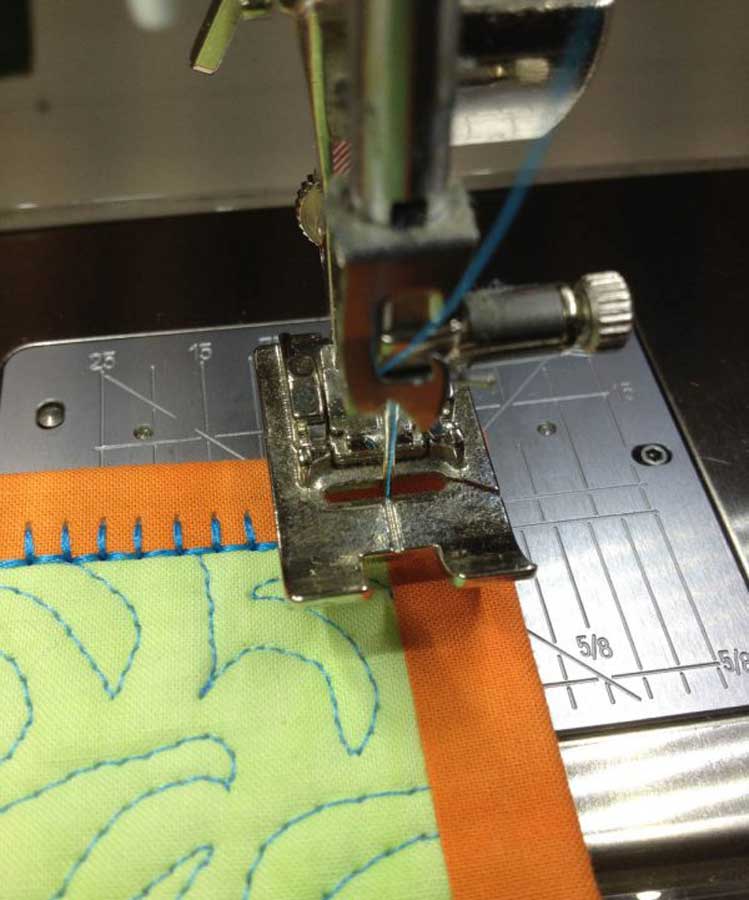
Position the garment under the presser foot with the facing layer right side up and to the right your machine has an adjustable needle position, use it to fine-tune the needle placement near the seam. If your machine has an edgestitching foot, that can be helpful to keep the stitching straight, especially over bulky layers like cross seams. If your garment is lined to the edge, the understitching will be on the lining.

Understitching in progress

Understitching should catch all the seam allowances under the facing/lining, so keep your fingers underneath the stitching area to be sure layers don’t shift. Graded and clipped seam allowances sometimes decide to turn the opposite direction from how they were originally pressed, so be mindful of that and feel underneath as you sew.

Understitch close to the seamline

On circular facings, like armholes and neckline openings, understitch all the way around. If your garment has a front or back opening, stitch as far as you can as you approach the corner. Then backstitch to anchor the stitch end.

Finishing touches  

Once the understitching is complete, turn the facing again to the wrong side and roll the garment edge ever so slightly to the wrong side next to the facing seam. Tack the finished facing edge to the adjacent garment seam allowancesat the shoulder, side seam, etc. to keep it in place.    {photo 4: Finished neckline with understitching}   

Finish neckline with understitching

~Linda Griepentrog is the owner of G Wiz Creative Services and she does writing, editing and designing for companies in the sewing, crafting and quilting industries. In addition, she escorts fabric shopping tours to Hong Kong. She lives at the Oregon Coast with her husband Keith, and three dogs, Yohnuh, Abby, and Lizzie. Contact her at gwizdesigns@aol.com.

August 8, 2025

Sewing with Sheer Fabrics

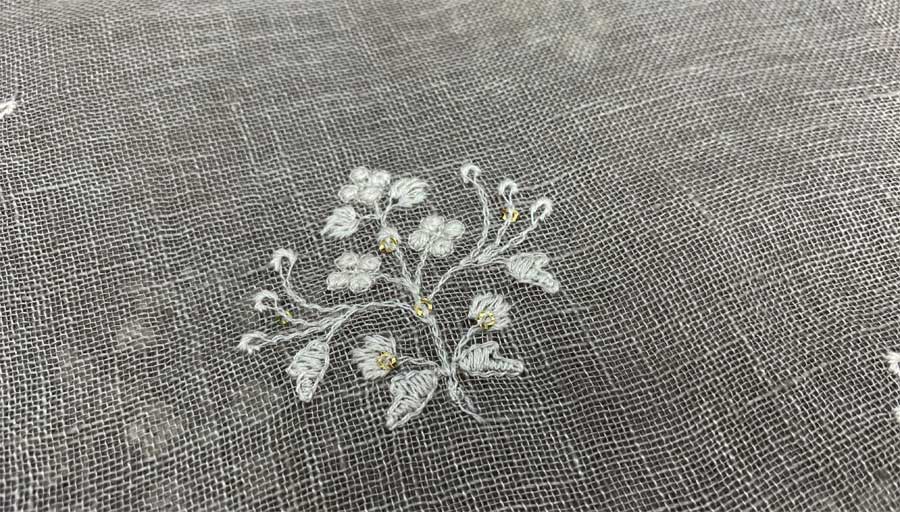
Sewing with sheer fabrics may not be something you do every day, but for that special garment or home décor adventure, it’s good to know the ins and outs of seaming these wispy see-throughs.

There are various types of sheer fabrics, from organdy and chiffon to georgette and voile. No matter which one you choose, pay attention to the details of sewing the perfect seam. Use some fabric scraps and test-sew these seam finishes to see what works best with your particular fabric.

Conventional Machine Finishes

Stitch and trim

Using a conventional machine, straight stitch the project seam, but do not press it open. A full-width open seam in a sheer fabric screams home-made. Instead, stitch another row of stitching next to the first one and trim the excess seam allowance close to the second stitching row. Press the seam allowances in one direction, usually toward the front if it’s a garment. The narrow seam allowances barely show through the outer fabric, and you have an inconspicuous joining.

Stitch and trim finish on a straight edge

If the fabric is especially ravelly, you can choose a narrow zigzag for the second line to keep threads in check.

Stitch and trim zigzag finish

French

Note: These directions are for a pattern with a standard 5/8” seam allowance.

To create a French seam, sew the two layers of the project WRONG sides together using at 1/4” seam allowance. Trim the seam allowances next to the stitching, then refold the seam so that the previously sewn seam is along the folded edge, but this time the fabric is right sides together. Sew another seam 3/8” from the previously seamed edge, encasing the trimmed seam allowance.

French Seam Finish

This type of seam works best on straight seams—creating a French seam on a curve (like an armhole) is trickier. On curved areas, choose one of the other seam finishes mentioned above.

It’s OK to mix seam finishes on a single garment! Some techniques work better on straight seams, and others for curved areas.

Pink

If you own pinking shears, they can be used to finish a sheer seam, but depending on the opacity of the fabric, you may be seeing the small zigzags through the outer fabric. Pink seam allowances together after sewing a single or double row of seam stitching, then press the seam allowances in one direction.

Pinked edge finish

Serger Finishes

If you choose to use a serger for seaming, set the stitch width for a relatively narrow seam and use two or three matching threads. Sew your seam, allowing the machine to trim the excess seam allowance as it sews. You’re left with a narrow, overcast seam with minimal show-through. This type of seam works best on crisp sheers, as very soft fabrics may distort in the serging process unless you use a stabilizer beneath the seam.

Rolled hem

For an even narrower seam, turn your serger to the rolled hem setting. This will create a very narrow, wrapped seam allowance never to be noticed from the outside.

Other tips for sewing on sheers:

  • Choose a small size sewing machine needle to avoid leaving holes in the fabric.
  • Select a lightweight thread.
  • Shorten your stitch length to avoid puckering.
  • Enlist tissue paper or removable stabilizer to help “tame” any stretching or puckering.
  • Be sure your scissors are sharp when cutting and trimming.
  • Use a straight-stitch presser foot and/or throat plate to keep lightweight sheer fabrics feeding evenly without poking down into the needle hole.
  • Use self-fabric for interfacing to avoid dramatic color changes.

~Linda Griepentrog is the owner of G Wiz Creative Services and she does writing, editing and designing for companies in the sewing, crafting and quilting industries. In addition, she escorts fabric shopping tours to Hong Kong. She lives at the Oregon Coast with her husband Keith, and three dogs, Yohnuh, Abby, and Lizzie. Contact her at gwizdesigns@aol.com.

August 1, 2025

Reverse Flap Detail

One of the true pleasures when sewing any garment is adding that perfect unique “something extra” that takes it from ordinary to extraordinary. This unusual finish for a blouse or jacket adds an unexpected design twist to give a garment an uncommon look.

Reverse flap detail on a blouse

This short tutorial described how easy it is to make a minor change to the left front facing of your pattern.

To begin, the project assumes you are using 1/2″ buttons.

Start by marking a straight line that is parallel to the front edge of the fold, 3/4″ in from the folded edge. Then, at 5-1/2″ below the neck seamline, draw a 1-1/2″ line perpendicular to the already chalked vertical line.

Draw another 1-1/2″ line 5″ below that. (Fig 1)

Stitch around these opening markings, taking 2 tiny horizontal stitches at the tum. Cut on the marked lines to the tum (Fig 1a).

details

Tum the facing to the inside and press the opening edges. Edgestitch the front edge.

Note that no changes are made to the right front facing.

This reverse flap is especially attractive when you add extra buttons to it. Arrange button placement so that a button is directly above and below this flap to prevent gaposis and shifting. 


~Based on an article by Ann Jacobi previously prepared for ASG

July 25, 2025

What’s the (Sewing) Word? Part 2

Whether you’re new to sewing or a seasoned veteran with myriad skills, chances are good that you like to continue learning about your favorite hobby and knowing the vocab is essential.

While there are glossaries of common sewing terms, we wondered about the not-so-common words that might be good to know. If you missed Part 1, click here to learn those words, then learn these as well for your next game of Trivial Pursuit!

Besom Pocket

Image courtey of Alan Flusser Custom

A besom pocket is inset into a garment (as opposed to being applied to the outside like a patch pocket). It is characterized by narrow piped edges along the pocket opening. Constructed similarly to a welt pocket, the narrow trim bands set it apart. The piped edges can be made from the same fabric as the garment, or from a contrast fabric or ribbon.

French Tack

A French tack is a grouping of threads used to hold two layers of fabric loosely together. Typically used to hold a lining in place at the hemline inside a garment, a French tack is about an inch long and the multiple thread strands are “overcast” together to hold them in place. French tacks are made by hand using a single thread to blanket stitch the initial strands together.

Hair Canvas

Hair canvas, available from Amazon. (Amazon affiliate link)

Traditional hair canvas is an interfacing fabric made from goat hair and/or wool, and it’s used in tailoring to give a crisp finish to lapels and collars. The real deal is quite costly, so manufacturers have come up with a substitute made from acrylic or polyester, cotton, rayon, wool and a small amount of hair. Hair canvas was originally only a sew-in product, but today there are now fusible versions as well. Because of its weight and character, hair canvas is best used on tailored wool garments.

Interlining

A layer of fabric behind the lining of a coat or jacket to add extra warmth. Often, it’s a lightweight wool, fleece or flannel depending on the amount of warmth needed.

Lambswool

A fluffy white woven fabric used in tailoring for sleeve heads, chest pieces and shoulder pads to add shaping and support.

Padstitching

Stitches used to hold one or more layers of interfacing to a tailored garment. Padstitching can also be used for garment shaping. The technique can be done by hand when it doesn’t show on the finished garment, or it can be done by machine where it’s visible upon completion.

Rouleau

Very thin fabric tubes used as button loops or for garment trim.

Sleeve Head

Image courtesy of Gorgeous Fabrics

An added piece of woven fabric or interfacing placed at the cap of a sleeve to support the sleeve and maintain shaping. Sleeve heads are usually loosely hand stitched to the cap seam allowance. There’s no need to finish the edges of the sleeve head as it will be covered by the garment lining.

Tailor Tack

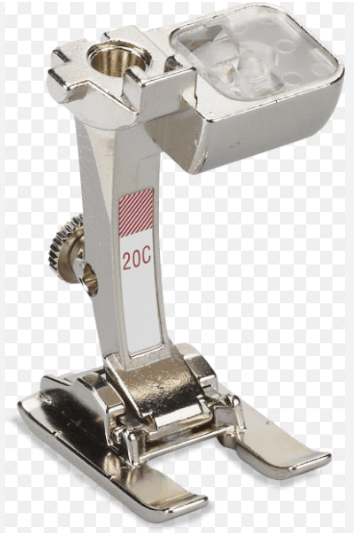
Tailor tack foot
Tailor Tacking Foot (Image courtesy of Bernina)

A tailor tack is a thread marking used to indicate a seam line or construction details, such as darts, match points, etc. Threads remain in the fabric until after stitching the marked item, then are removed. Tailor tacks can be made by machine, using a tailor tacking foot with a raised bar, or they can be made by hand using multiple thread strands.

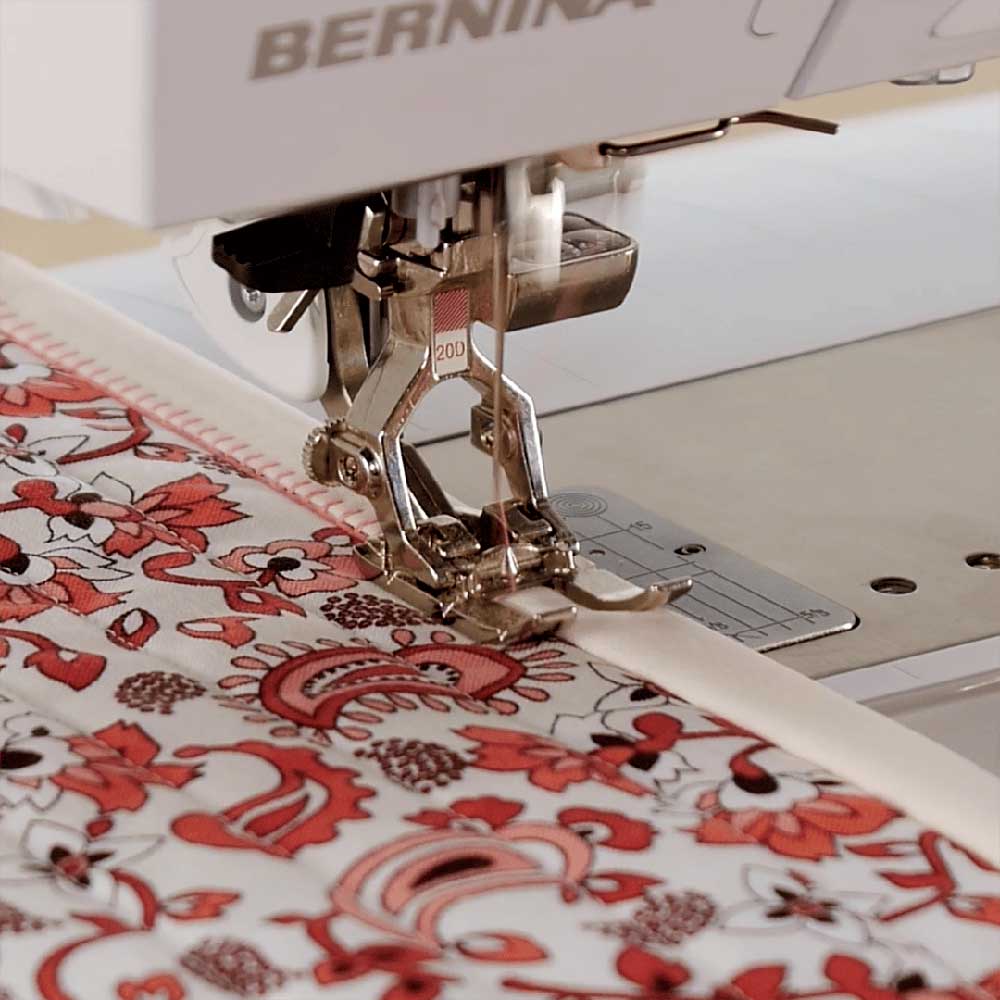
Tailor tacks along a seam line (Image courtesy of Bernina)

When making tailor tacks by machine, use the special foot and sew a wide zigzag stitch along the designated design detail (dot, seamline, etc.) through the pattern and fabric layers. Clip the threads between the layers and leave the thread tufts in place until after final stitching is complete.

Tailor tacks marking a dart (Image courtesy of Bernina)

Underlining

Underlining is an extra layer of very lightweight fabric cut like the outer garment’s fashion fabric. The two layers are joined along the edges and treated as one during construction. Underlining is helpful for adding body to lightweight fabrics, and it helps retain shape on loosely woven fabrics. Often confused with interlining (see above).


~Linda Griepentrog is the owner of G Wiz Creative Services and she does writing, editing and designing for companies in the sewing, crafting and quilting industries. In addition, she escorts fabric shopping tours to Hong Kong. She lives at the Oregon Coast with her husband Keith, and three dogs, Yohnuh, Abby, and Lizzie. Contact her at gwizdesigns@aol.com.

July 18, 2025

A Special Visit to the Textile Center

ASG member, and former Board member, Joi Bostic, recently had an opportunity to visit to the Textile Center in Minneapolis. The following is a recap of Joi’s visit, in her own words:

I was incredibly excited to learn that my brother-in-law who lives in the Minneapolis/St Paul area and knows about my love of sewing, had planned a trip to the Textile Center in Minneapolis during my visit. Due to road construction, we had to enter through the rear of the building, so I covered my eyes and carefully navigated the hallways until we reached the front. He really wanted me to experience the space from the front entrance, and he was absolutely correct.    

Textile Center in Minneapolis

Upon my second time “entering” the building, I was greeted by a beautiful quilt exhibit to my left and a store to my right that was filled with treasures just waiting to go home with me.

But let’s start with the exhibit… 

We were able to move through “Stitching Black Legacy: The Quilts of Carolyn Mazloomi.”  Ms. Mazloomi’s attention to detail is amazing—the quilts were done in black and white with some having a splash of color to better tell the story. The most impressive part of the 19 quilts is that they were all created between 2024 and 2025 and the story that each one told was breathtaking. The “Stitching Black Legacy” exhibit will be there through July 12 in case you find yourself in Minneapolis. 

Then, the Shop

To the right was the Textile Center Shop which was filled with handmade fiber art and gifts featuring over 100 artists, as well as supplies to purchase for use in creating your own masterpiece.

Towards the rear of the shop was the entrance to a lounge area where a young lady was making yarn cakes for knitters or crocheters. The lounge area then ushered me into The Stashery. This area is where you can find a variety of previously loved materials at great prices. I had to exercise great restraint as I walked through and repeatedly reminded myself that I flew to the area and would not be able to fit the fabric, rulers, or big bundles of thread in my suitcase, not to mention not being able to transport rotary cutters or shears in my carry-on bag. Note that due to its nature, their selection changes constantly, but I was impressed that there were items for every type of fiber artist. 

Into the Library

Across the hall from The Stashery is the phenomenal library. In this space, you can find the largest collection of fiber arts books, magazines, and media materials in the country with over 35,000 holdings. The stacks are arranged by topic, so all quilting materials are together, then sewing, then surface design which is subdivided by type of design. Finally, there is a a catch-all section. The end of each aisle features what can be found on that stack.   

The librarian is a wonderful 81-year-old woman named Nancy. Nancy took the time to walk us through the entire library and explain how to find things. At one point she mentioned that members of various guilds can check out materials so, of course, I asked whether American Sewing Guild members could take advantage of checking out materials and the response was “YES!”

Ms. Nancy has an interesting story—she was a schoolteacher for many years then, after she retired, she started volunteering at the Textile Center. The librarian at the time became pregnant and needed to leave the Center and Ms. Nancy was asked if she could step into the role temporarily. Twenty years later, she is still their librarian and continues doing a fabulous job. 

On to the Classroom

Down the hall from the library is a large classroom. This is a versatile space which can used for a number of purposes. When we arrived, a class was being held, but I didn’t see what it was as I was shielding my eyes to make my way to the front. Across from the classroom is a Dye Lab. Ooh, how I wished I had the time to play is that space! Along one of the hallways is a Guild Wall where fiber creations are featured. 

Needless to say, I am grateful to know about the Textile Center. Its mission is to honor textile traditions, promote excellence and innovation, and inspire widespread participation in fiber art. It does my heart good to know that fiber arts continues to be appreciated and is here to stay for a long, long time.

Learn more about the Textile Center at https://textilecentermn.org/.   


~Joi Bostic, ASG Member

  • « Previous Page
  • 1
  • …
  • 3
  • 4
  • 5
  • 6
  • 7
  • …
  • 87
  • Next Page »

Become a Member

Join the only national organization dedicated to Advancing Sewing as an Art and Life Skill.

Join Now button

Blog Article Categories

  • ASG Conference
  • Chapter Stories
  • Embroidery
  • Fitting
  • Learn to Sew
  • National Sewing Month
  • Products, Books, & Patterns
  • Projects
  • Quilting
  • Sewing
  • Sewing Techniques
  • Sewing Tips
  • Sewing Tours
  • Videos
  • Disclaimer
  • Privacy Policy

American Sewing Guild
National Headquarters
9660 Hillcroft, Suite 230
Houston TX 77096
713-729-3000 | 713-721-9230 Fax
www.ASG.org

ASG wordcloud - education, conference, discounts, videos, special offers, tours and more

Copyright © 1998–2026 · American Sewing Guild · All Rights Reserved