Rich textures, intricate patterns, and a little old-fashioned glamour are making a fashionable comeback.
Move over, minimalist fabrics! This fall and winter, fashion is embracing something considerably more luxurious. Brocade and jacquard fabrics, with their elaborate woven patterns, dimensional textures, and occasional metallic shimmer, are enjoying renewed popularity. From statement jackets and tailored trousers to elegant skirts and eveningwear, these textiles are bringing a touch of historical opulence into contemporary wardrobes.
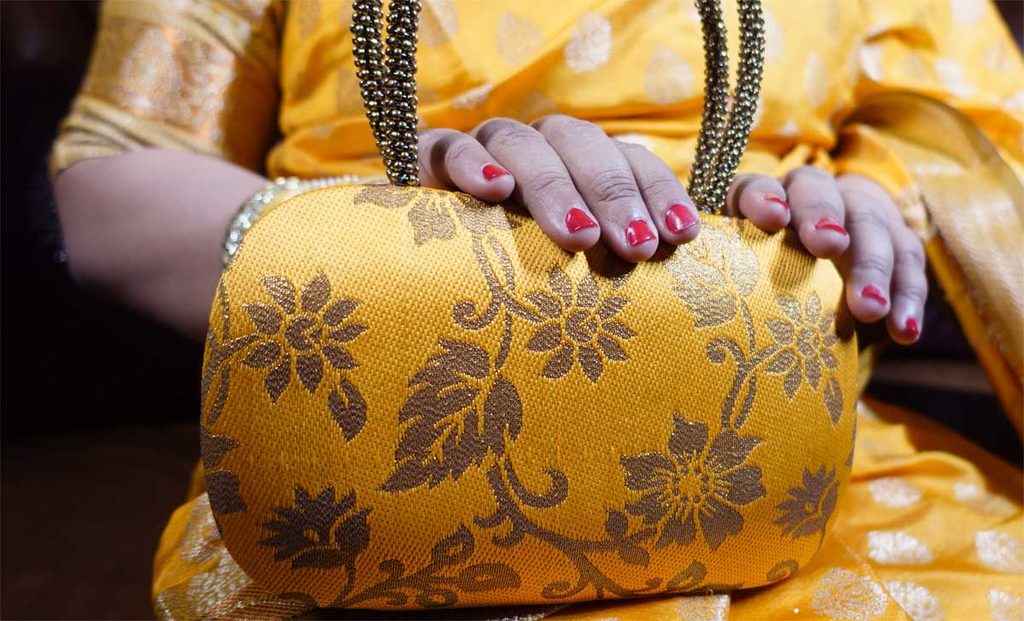
According to a recent article in The Zoe Report, Google searches for “jacquard” increased 200% during January through early November 2026 compared with the same period in 2025. Designers including Dior, Valentino, Dries Van Noten, and Conner Ives have embraced these richly patterned textiles, demonstrating that fabrics once associated primarily with royalty and formal occasions can look surprisingly modern.
For garment sewists, the trend presents an exciting opportunity to work with fabrics that make even simple silhouettes look extraordinary.
A Little Fabric History
Brocade has a remarkable history stretching back more than 2,000 years. Early examples were produced in ancient China, where elaborate silk textiles symbolized wealth and status. Brocade later became prized throughout Asia, the Middle East, and Europe. During the Renaissance, Italian weavers created magnificent fabrics incorporating silk and metallic threads for aristocratic clothing.
Jacquard takes its name from French inventor Joseph-Marie Jacquard, whose early 19th-century loom innovation revolutionized textile production. Using punched cards to control individual warp threads, the mechanism made intricate woven designs easier to reproduce. Interestingly, this technology also helped inspire early developments in computing.
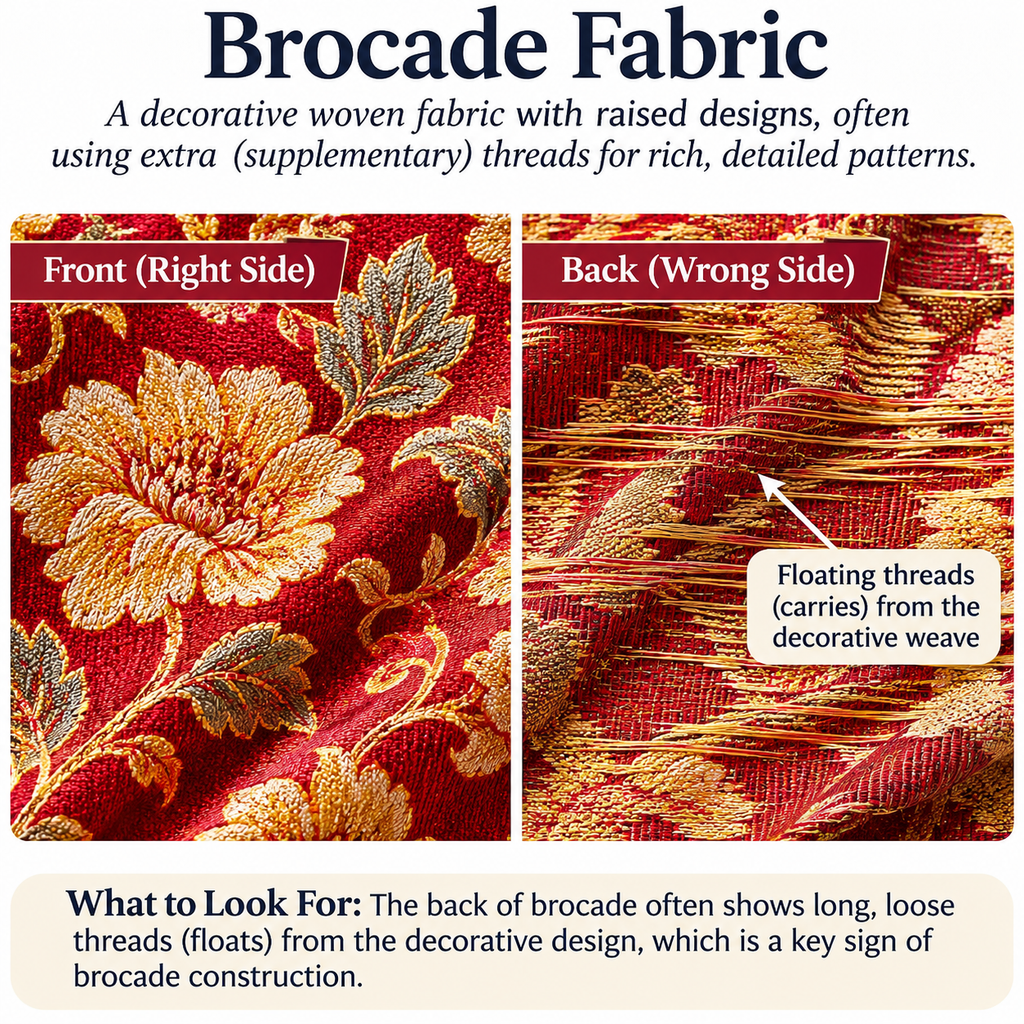
Although the names are sometimes used interchangeably, there’s an important distinction. **Jacquard describes a method of producing woven patterns, while brocade is a particular type of decorative fabric.** Brocade typically features raised motifs created with supplementary threads, often leaving floating yarns on the reverse. Other jacquard fabrics may have smoother surfaces or patterns visible on both sides.
Choosing the Right Fabric
Today’s brocades and jacquards are available in silk, cotton, rayon, polyester, and numerous blends. Their weights range from relatively soft, drapable fabrics to substantial textiles suitable for structured garments.
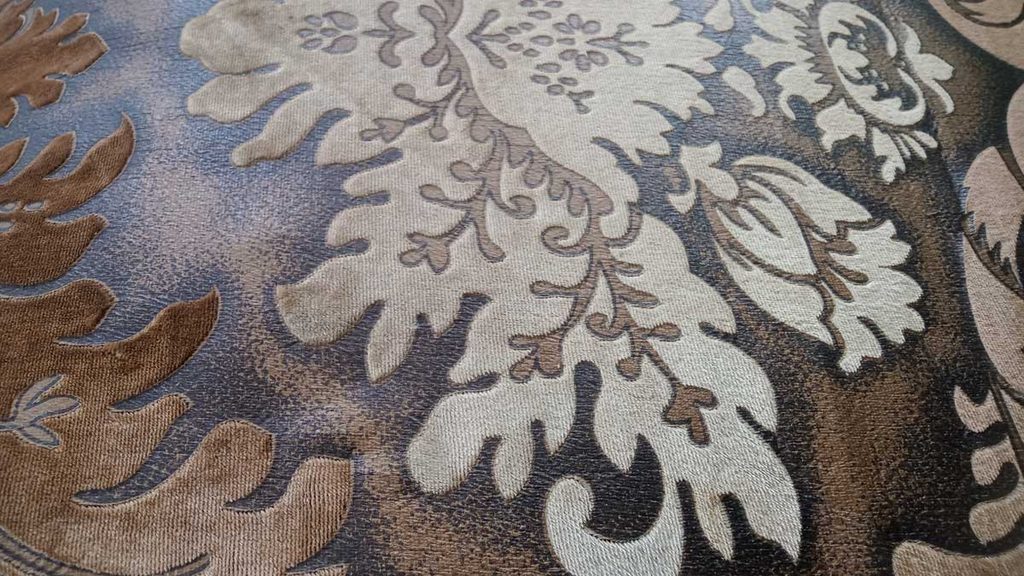
Before purchasing, consider how the fabric will behave in your chosen design.
- Weight and drape: Crisp brocade works beautifully for tailored jackets, A-line skirts, and structured dresses. Softer jacquards suit blouses, relaxed trousers, and flowing silhouettes.
- Pattern scale: Large motifs require careful placement, especially across center fronts, seams, and pockets.
- Fiber content: Silk offers luxurious texture, while cotton blends may be easier to maintain. Synthetic fibers can provide durability and affordability.
- Metallic threads: Beautiful but sometimes scratchy, delicate, or heat-sensitive, they may require lining and special handling.
Check the fabric’s width before calculating yardage. Some specialty brocades are considerably narrower than standard apparel fabrics.
What About Sustainable Options?
Sewists interested in reducing textile waste have several possibilities. Vintage brocade garments, secondhand formalwear, upholstery remnants, and unused decorator fabrics can become beautiful jackets, handbags, or accessories.
Some manufacturers also produce jacquards containing recycled polyester or other reclaimed fibers. Look for documented recycled content, preferably supported by certification such as the Global Recycled Standard (GRS) or Recycled Claim Standard (RCS).
Remember that recycled content doesn’t automatically make a fabric environmentally harmless. Durability, fiber blends, care requirements, and eventual recyclability all matter. Repurposing an existing textile can be an especially satisfying choice.
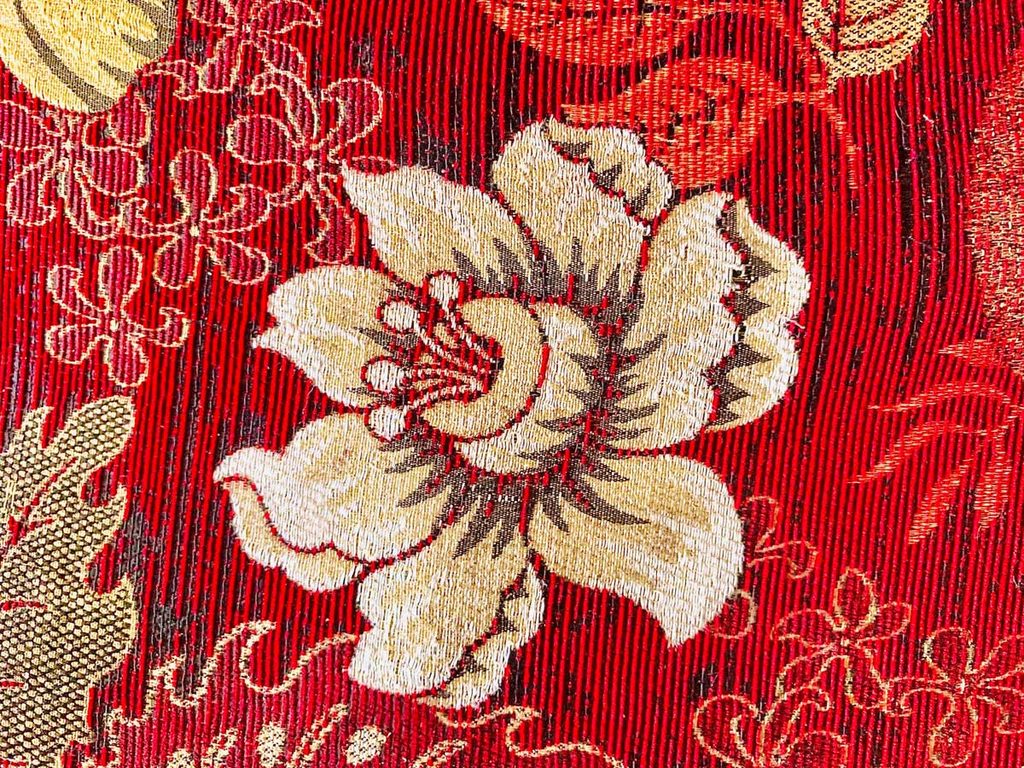
Sewing Successfully with Brocade and Jacquard
These fabrics aren’t necessarily difficult to sew, but they reward careful preparation.
- Choose a suitable pattern. Simple, well-fitted silhouettes showcase elaborate fabric without competing with its design.
- Test before cutting. Make a sample to evaluate needle size, stitch length, pressing, and seam finishes.
- Use sharp tools. A fresh Microtex or universal needle, generally size 70/10–90/14 depending on fabric weight, is a good starting point.
- Control fraying. Many brocades unravel readily. Consider overlocking, Hong Kong finishes, or lining the garment.
- Protect the surface. Avoid unnecessary pinholes, test clips, and press from the wrong side using a press cloth.
- Consider pattern matching. Large woven motifs may require additional yardage and thoughtful cutting layouts.
For heavily textured fabrics, a walking foot can help prevent shifting. Test fusible interfacing on scraps, since heat and adhesive may alter the fabric’s appearance.
Cleaning and Caring for Your Creation
Care depends primarily on fiber content, weave, and embellishments. Many silk and metallic brocades require professional dry cleaning, while some cotton and synthetic jacquards tolerate gentle washing.
Always check manufacturer recommendations and test a generous swatch before laundering. Watch for shrinkage, color bleeding, distortion, and loss of sheen.
If washing is appropriate, use cool water, mild detergent, and minimal agitation. Avoid wringing, which can damage decorative threads. Air-dry carefully and press on the wrong side at a temperature suitable for the most delicate fiber.
Store finished garments away from direct sunlight, protecting delicate woven surfaces from snagging.
A Trend Worth Keeping
Perhaps the greatest appeal of brocade and jacquard is their timelessness. These aren’t fabrics destined to disappear when next season’s trends arrive. A beautifully constructed brocade jacket or jacquard skirt can remain a wardrobe favorite for years.
And for sewists who appreciate craftsmanship, that’s a fashion trend worth celebrating!
~American Sewing Guild