There’s something timeless and heartwarming about sewing matching outfits for a young girl and her favorite doll. For generations, sewists have delighted in creating miniature versions of garments, turning everyday sewing projects into cherished keepsakes. Whether it’s a twirly dress, a cozy set of pajamas, or a holiday outfit, coordinating clothing for a child and her doll adds an extra layer of creativity and joy to the sewing process.
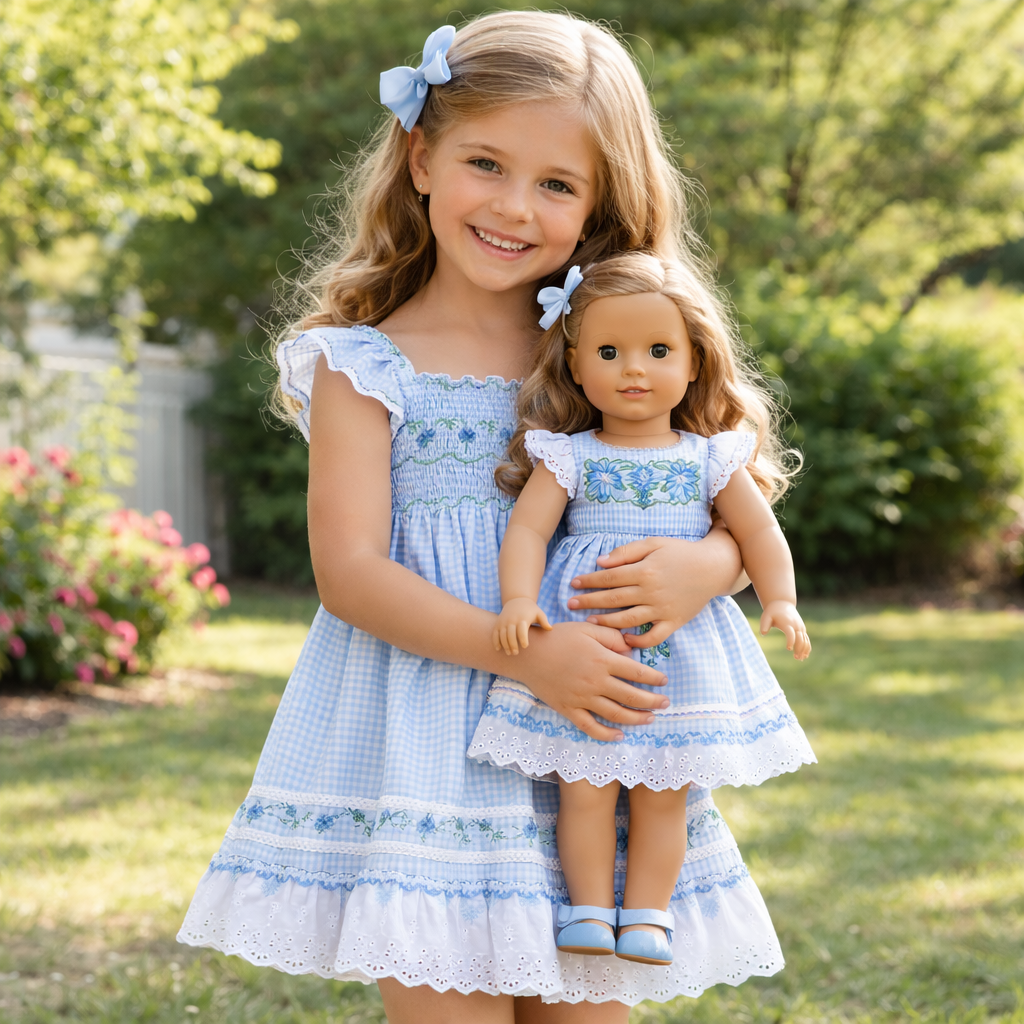
Should you decide to copy a girl’s purchased outfit or a handmade one instead, you must analyze the details of each garment to determine the basic construction. For a purchased garment, study the actual garment. For dresses, look to see if the waist is high or low, if the sleeves are full or tailored, what type of neckline or collar it has, and if the skirt is gathered or A-line. For sportswear or casual clothing, determine if the waistline of the pants is placed at the actual waistline or below, and if the shirt has a collar or ribbing at the neckline.
If you have the pattern that was used for the child’s garment, look at the line drawing, not the photo. This will clarify the general shape of the clothing. Your goal is to reproduce the essence of the garment without following all the details exactly. Your doll’s garment needs to echo the basic shape, such as a high yoke dress with long straight sleeves.
Once your garment shape has been determined, look for a pattern that follows the same design lines. Don’t worry if some details are missing. Many times, they will only clutter up the smaller garment. For example, a girl’s dress may have multiple rows of pin tucks down the front of the bodice, but on the doll’s dress, no one will miss them.
One of the easiest ways to begin is by choosing a pattern specifically designed for both child and doll sizes. These patterns simplify the process by scaling design details appropriately so the doll’s version mirrors the child’s outfit.
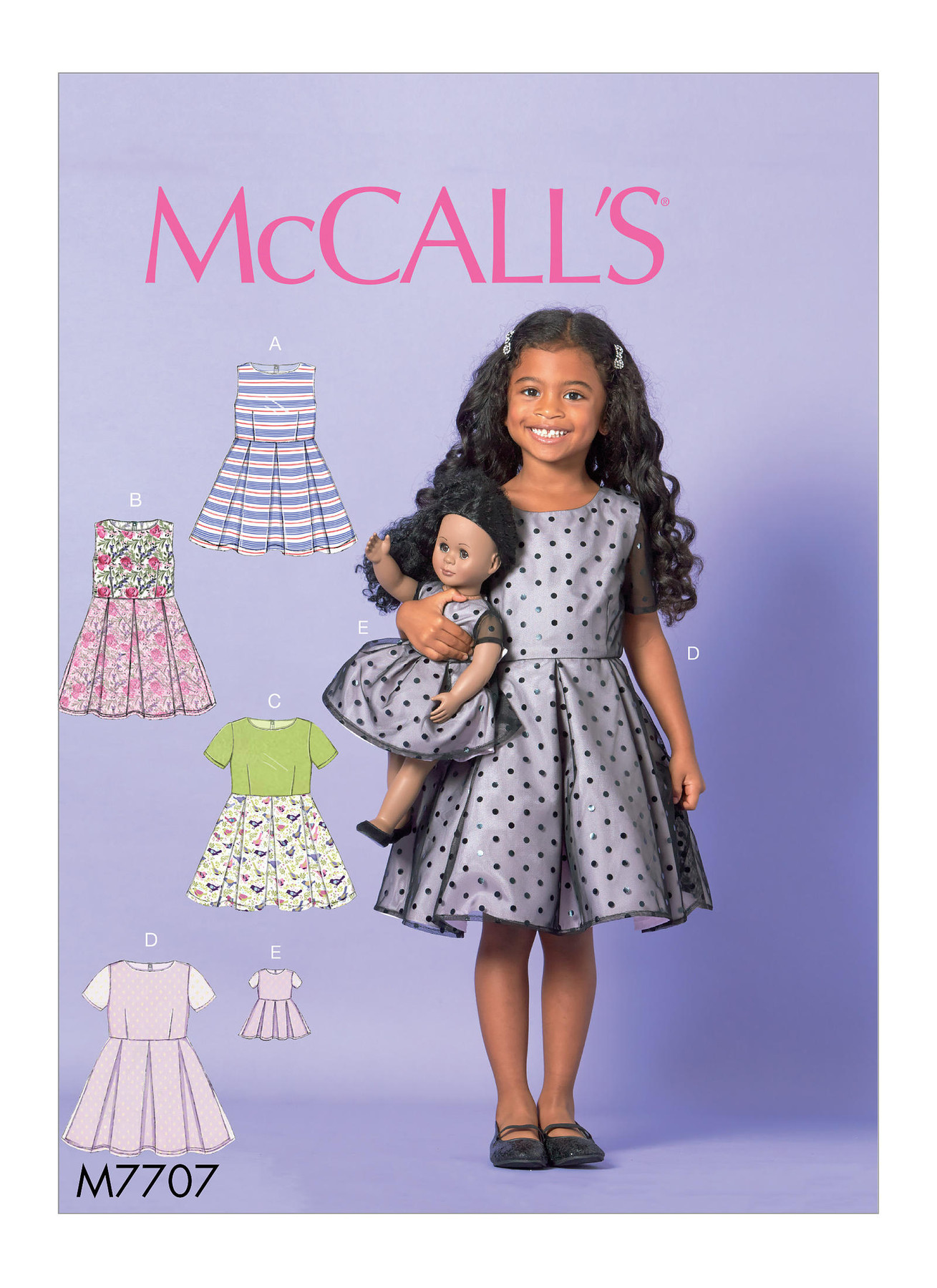
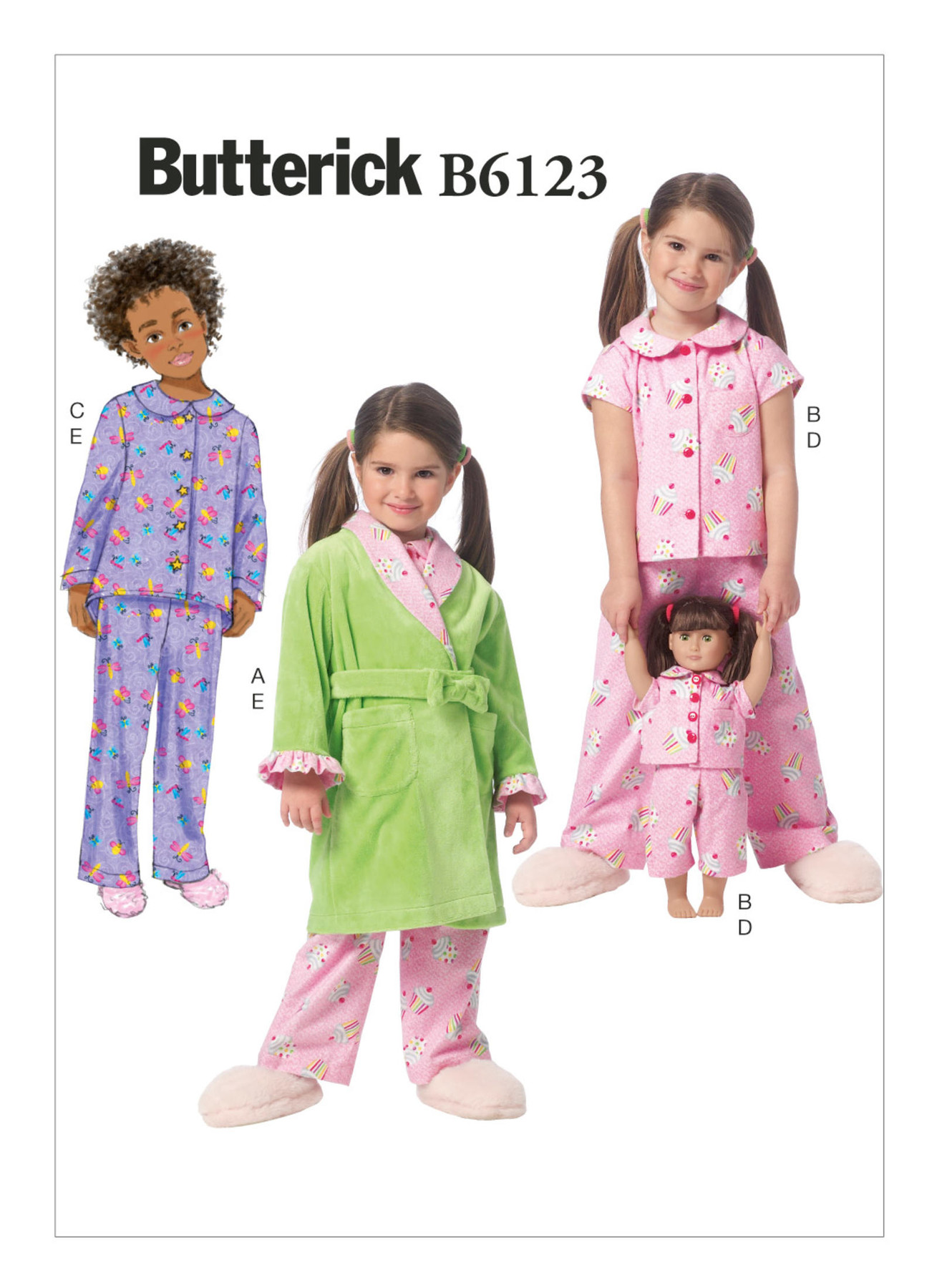
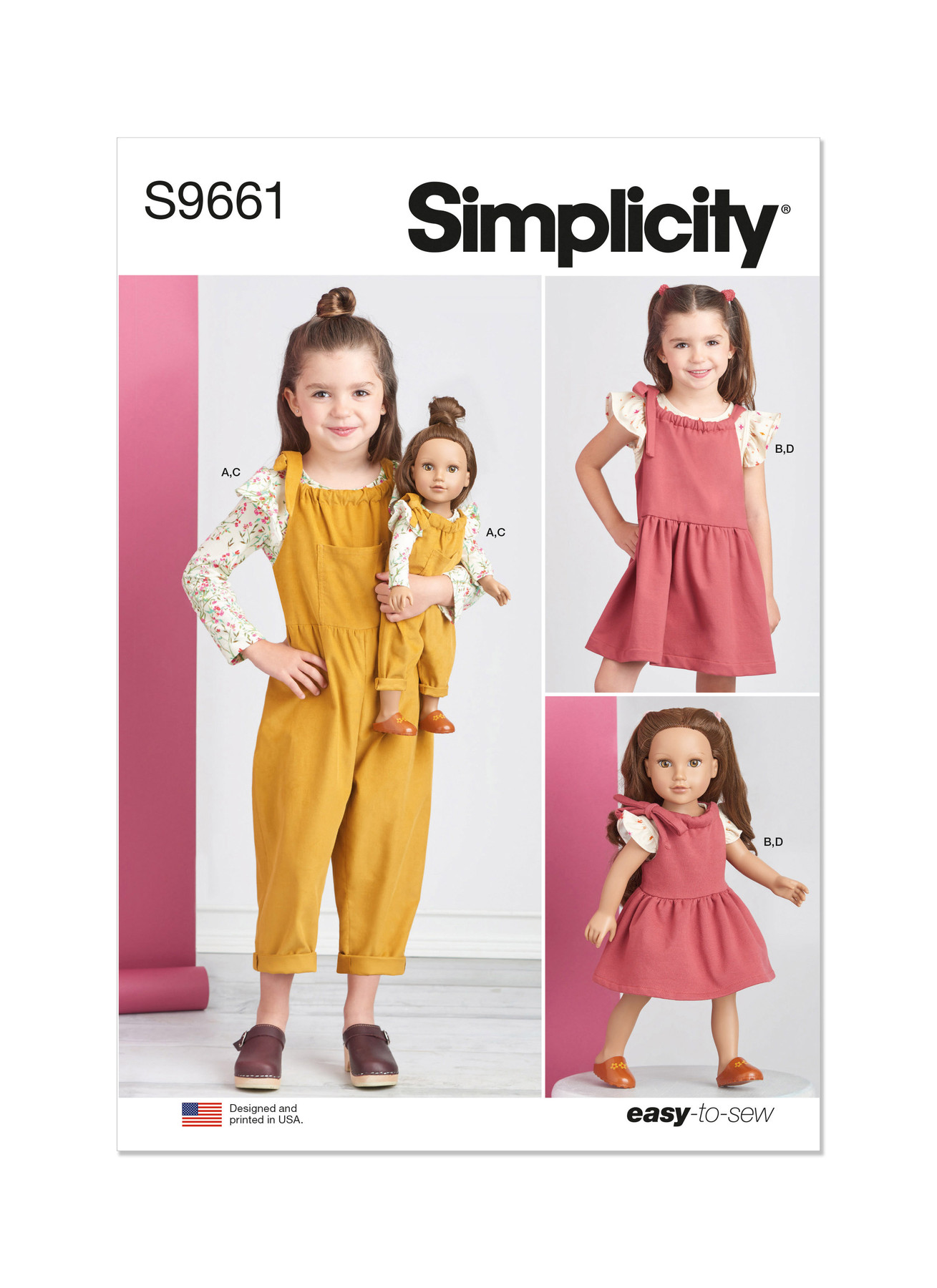
If you already have a favorite children’s garment pattern, you can adapt it for a doll by reducing the pattern pieces on a copier or printer. While this requires a little experimentation, it can be a fun challenge for experienced sewists. When scaling patterns down, remember that small garments often need simpler closures and fewer seam allowances to keep the pieces manageable.
Fabric selection plays an important role in the success of doll garments. When buying fabric for the child’s garment, purchase enough fabric to make the doll’s outfit-provided the weight of the fabric and the scale of the print are appropriate. Usually, one-half yard of fabric will be enough to make any garment for an 18″ doll. Note that if the fabric is medium- or heavyweight, it may be too heavy to use in doll clothing. Denim can vary in weight from light to heavy. Choose the lightest weight version you can find or substitute lightweight chambray that resembles the denim you want to match. Micro fleece, a thinner version of standard fleece fabric, is perfect for dolls. It drapes better and will allow a collar on a doll’s jacket to lie flat. Velvet, beautiful in a girl’s dress, is too bulky for a doll’s dress. Use velveteen instead. Lightweight cottons, lawn, and quilting cottons tend to work well because they press crisply and are easy to sew at a smaller scale.
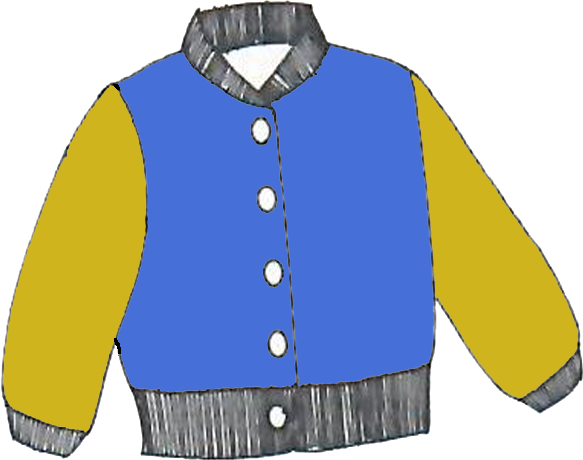
Varsity jackets for girls are made out of heavyweight wool with leather sleeves. For dolls, go for lighter weight wool or even cotton flannel to get the same effect. Thinner, synthetic leather will resemble the real leather sleeves and keep the cost down, too.
If your girl’s special dress is ready-made, not custom-made, there are still ways to get a matching dress. If your goal is to use the same fabric, purchase a second dress in the largest size possible. If the dress has a sheer fabric overskirt, you may be able to use its hemline as the hem of the doll’s skirt. This not only eliminates the need to hem, but also insures that both garments will have the same edge finish-an added bonus if it’s a decorative one. Take all the trims off the ready-made garment, such as sequins or pearls, ruffles, and flowers. The ruffles can be narrowed, if necessary, and hopefully, other trims will be in scale for your doll’s dress. If not, take them with you to the fabric store to find similar but smaller versions.
To replicate a school uniform, use a doll’s jumper pattern with a bodice that comes to the waist or below and a pleated skirt. For the matching fabric, find extra uniforms at rummage sales or in the school’s lost and found. If there are plaids to match, you might need two uniforms.
Adding decorative details can make these projects even more special, but simplify and miniaturize the final details in your doll clothing. Use snaps instead of buttons and button holes. To eliminate fussing with tiny facings, line garment sections to the edge with a lightweight lining fabric.
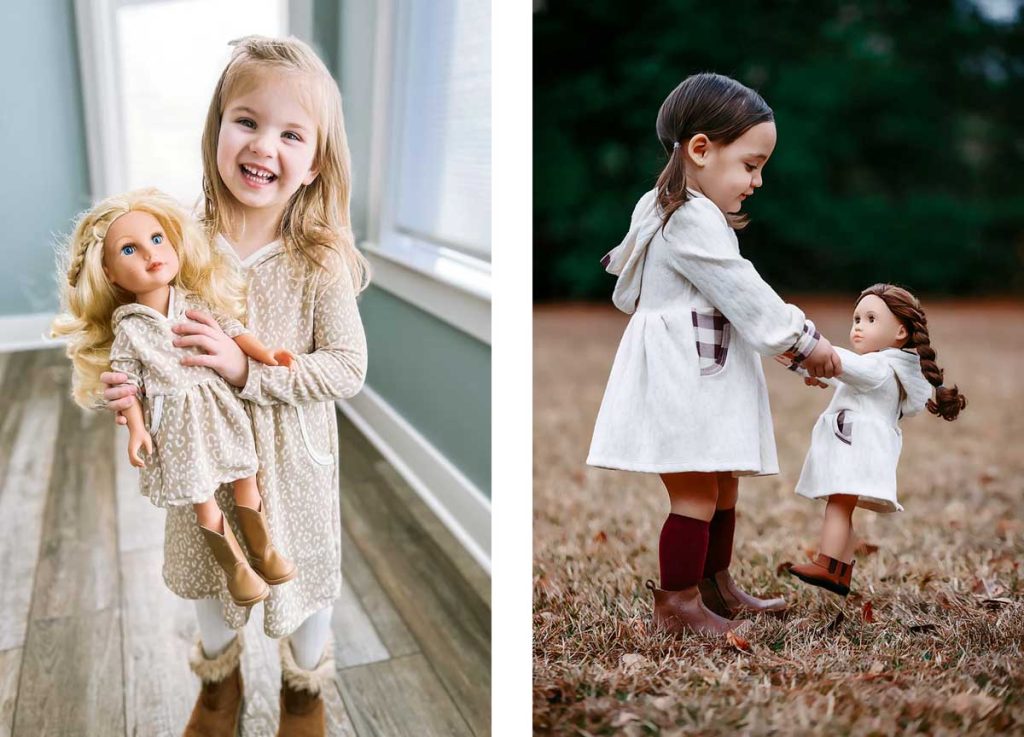
Look for short separating zippers for jackets and vests. Other doll-sized notions are available, such as overall buckles with buttons, colored snaps, mini “frog” closures, and belt buckles. Eliminate any unnecessary trims, pockets, or ruffles. While a girl’s skirt may have multiple rows of ruffles, one row of ruffles on a doll’s skirt will probably suffice. Because doll clothing is so small, even tiny scraps of trim can make a big impact.
Machine embroidery looks wonderful on both girl’s and doll’s clothing. Look for designs that are scaled down for dolls. Dual-sized designs for girls and dolls are also available. Often an embroidery machine can resize and reduce a design to 20%, making it more proportional for doll clothing.
TIP: Check Etsy for matching girl and doll clothing patterns
Beyond the sewing itself, matching outfits encourage imaginative play and storytelling. A child who helps choose fabrics or trims becomes part of the creative process, making the finished garments even more meaningful. For many sewists, these projects become treasured memories—both of the sewing time spent at the machine and the smiles that come when a young girl sees her doll dressed just like her.
In the end, sewing coordinating outfits for girls and their dolls is more than just a sewing project. It’s a tradition that celebrates creativity, craftsmanship, and the simple joy of making something special by hand.
Based on a previous article by Joan Hinds and edited to contain new information. Search for books by Joan on sewing clothes for dolls on Amazon, Etsy, and other online sources.