Staystitching is a term we don’t often hear in the world of fast fashion sewing, but its importance can’t be overrated. And it’s essential for quality construction.
What is it?
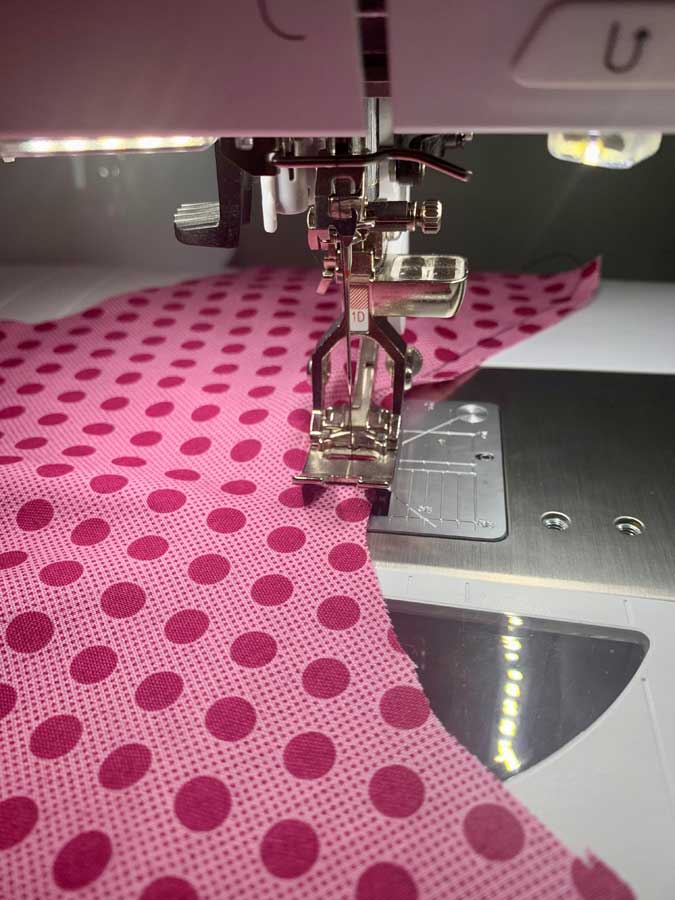
Staystitching is a row of regular length or slightly shorter (2mm) straight stitches done just within a seamline help stabilize the area. On conventional 5/8” seams, staystitching is done ½” from the cut edge. It’s done on woven fabrics, not usually on knits. Matching thread should be used for all staystitching.
Typically, it’s done on curved areas like necklines, armholes, shoulder seams, curved pockets and curved waistlines, but it can also be used in other places on unstable fabrics. These areas generally have some bias grain to them and the fabric can easily distort.
Staystitching can also be done on straight seams when they’re on a loosely woven or stretchy fabric that can stretch out of shape during handling. It’s a permanent line of stitching that stays in for the life of the garment, so no need to remove it after construction.
When to staystitch
Staystitching is done on individual (single layer) pieces of the garment immediately after cutting them out. It’s important to staystitch before the pattern pieces are handled a lot, in order to keep them in shape. Do it on the main garment pieces and also on facings and collars. Linings can also be staystitched in the same areas as the outer garment. No backstitching is needed for staystitch rows.
Direction matters
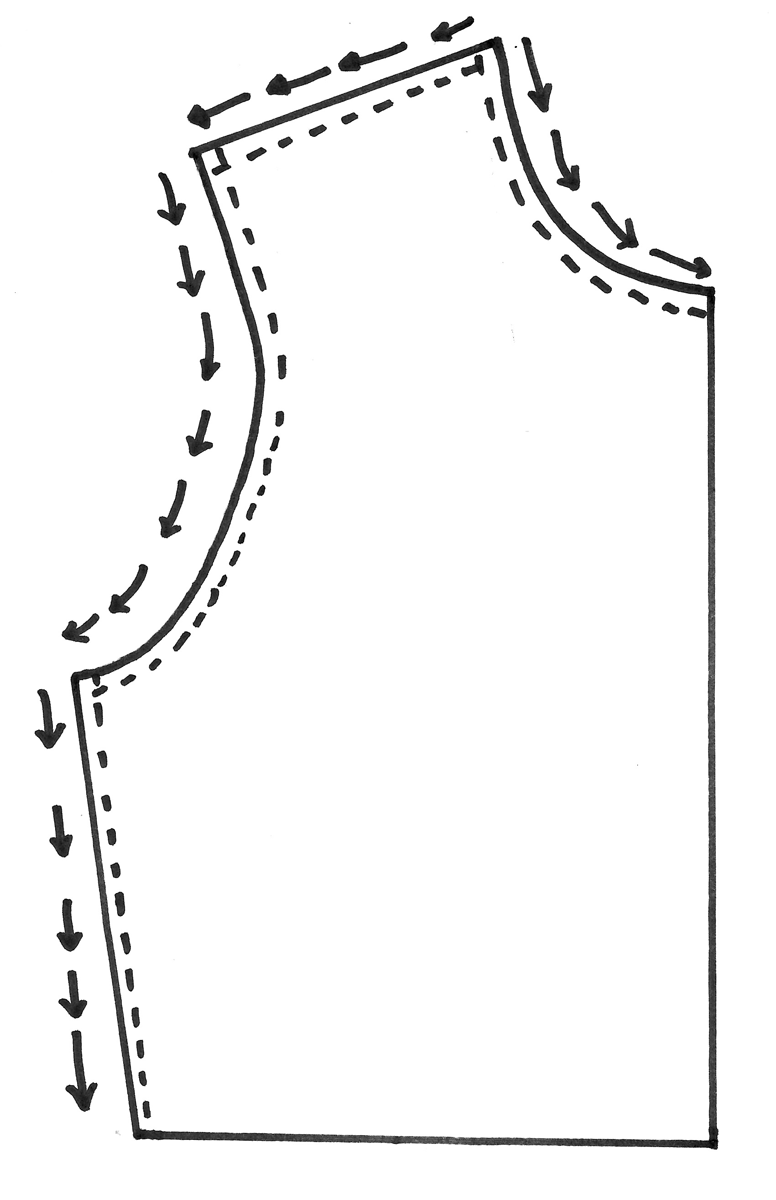
The direction you stitch definitely matters. The general rule is to sew from wide to narrow. For bodices, stitching is done from shoulder to underarm for armholes, shoulder to center for round necklines and shoulder to armhole along shoulder seams. For V-necks, sew from the high point to low point. Neckline facings, again shoulder to center. It’s important not to try to sew continuously from one shoulder neckline edge to the other—instead, break the stitching at the center front/back and begin stitching again at the opposite shoulder. Any seams that are cut on grain, or close to it do not require staystitching. For skirts, stitching is done from hipline to waistline along the side seams.
As you staystitch it’s important not to distort the fabric edges—just let them feed gently into the machine without any pushing or pulling, as that can lead to stretching out of shape.
After stitching
On loosely woven fabrics, it’s a good idea to lay the staystitched pattern piece over the paper pattern to be sure they match. If the fabric piece has distorted, use a pin to gently pull on the stitches in the affected area and ease it back into shape. If the staystitching pulled up the pattern piece, clip every 4 stitches to release the tension and get it back in shape.
Staystitching can also be used as a guide during construction. For example, on a curved neckline use the staystitching as a guide so you don’t clip into the seam allowances too close to the actual construction stitching.
One word or two? You may see this term as stay stitching or staystitching, depending on the reference. Doesn’t matter…it’s the same function.
Knit Wits
While it’s generally not necessary to staystitch knits, you may find it helpful in some instances like these:
- Use on necklines to keep them from gaping and stretching out.
- If the fabric is very loosely constructed and/or very stretchy.
- If you’re not going to be sewing the project up in the near future or you’re traveling with it.
- If your project has uniquely shaped pieces that can stretch out of shape—like wrapped fronts.
~Linda Griepentrog is the owner of G Wiz Creative Services and she does writing, editing and designing for companies in the sewing, crafting and quilting industries. In addition, she escorts fabric shopping tours to Hong Kong. She lives at the Oregon Coast with her husband Keith, and three dogs, Yohnuh, Abby, and Lizzie. Contact her at gwizdesigns@aol.com.