American Sewing Guild (ASG)

Visit our blog Visit the ASG Facebook page Visit ASG on Pinterest Visit ASG's YouTube channel Visit ASG on Instagram
  • Home
  • Join ASG
    • Join Online
    • Chapter Locations
    • Member Benefits
    • Member Brochure
    • Join by Mail
  • Education & Classes
  • Resources
    • Contests & Awards
    • Giving Back
    • Hall of Fame
    • Travel and Tours
    • Measurement Chart
  • Shop
    • ASG Store
    • Chapter Products
    • Video Resources
  • Blog
  • About
    • About Us
    • Donate to ASG
    • ASG Sensitivity Statement
    • FAQ’s
    • Start a Chapter
  • Contact
  • Member Login
    • Login First!
    • Members Only
    • Leadership Only
    • Website FAQ’s
    • Logout
  •  

April 17, 2026

Sewing Room Triangle

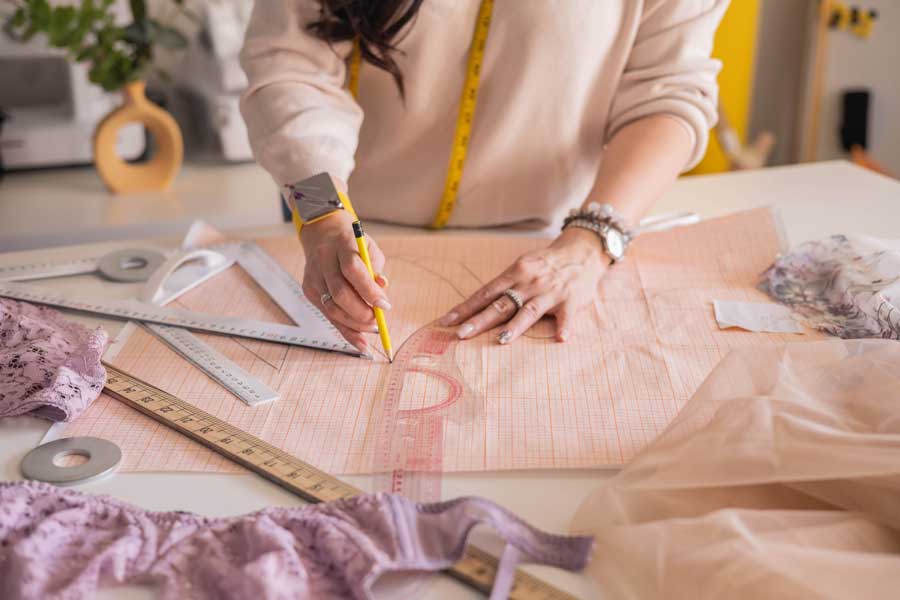
The idea of a “work triangle” has long been a cornerstone of efficient kitchen design, helping cooks move seamlessly between the sink, stove, and refrigerator. But what if that same concept could transform your sewing space? Enter the “sewing room triangle”—a practical layout strategy that connects your three most-used areas: the worktable, ironing station, and sewing machine. When thoughtfully arranged, this triangle can streamline your workflow, reduce fatigue, and make your time in the sewing room far more enjoyable.
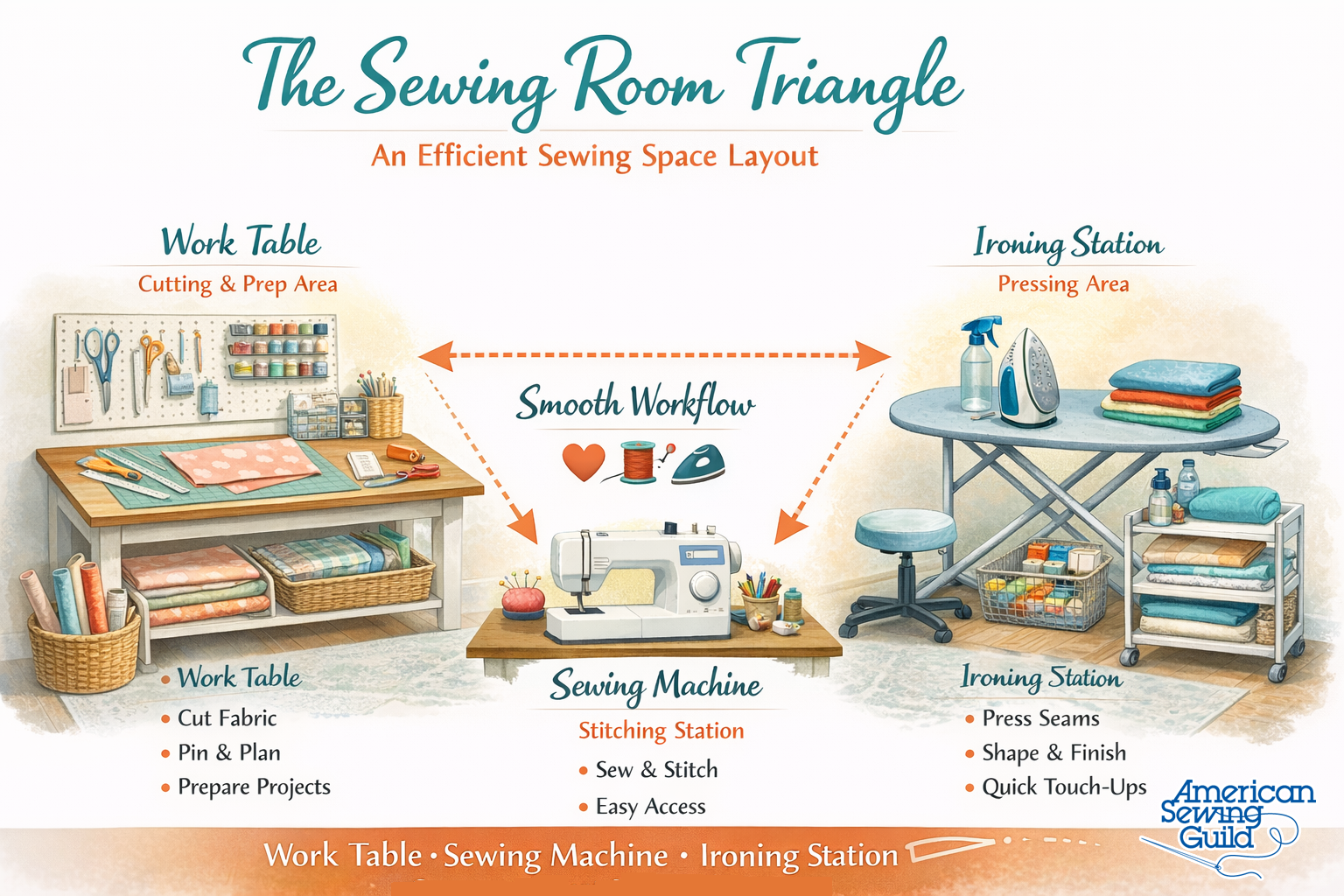
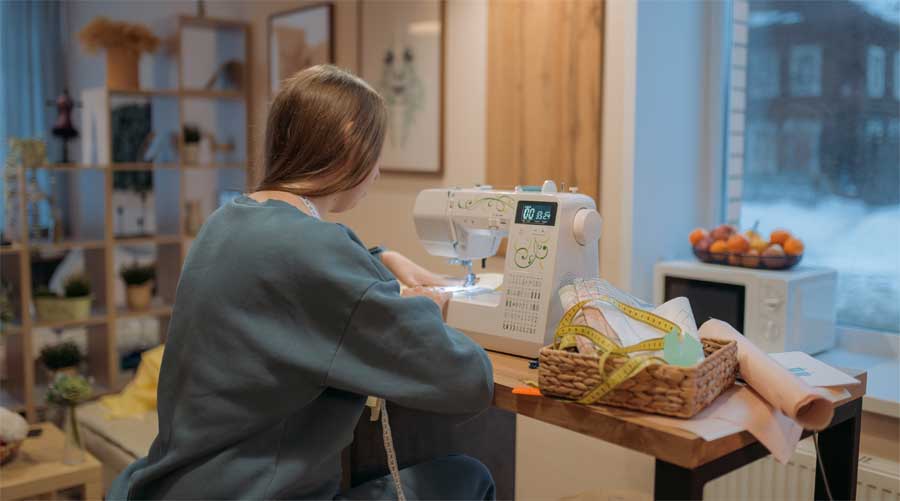
Sewing room triangle layout

At its core, sewing is a process of preparation, construction, and finishing. The work table is where everything begins. This is your cutting and planning zone—the place where fabric is laid out, patterns are pinned, and projects take shape before a single stitch is sewn. Because of its importance, your work table should be spacious, well-lit, and easily accessible. Ideally, it sits at one point of your triangle, with enough clearance around it to move freely, especially when working with larger pieces like quilts or garments.

From the worktable, the next natural step is the sewing machine—the heart of your operation and the center point of your triangle. This is where your project comes to life. Positioning your sewing machine centrally allows you to pivot easily between cutting and pressing without unnecessary steps. It should feel like your command center: comfortable seating, proper lighting, and all your essential tools within arm’s reach. Think seam ripper, scissors, pins, and thread—everything you reach for repeatedly should live here.

The third point of the triangle is the ironing station, which is often underestimated but absolutely essential. Pressing is not just a finishing step—it’s something that happens throughout the sewing process. Seams need to be pressed open, hems need shaping, and fabric often needs smoothing before it ever reaches the needle. Placing your ironing station within a few steps of your sewing machine ensures you won’t skip this critical step out of inconvenience. And let’s be honest—when the iron is too far away, it’s very tempting to say, “That’s good enough,” even when we know better.

The magic of the sewing room triangle lies in proximity and flow. Each point should be close enough to move between them with just a few steps, but not so cramped that you feel boxed in. Imagine a gentle rotation: cut at the table, sew at the machine, press at the ironing station, then back again. This circular workflow minimizes backtracking and keeps your momentum going, which is especially helpful during longer sewing sessions.

Of course, every sewing space is different. Whether you’re working in a dedicated room, a shared space, or even a corner of your home, the triangle can be adapted to fit your needs. In smaller spaces, the triangle may be tighter, with stations doubling up—for example, a pressing mat on your worktable or a fold-down ironing board near your machine. In larger rooms, you have the luxury of spreading out, but the principle remains the same: keep your three key areas connected in a logical, efficient way.
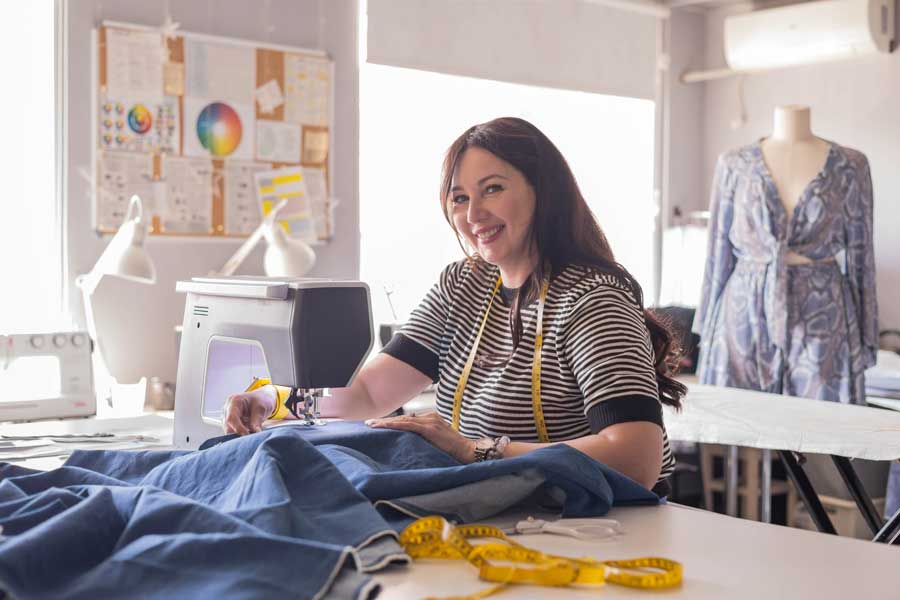
Storage also plays a supporting role in this setup. Keep supplies close to where they’re used. Fabric and patterns belong near the work table, thread and notions near the sewing machine, and pressing tools near the ironing station. This reinforces the triangle and prevents unnecessary wandering around the room searching for what you need.

Another benefit of the sewing room triangle is how it reduces physical strain. Sewing often involves repetitive motions and long periods of sitting or standing. By organizing your space thoughtfully, you can cut down on excessive reaching, bending, or walking. Over time, this makes a noticeable difference in comfort and energy levels, allowing you to sew longer and with greater focus.
Perhaps most importantly, a well-designed sewing room simply feels better to work in. There’s a sense of rhythm and ease when everything is in the right place. Instead of interrupting your creative flow to hunt for tools or navigate around obstacles, you can stay immersed in your project from start to finish.

The sewing room triangle isn’t about perfection—it’s about intention. Even small adjustments, like moving your ironing board closer or rethinking the placement of your machine, can have a big impact. Take a look at your current setup and consider how you move through your space. Are you taking extra steps? Skipping important processes because they’re inconvenient? A few thoughtful changes could transform not just your workspace, but your entire sewing experience.

In the end, sewing should be a joy, not a juggling act. By embracing the sewing room triangle, you create a space that works with you, not against you—one where creativity flows as smoothly as the thread through your machine.


Our thanks to Mary K. from the Northern Virginia ASG chapter for the inspiration for this article!
Tagged With: sewing room organization, sewing room tips

April 10, 2026

Shirr Delight

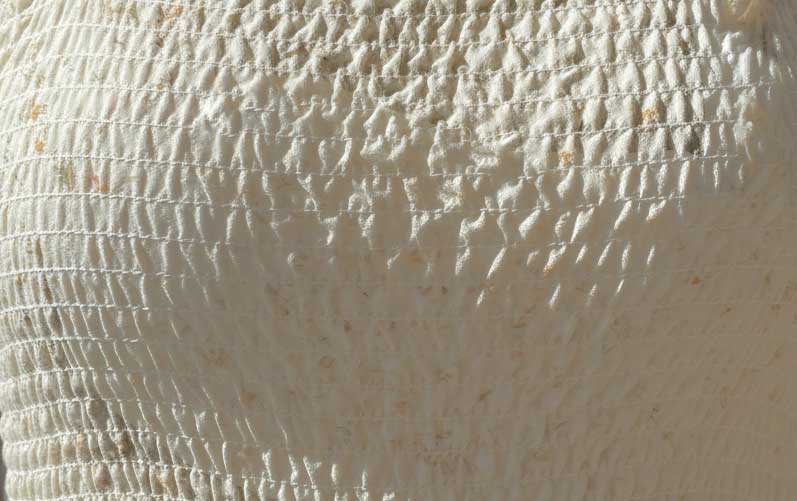
If you’ve long admired those form-fitting elasticized dresses and wondered how it was done, the answer is easy—check out elastic thread.

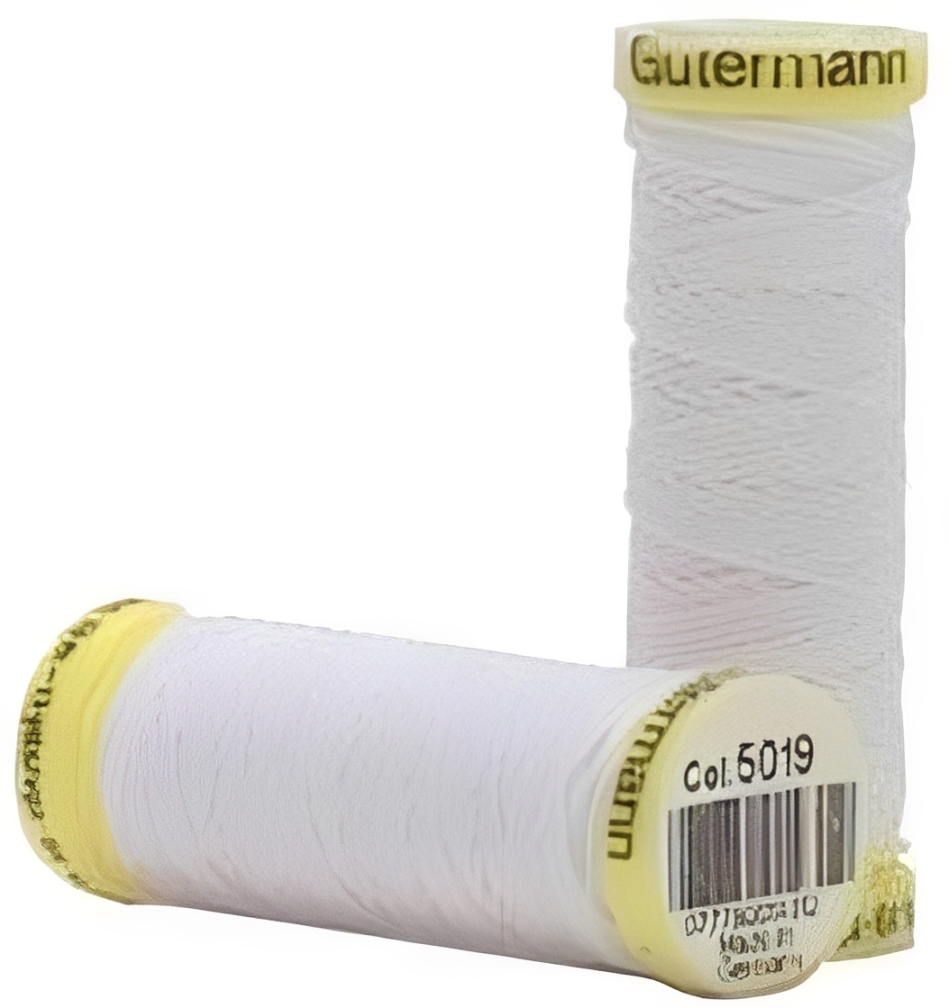
Elastic thread, a fine stretchy strand, is available in black and white, and it’s thicker than regular sewing thread. Do not confuse elastic thread with elastic cord—the latter is designed to be sewn over, not used in the bobbin.

Buy on Amazon or from your favorite retailer.

Pattern/Fabric Selection

If your pattern calls for other types of elastic, you’re likely set already, but if there’s no hint of puckering up on the original design, it’s best to choose a different pattern that has fullness built into it for the shirring. Elastic thread will draw up an area about 1/3 of its original size, so fabric has to be allowed for that shrinkage.

Shirring can be used on entire bodice areas, waistlines, cuffs, shoulder areas and necklines, or as a band along upper arm areas to shape a full sleeve.

This shirring technique works best on lightweight fabrics—the lighter, the better fullness you’ll get. Look for voile, lawn, lightweight silks, gauze, etc.

Pucker up

Hand wind the elastic thread on the machine bobbin without stretching it. Avoid the temptation to use the bobbin winder on your machine, as that will put unneeded tension on the thread during the winding process.

Thread the elastic through the bobbin tension like normal thread. No need to adjust the bobbin tension.

Thread the top of the machine with regular sewing thread in a color that matches the project. Pull both thread ends under the presser foot before sewing.

Using a removable marker, draw parallel lines on the fabric right side about an 1/4”-1/2” apart and extending into the seam allowances on both ends. At the same time, draw the same onto some fabric scraps for testing. If you’re working with a stripe, plaid or check, use the patterning lines for spacing the stitching rows.

Testing 1, 2, 3

Set the machine for a slightly longer than average straight (4mm). Sew along a marked line (without backtacking), and see how much the fabric draws up. Repeat for several parallel lines, as you won’t see much shirring until you’ve stitched multiple rows. If it’s not much, try tightening the top thread tension and restitch. You may need several adjustments to get the finished look you want.

Note that stitching multiple rows with elastic thread are essential to judging “the look.”

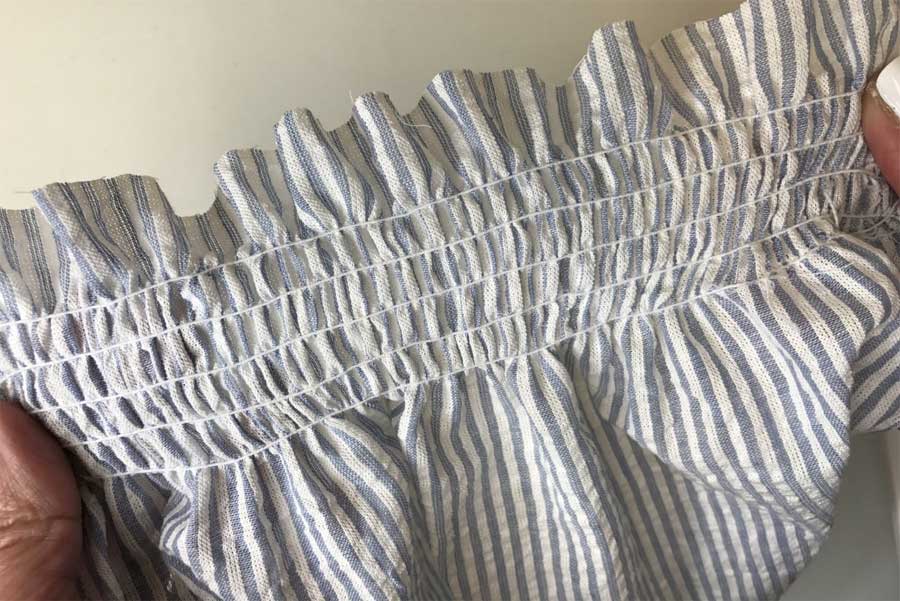
Underside of shirring. Image compliments of Bernina.

The Real Deal

Once you get the look you like, stitch on the marked lines on your actual project. It’s important that you’re always stitching on flat fabric, so hold the fabric taut as you stitching to avoid stitching over any already shirred areas.

If you’re still not getting the amount of puckering you want, grab ahold of the elastic thread ends and pull up slightly to adjust the fullness to the size needed.

If you run out of elastic mid-way across your shirring area, leave a tail of top thread, pull it to the back and tie off with the elastic thread end. Then reload a new bobbin and start again where you left off, tying threads together at the beginning area.

Finishing up

Once all your shirring rows are stitched, adjust the fullness as needed for a consistent look. When you have the look and fit you want, tie off all the elastic thread ends securely within the seam allowance. For a bit of extra security, thread the machine with regular thread and stitch across the ends within the seam allowance.

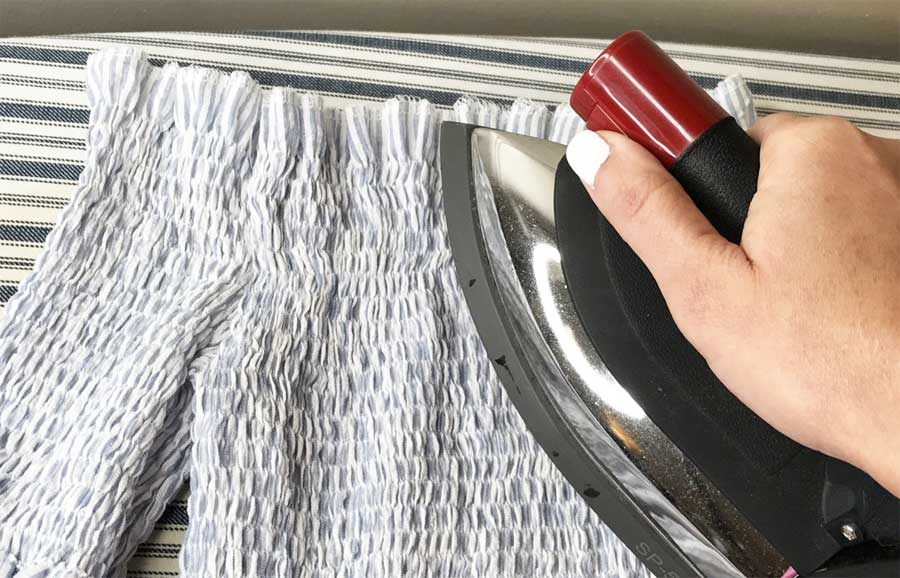
To set the fullness, lightly steam-press the shirred area. Simply hover the iron over the stitched area—do not put the iron on the fullness folds.

Lightly steam the finished shirring. Image compliments of Bernina.

~Linda Griepentrog is the owner of G Wiz Creative Services and she does writing, editing and designing for companies in the sewing, crafting and quilting industries. In addition, she escorts fabric shopping tours to Hong Kong. She lives at the Oregon Coast with her husband Keith, and three dogs, Yohnuh, Abby, and Lizzie. Contact her at gwizdesigns@aol.com.

April 3, 2026

What Being an ASG Member Means

Many of you are reading your very first issue of Notions. Others have just received their first membership renewal notice. Some of the former group may be wondering how to really plug in and benefit from their membership in ASG. Some of the latter may be questioning whether they’ve received what they expected from their membership and if they really want to renew. I’d like to address both groups.

I’m not going to tell you about the fantastic educational programs  and active virtual community and special discounts, though those are very important benefits. I’m not going to appeal to your charitable nature by pointing out the incredible impact ASG members make on their local communities by sharing their talent and skills. I won’t even remind you that your dues provide a voice to the home sewing industry that has resulted in so many great partnerships and benefits to the home sewing enthusiast.

No, what I want to talk to you about is the reason most of us really join ASG and how we can be sure we get what we really want from it. Long before Madonna came on the scene, we sewers knew that “girls just want to have fun!” And sewing girls just want to have fun with sewing friends.

We want sewing friends who can offer suggestions for turning that rotary cutter slip-up into a design element, help us chose a flattering pattern, offer that yard of peach silk we desperately need, and show the appropriate appreciation for our latest creation. We want sewing friends who will love to visit fabric stores with us, drive all night through pouring rain to get to Puyallup by morning, and most especially, fall on their sword before ever telling anyone how big our thighs really are.

Ask a long-time ASG member: “What has your affiliation with ASG meant to you?” Nine times out of ten, the response you’ll hear is “I’ve made life-long friends” or “My sewing friends have become my best friends.”

What really makes me sad is when I hear people say, “I really haven’t made any friends in my group.” My response is always “What are you doing to change that?” Are you attending a neighborhood group or general meetings regularly? If so, do you arrive just after the meeting has started and bolt out the door before anyone’s out of their chair? Do you ask if anyone would like to go out to lunch afterward or grab a bite of dinner before the meetings? Do you invite others to join you for an informal fabric shop hop? Do you let others know you need a buddy to take your measurements for you? Do you offer to do the same for them? Have you tried carpooling to meetings? Your NG leader or chapter membership chair can provide you with the names and numbers of those in your area.

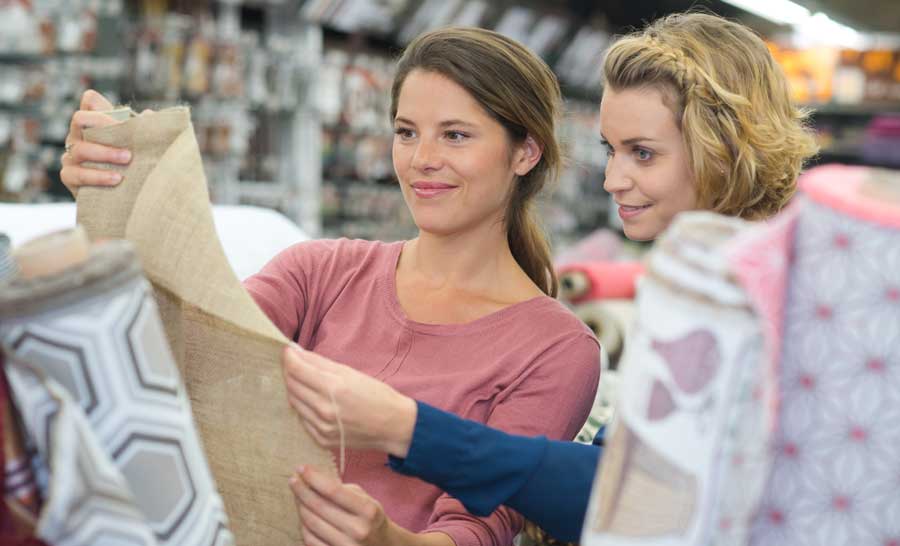
Shopping for fabric

There’s the sure-fire way to make friends fast—have you volunteered to help out in some way?

Many chapter advisory board members are first- or second year members themselves! There are some committee positions that require very little time but offer huge rewards via the opportunity to meet people in your chapter. Volunteering is the fastest route to making friends in ASG.

If you feel your chapter isn’t really making an effort to make new members feel welcome and orient them to chapter opportunities, how about volunteering to host a “New Member Tea” or luncheon or field trip? I guarantee you, in the process of helping others, you’ll also create a wonderful network of sewing friends yourself! In fact, I’m so sure of it, I’d like to invite you to drop me a line and share your experiences in expanding your sewing friends network through ASG.


~Margo Martin, Executive Director, ASG

March 27, 2026

Creative Chaos

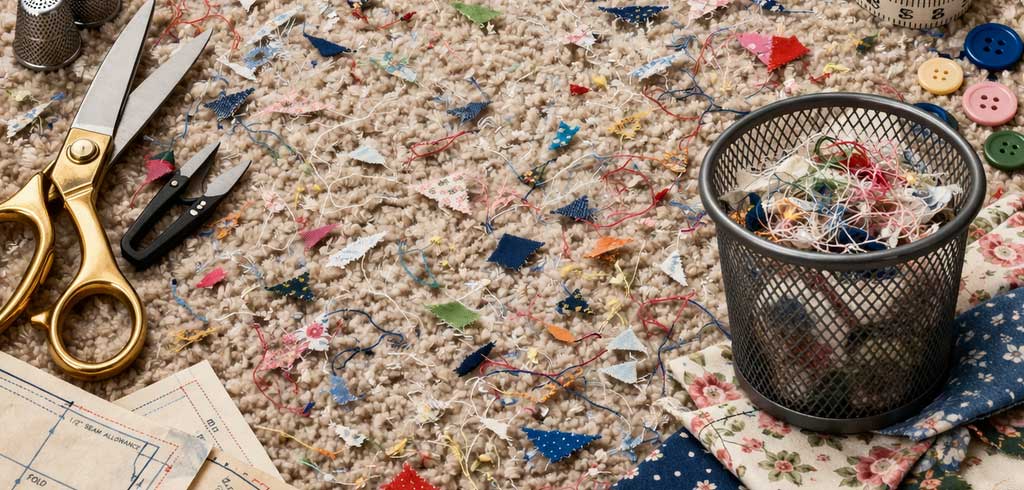
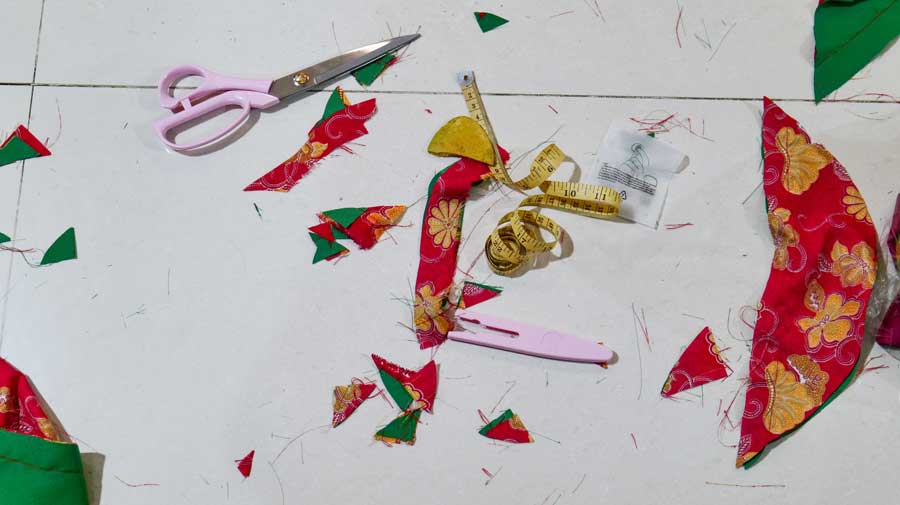
There’s a moment in nearly every sewing project that reveals more about us than we might expect. It doesn’t happen when we choose a pattern or admire a finished garment—it happens in the quiet, repetitive act of trimming seams and clipping threads. And in that moment, a simple question emerges: do you aim neatly for the wastebasket, or do those tiny snips fall freely to the floor, to be dealt with later?

 At first glance, it seems trivial. After all, what difference could a few stray threads make? But talk to any group of sewists, and you’ll quickly discover this small habit divides people into two very distinct camps—those who clean as they go, and those who embrace a little (or a lot of) creative chaos.

For the tidy sewist, the process is part of the discipline. Tools are returned to their proper place, scraps are managed, and thread clippings are carefully directed into a nearby bin. There’s a rhythm to it—sew, trim, toss—that keeps the workspace clear and the mind focused. A clean sewing area can feel calming, even meditative. It reduces distractions, prevents lost tools, and makes it easier to move from one step to the next without interruption.

There’s also a practical side. Loose threads can tangle with tools, get caught in machine mechanisms, or transfer onto garments in ways that are less than ideal—especially when working with contrasting colors. For those who sew frequently or in shared spaces, staying tidy can mean less cleanup at the end of a project and a more efficient workflow overall.

And honestly? There’s something freeing about that!

Creative work isn’t always neat. In fact, some would argue that a bit of mess is a sign that something exciting is happening. Those scattered threads become a visual record of effort and movement—a kind of “thread confetti” marking each completed seam. For many sewists, stopping to clean constantly can break concentration and slow down the rhythm of making. Letting go of that pressure, even temporarily, can make the experience more enjoyable.

So which approach is better?

Of course, this approach comes with its own trade-offs. What starts as a few stray threads can quickly become a full-blown cleanup session. At the end of a long sewing day, facing a floor covered in clippings and fabric bits can feel a little overwhelming. And if you’ve ever tracked threads through the house on your socks, you know the aftermath isn’t always contained to the sewing space.

The truth is, neither is inherently right or wrong. Like many aspects of sewing, it comes down to personal preference, workflow, and even the type of project you’re working on. Some sewists find that a tidy space helps them think clearly and work efficiently. Others thrive in a more relaxed, less structured environment where creativity takes the lead.

Many people even find themselves somewhere in between. You might be meticulous when working with delicate fabrics or detailed garments, but far more relaxed during casual or experimental projects. Or perhaps you let things slide during an intense sewing session, then reset your space at the end of the day. These hybrid approaches often strike a balance between maintaining focus and keeping the workspace manageable.

If you’re looking to shift your habits one way or the other, small adjustments can make a big difference. Keeping a wastebasket within easy reach—or even attaching a small thread catcher to your sewing table—can make tidying up feel effortless. On the other hand, if you tend to interrupt your flow too often to clean, giving yourself permission to “make a mess now, clean later” can help you stay in the creative zone longer.

But then there’s the other camp—the “I’ll clean it up later” sewists. These are the makers who get deeply immersed in the creative process, where momentum matters more than maintenance. When inspiration strikes, the last thing they want to do is pause mid-flow to aim thread clippings into a bin. Instead, they snip and keep going, letting the floor (or table, or lap) collect the evidence of their progress.

It’s also worth remembering that sewing is, at its core, a personal and creative practice. The way you manage your space is just one part of that. Whether your sewing area is spotless or sprinkled with thread clippings, what matters most is that it supports your process and makes you want to keep creating.

So the next time you reach for your scissors and snip a thread, take a moment to notice what you do next. Do you aim for the wastebasket with practiced precision, or let it fall without a second thought?

Whichever camp you fall into, you’re in good company. And chances are, every sewist has been on both sides at one time or another—because sometimes, the floor really does become part of the workflow.


~American Sewing Guild

March 20, 2026

Sewing with Handwovens

If you’ve traveled to a faraway place and returned with a wonderful piece of handwoven fabric, or you know a weaver who has created some special yardage, you may just be a bit hesitant to cut into it.

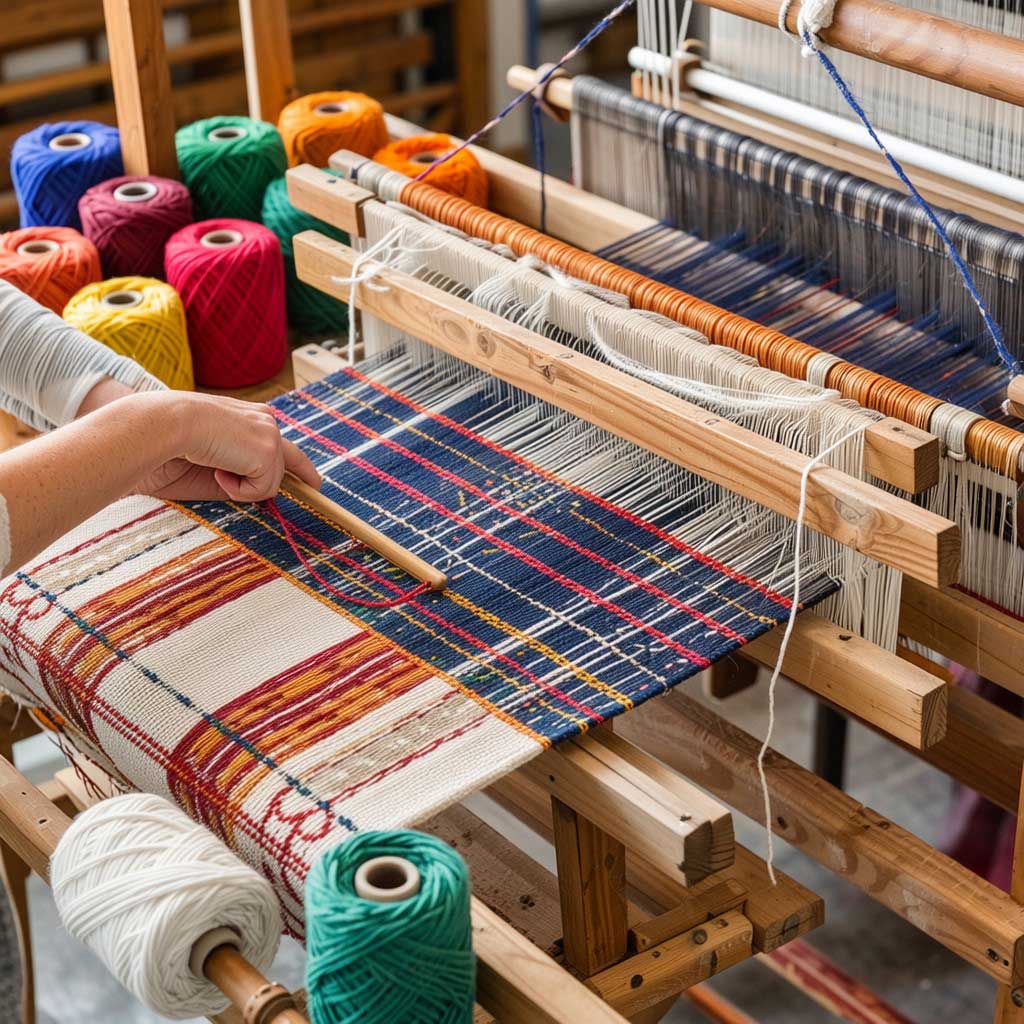
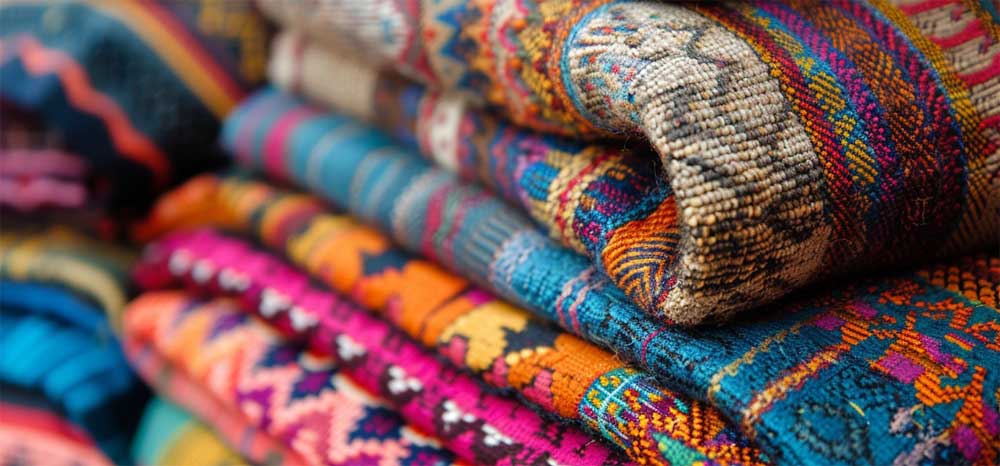
Handwoven fabric display

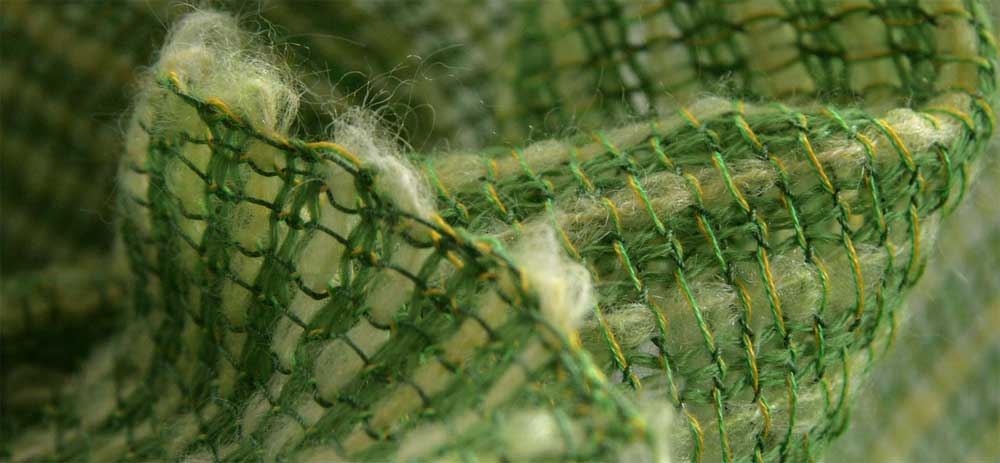
The term handwoven simply means that a person did the weaving, not an automated machine. Because of that there may be some inconsistencies in the weave or patterning, and it’s likely that the fabric has a more unique hand than its commercially finished cousins. It may also be narrower, depending on the loom width.

Handwovens can vary in appearance just like their commercially made counterparts, depending on the fiber and weaving process, and range from stiff or bulky made from wools to very lightweight and drapeable woven from fine linens.

Sewing with handwovens isn’t all that different than sewing with a comparable commercial fabric, but these tips can help make your sewing/cutting adventure less traumatic.

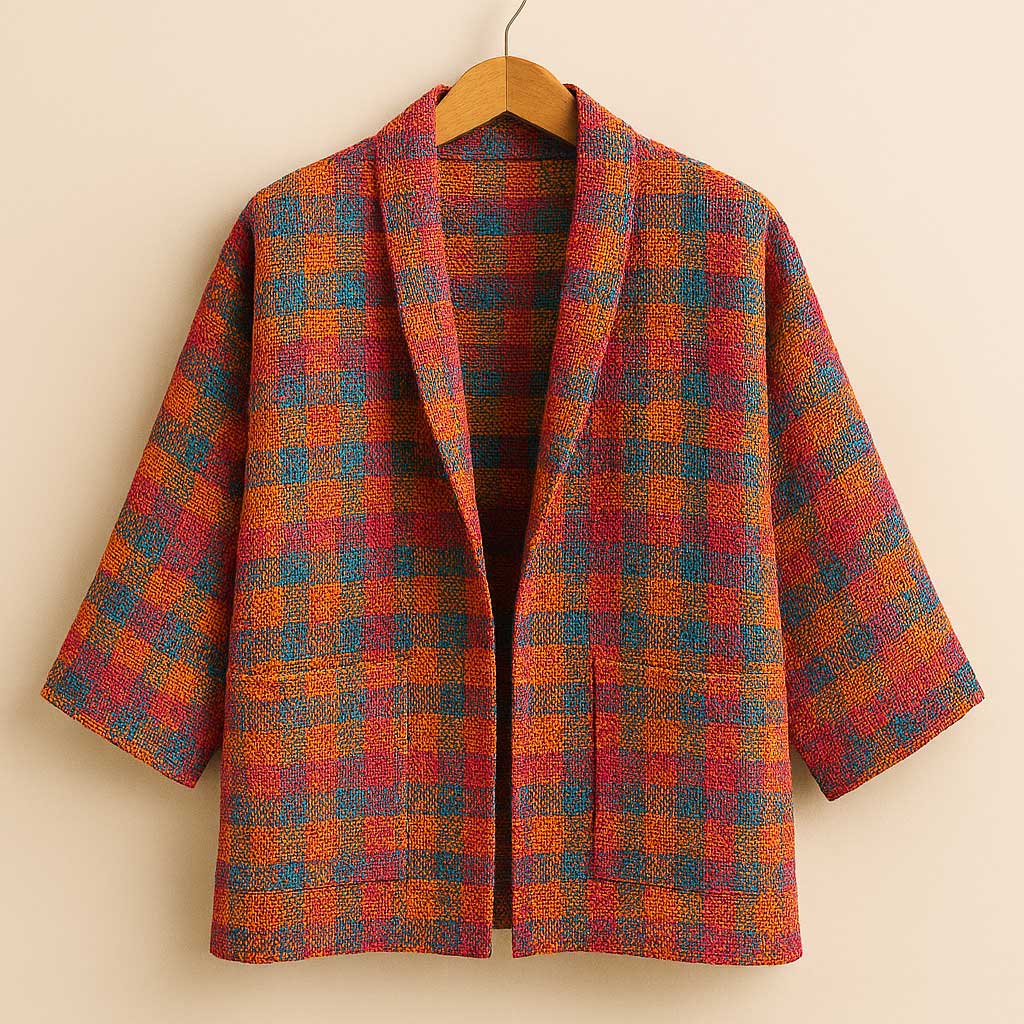
Jacket made with handwoven fabric

Select a pattern with simple lines. Let the fabric be the focal point. Look for designs with fewer details, like darts, seams, etc. if your fabric has prominent designs woven in or a stiffer hand. Some companies make patterns especially designed for handwoven fabrics, such as www.mekongrivertextiles.com, www.weaversew.com/shop/sewing-patterns.html, or etsy.com/uk/shop/getweaving.

Fit your garment pattern before you sew. Some handwovens are fragile, others are bulky, and unsewing seams isn’t recommended as it may damage the fibers.

Pretreat the fabric like you plan to care for the finished garment. Handwovens will often shrink more than commercially produced fabrics due to the lack of finishing processes. Better to have that happen before construction. Pretreating will also help close up looser weaves.

Simple dress made with handwoven fabric

Check the fabric width. Many handwovens are narrower than commercially produced fabrics due to the nature of the looms they’re created on. If the pattern you choose requires pieces wider than your fabric, you’ll need to cut the pattern and add seam allowances to accommodate the narrower yardage. A test layout is advised to be sure you have adequate fabric, given a narrower width.

Consider the unique characteristics of your fabric piece. Are there interesting selvages that can be used decoratively or as seam finishes? Are both sides presentable, so you can consider single-layer construction techniques? Would the loose weave of the fabric look great as fringe for an edge finish? Are there any flaws in the fabric? Is there a design repeat to match? Some handwovens have no pattern repeat, creating asymmetry.

Cut pieces on a single layer and stabilize. If your fabric is the least bit squirmy (as opposed to tightly woven), it’s a good idea to cut pieces on a single layer for better control. Trace the pattern piece onto the wrong side of the fabric, then use narrow strips of lightweight fusible interfacing to stabilize the edges before you cut. Fuse the strips along the drawn line, just to, or 1/8” beyond the actual seamline, depending on the amount of give the fabric has. Another option is to zigzag on the lines prior to cutting, so edges are finished and less likely to shift out of shape during sewing.

If your fabric is especially unstable, or if you’re not going with the grain for cutting, consider cutting the entire garment from lightweight fusible interfacing and fusing it to the wrong side of the yardage, then cutting around the edges. This stabilizes the entire piece for easier sewing. Note that this technique might not be appropriate for any open-weave yardage as the interfacing can show through the fabric weave. If your fabric is an open weave, consider a coordinating color of underlining for the entire garment to help hold its shape.

Handwoven fabric sample

Experiment on scraps for testing seam finishes. Because many handwovens are more loosely constructed than their machined counterparts, fraying can be an issue. Consider serging, binding, zigzagging or turning under seam edges.

Use a walking foot. This handy machine accessory helps keep seam allowances flat and feeding through the machine evenly without shifting—especially important if you’re matching woven-in patterns.

Choose an appropriately sized needle. Just as for sewing commercially produced fabric, the right needle size is important so as to not leave visible holes in the fabric. A stitch length of 2.5-3mm works well for most handwovens for seaming.

Press as you sew. Depending on the fiber content, set the iron temperature appropriately and press seams and design details as you sew. On bulky fabrics, flatten the seams using steam and a clapper.

Creations from handwoven fabrics are great conversation pieces, so be prepared for the admiration of sewing (and non-sewing) friends.


~Linda Griepentrog is the owner of G Wiz Creative Services and she does writing, editing and designing for companies in the sewing, crafting and quilting industries. In addition, she escorts fabric shopping tours to Hong Kong. She lives at the Oregon Coast with her husband Keith, and three dogs, Yohnuh, Abby, and Lizzie. Contact her at gwizdesigns@aol.com.

  • 1
  • 2
  • 3
  • …
  • 89
  • Next Page »

Become a Member

Join the only national organization dedicated to Advancing Sewing as an Art and Life Skill.

Join Now button

Blog Article Categories

  • ASG Conference
  • Chapter Stories
  • Embroidery
  • Fitting
  • Learn to Sew
  • National Sewing Month
  • Products, Books, & Patterns
  • Projects
  • Quilting
  • Sewing
  • Sewing Techniques
  • Sewing Tips
  • Sewing Tours
  • Videos
  • Disclaimer
  • Privacy Policy

American Sewing Guild
National Headquarters
9660 Hillcroft, Suite 230
Houston TX 77096
713-729-3000 | 713-721-9230 Fax
www.ASG.org

ASG wordcloud - education, conference, discounts, videos, special offers, tours and more

Copyright © 1998–2026 · American Sewing Guild · All Rights Reserved