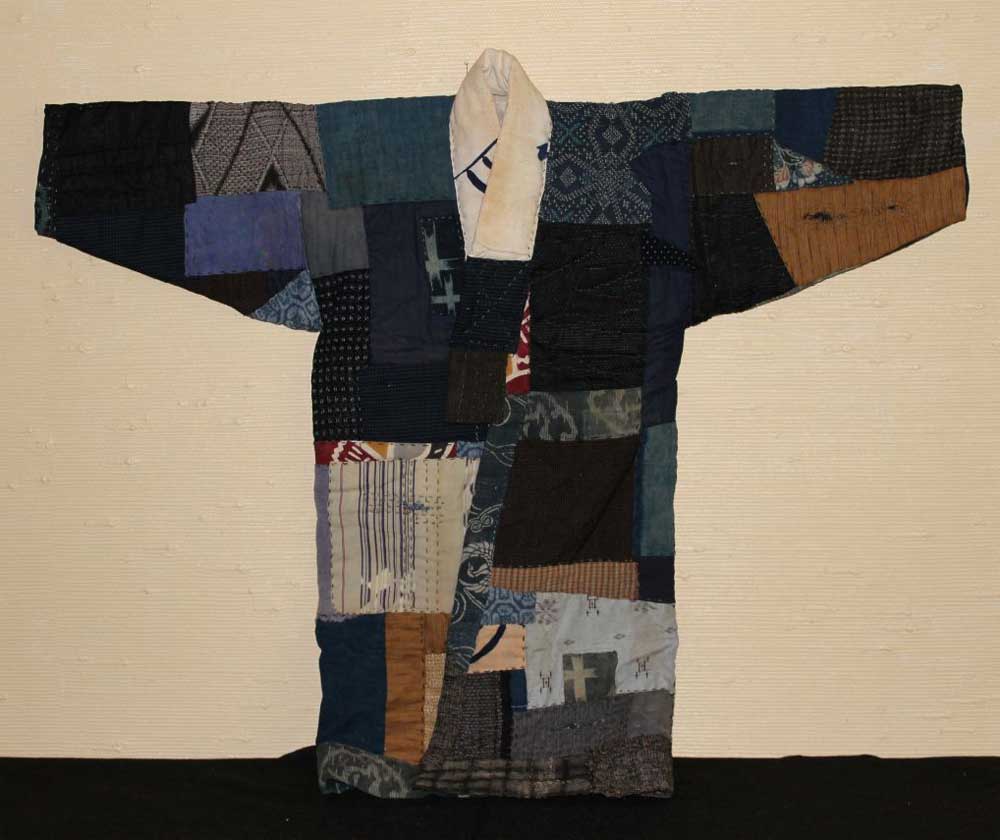
The story of Boro in Japan is the story of lives lived in extreme poverty by hardworking people who had little but still admired beauty and kept/repaired their valuable textiles—not just for years, but for generations. The word Boro means rags—tattered clothing and bedding mended, re-mended, and patched to make the fabrics usable for as long as possible.
Who were these people? Why was it so difficult for them to have good fabric? How did Boro become known around the world? What do the fabrics look like? How were they mended? What is the difference between Boro stitching and Sashiko? These are only a few of the topics June will cover in her presentation! Learn about cotton and indigo dyeing techniques, who could afford the fabrics and how societal rules governed how the poor became the last users in a long chain of reuse.
Through a series of slides, you will see examples of hundred-year-old indigo-dyed cotton with their first Boro patches, so the hand-stitching clearly shows. Then look at kimono and bedding full of patches and handed down through at least two generations of the same family. Listen to stories of their difficult but happy lives.
Finally, we’ll look at some of June’s interpretations of the Boro-style, giving fresh life to antique fabric, as she shares her love of Japan and its people. There will be lots of time for your questions and comments.
June Colburn
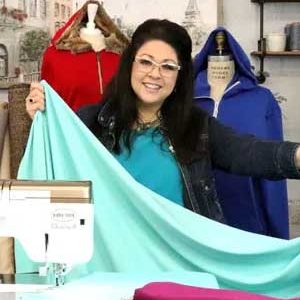
June is a textile artist, designer, and the creator of June Colburn Designs, specializing in vintage and antique Japanese fabrics, kimonos, obi, and Asian-inspired sewing patterns. She is well-known for creating commercial patterns such as Asian-inspired jackets, vests, and Simplicity sewing patterns for kimonos and haori.