When purchasing a zipper, you may notice several different types of these handy sliders. We don’t think much about them, but zippers are more complex than we know.
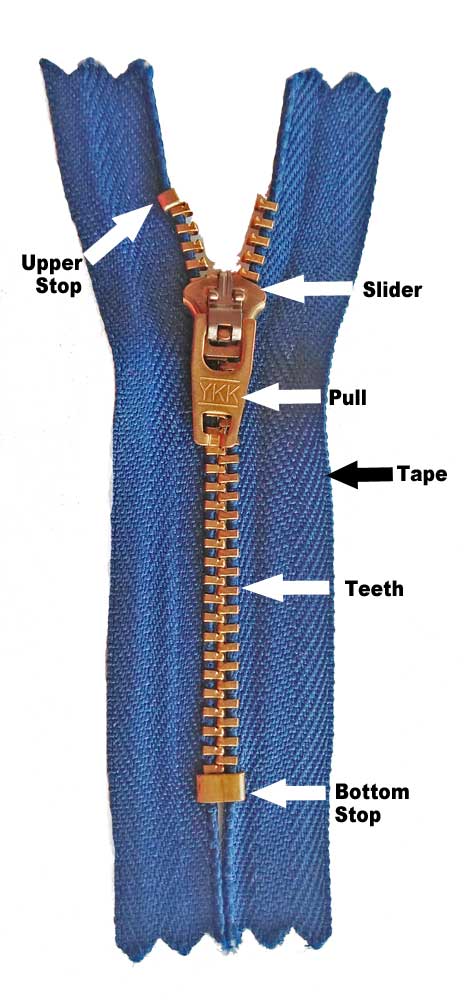
Zipper Parts
Zipper Types
- All-purpose zippers are closed at the bottom and open at the top, making them useful for plackets openings.
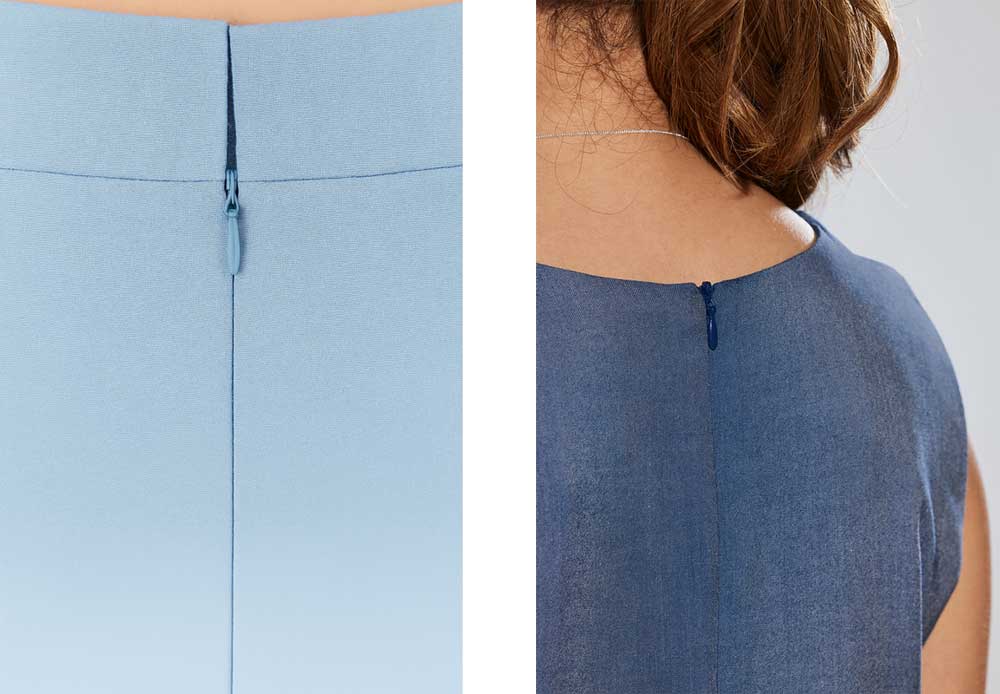
- Invisible zippers are specially made so that the coils roll under the zipper tape hiding them when inserted into a seam. Only the pull shows with proper application.
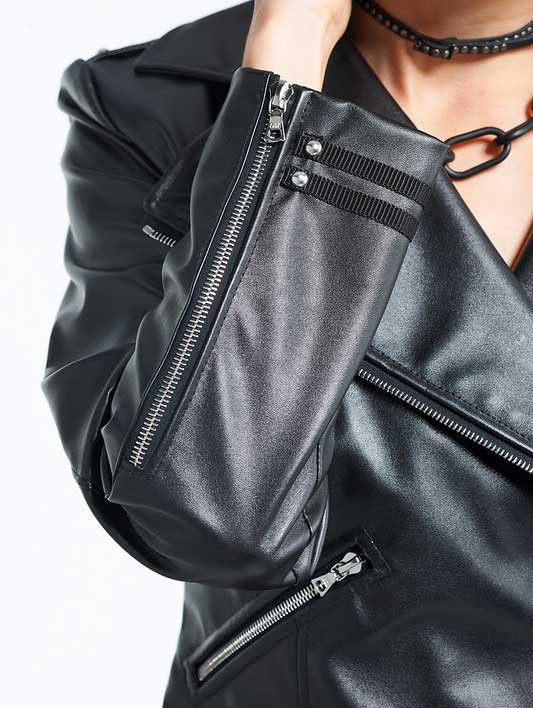
- Jacket zippers are heavier and they separate at the bottom so you can put on the garment.
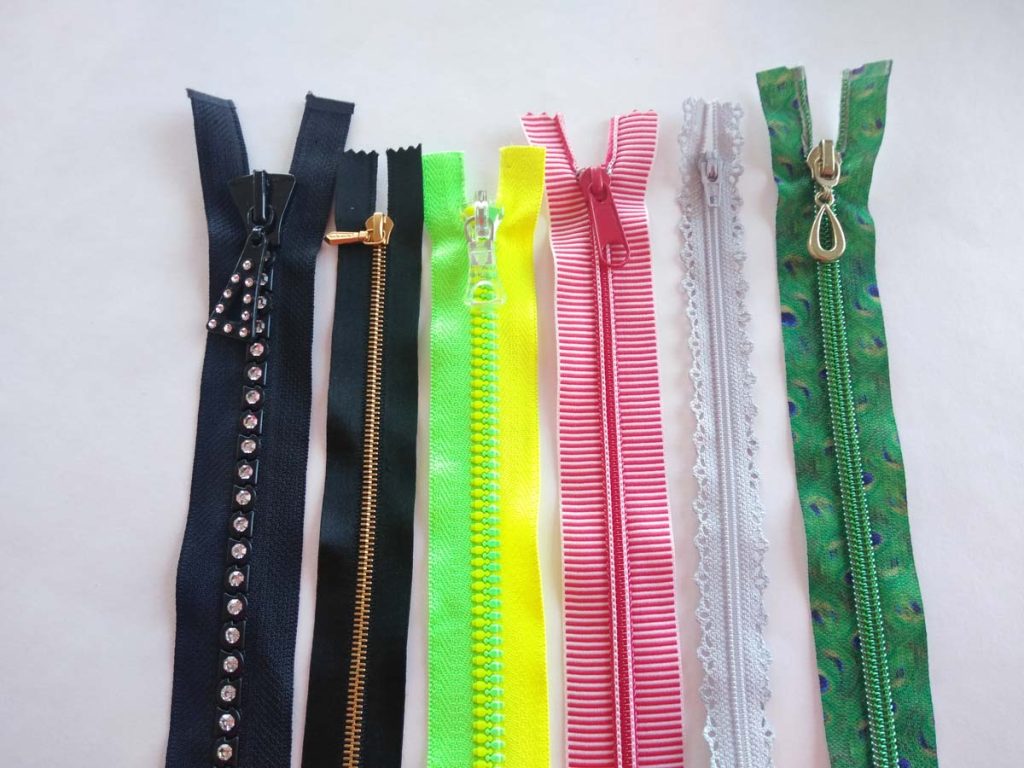
- Novelty zippers include those with die-cut tape edges like lace, novelty zipper tapes like stripes, prints, vinyl or satin; multi-color teeth, and even rhinestone teeth (2).
- Purse zippers can have one or two pulls, but are heavier weight than all-purpose ones. If the zipper has two pulls, they meet in the middle to allow for more convenient bag opening.
- Specialty zippers include those that may have waterproof coverings (for tents and outdoor gear), extra-long zippers for sleeping bags, tents, etc.; and upholstery zippers.
- Sport-weight zippers may or may not separate but are heavier than regular zippers, but not as heavy as jacket styles.
- Two-way zippers are also suitable for jackets, but they have two pulls—one opening from the top, and the other from the bottom.
Zipper Coils
- The teeth of the zipper can be metal, plastic, nylon or polyester, depending on the brand or the type of slider you’re purchasing.
- Metal zippers, often used in workwear and jeans, are difficult to shorten so be sure to purchase the proper length needed for your project.
- Molded plastic teeth are applied to the zipper tape individually, while softer nylon or polyester zipper teeth are often made from a continuous coil. The latter two can be sewn across for easy length adjustments, and they’re flexible for curved areas.
Size Matters
Zipper teeth come in various sizes and those sizes aren’t necessarily related to the width of the zipper tape to which they’re applied. The coil sizes are as expressed at numbers—#3, #5, etc. That number refers to the approximate width of the closed zipper teeth in millimeters (3).
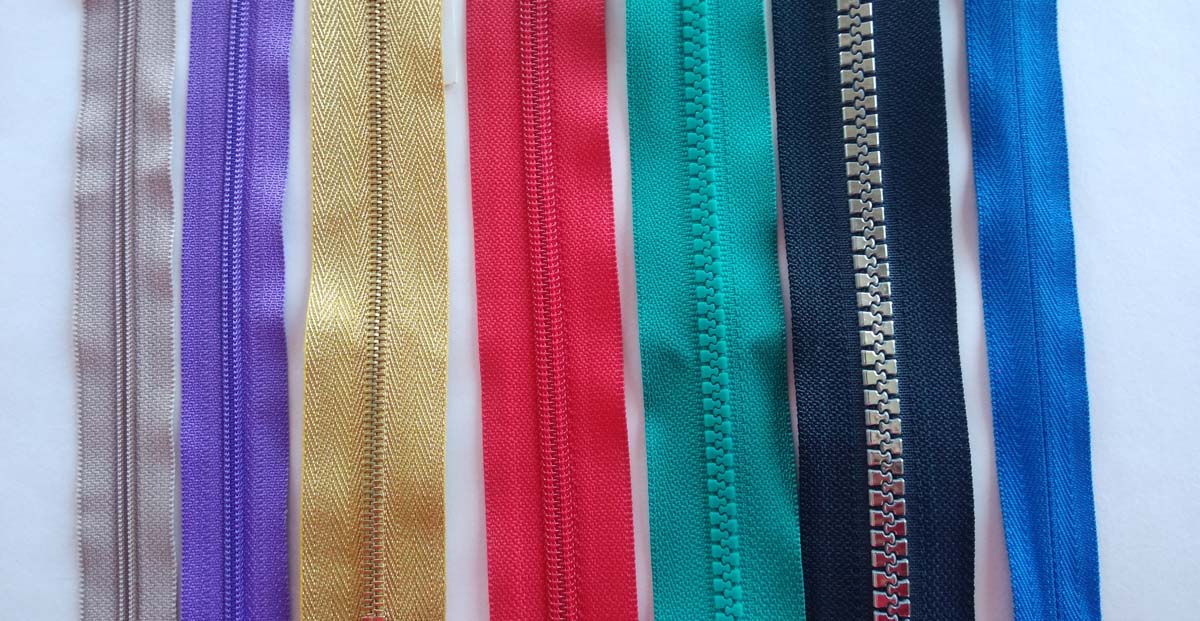
- Sizes #3-#5 are most commonly used for garment sewing, while sizes #7-#10 find their home in bags, luggage and outdoor gear.
- How do you know the zipper size? Depending on the brand, there may be a number on the underside of the zipper slider; others aren’t marked and you simply need to measure the closed coil width.
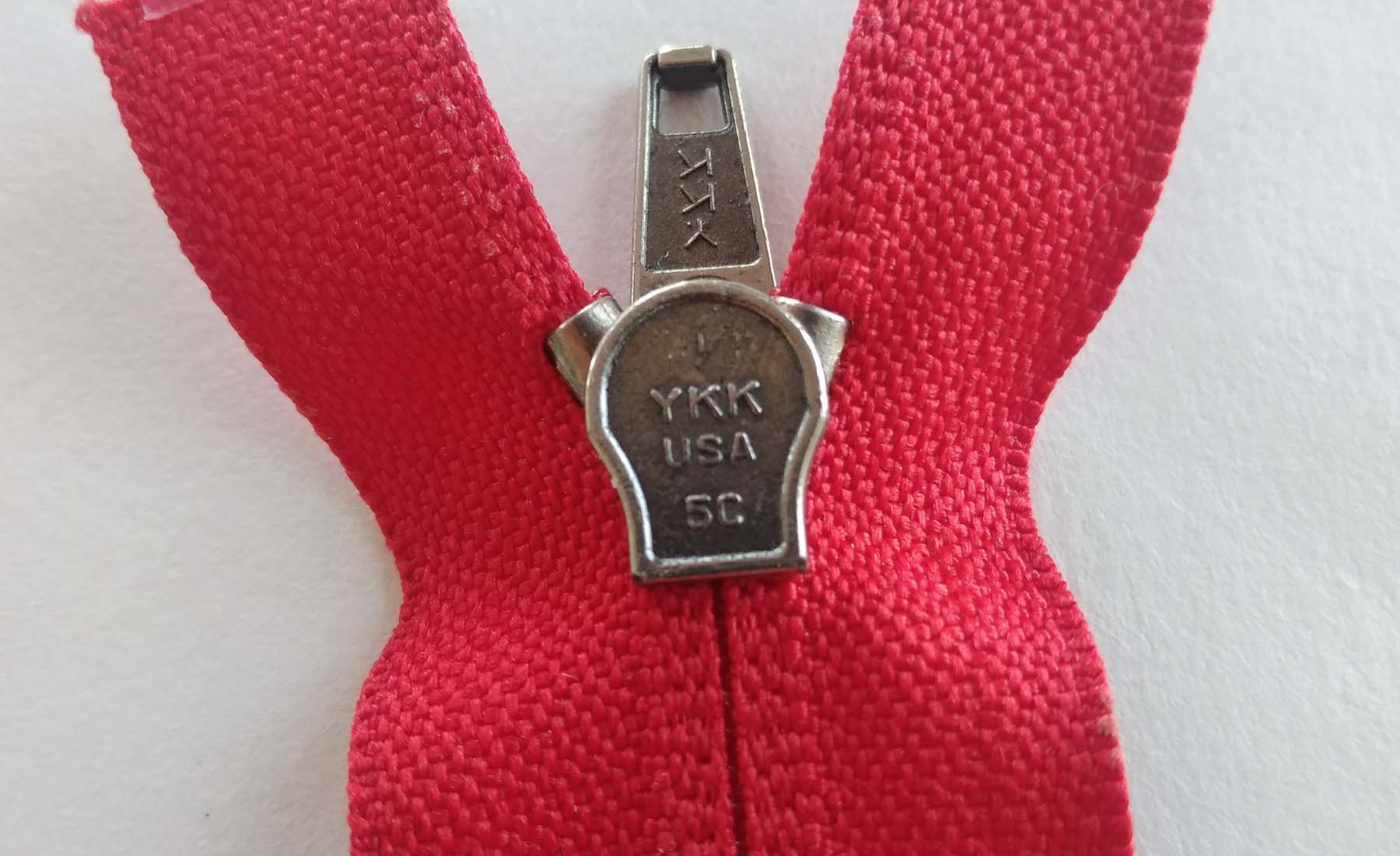
- If you’re ordering zippers online, many sellers indicate the teeth size so you have an idea of the proportion and strength to match with the intended use. Some vendors also offer a zipper color chart for specific brands.
- The length of a pre-made zipper is measured from the top stop to the bottom stop, not the tape length.
- Zippering can also be purchased by the yard to allow for customization—simply measure the length you need, and add the pull(s).
Zipper Applications
Depending on where you’re installing a zipper, the application and finished look can vary.
A centered application, as its name suggests, has fabric folds meeting in the center over the teeth.
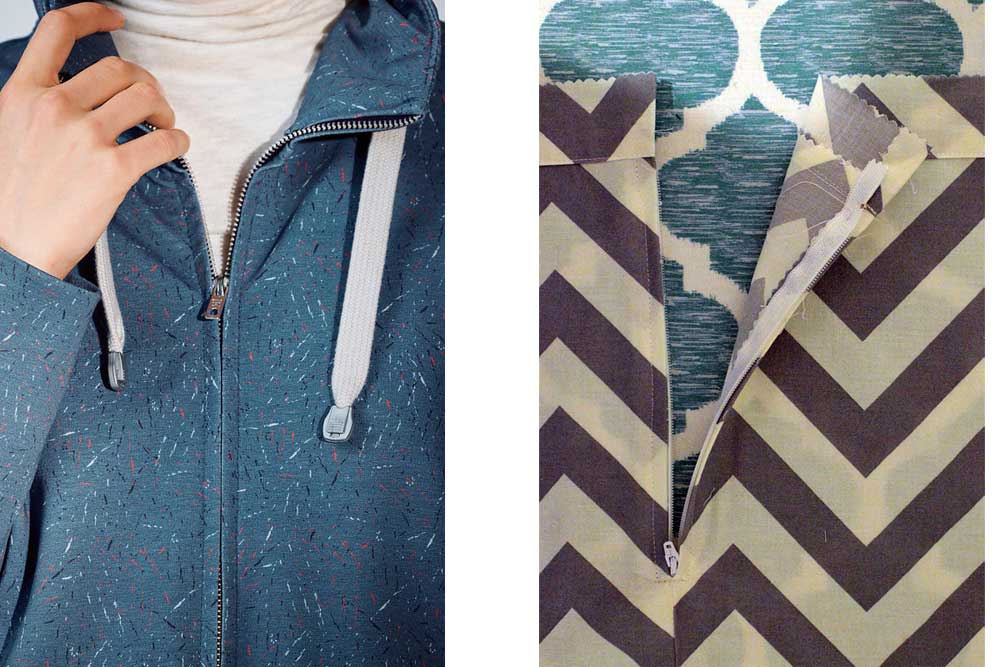
A lapped application features one side of the placket overlapping the other side to hide the zipper teeth.
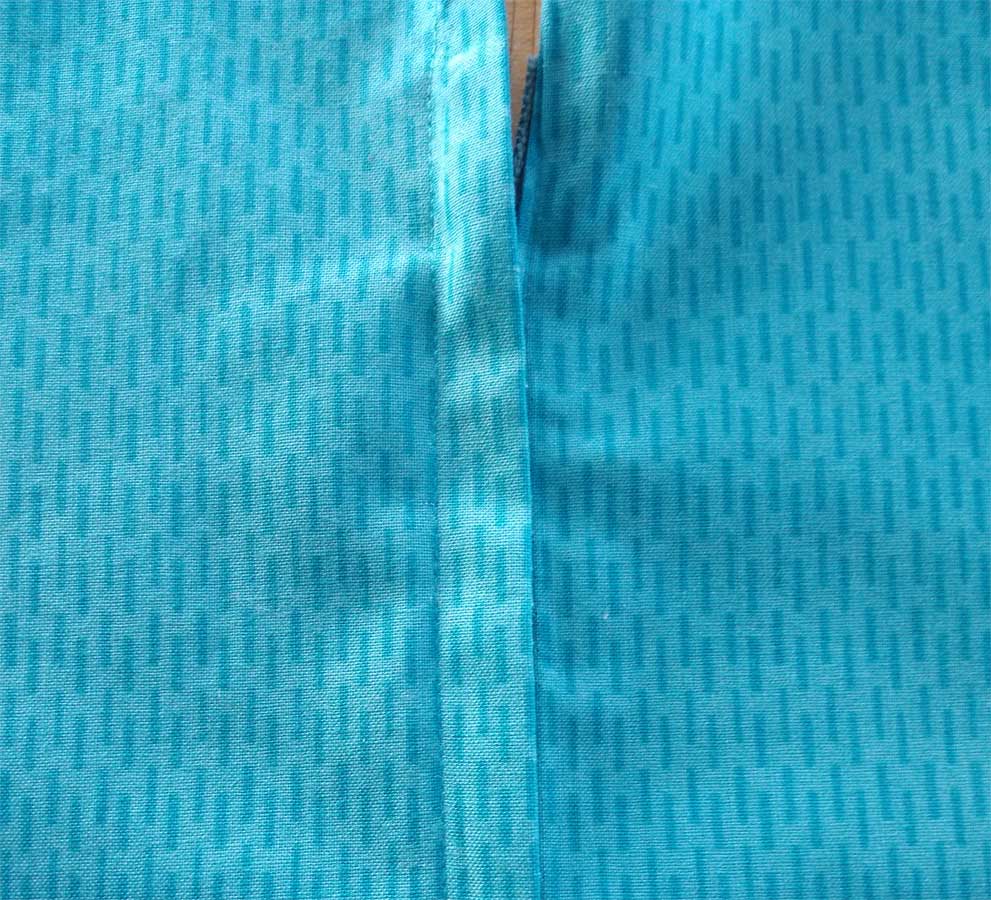
A fly-front application covers the entire zipper with a flap of fabric.
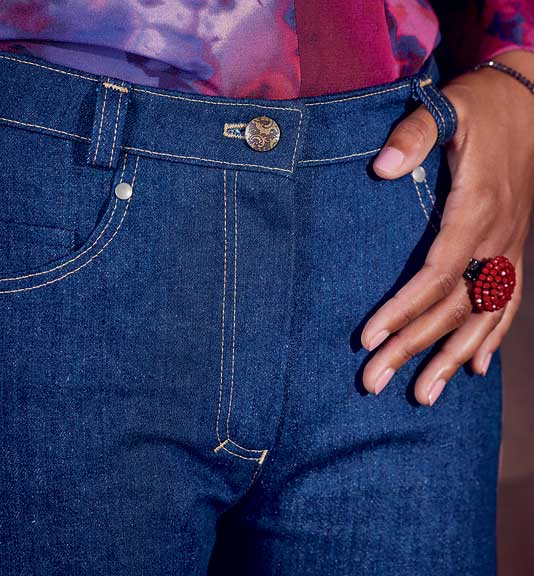
An exposed zipper showcases the zipper teeth and pull, or the entire zipper tape.
An invisible zipper application hides the entire zipper and only the pull is visible. A specific zipper is required for this look.
Note: select images provided by Bernina
~Linda Griepentrog is the owner of G Wiz Creative Services and she does writing, editing and designing for companies in the sewing, crafting and quilting industries. In addition, she escorts fabric shopping tours to Hong Kong. She lives at the Oregon Coast with her husband Keith, and three dogs, Yohnuh, Abby, and Lizzie. Contact her at gwizdesigns@aol.com.