American Sewing Guild (ASG)

Visit our blog Visit the ASG Facebook page Visit ASG on Pinterest Visit ASG's YouTube channel Visit ASG on Instagram
  • Home
  • Join ASG
    • Join Online
    • Chapter Locations
    • Member Benefits
    • Member Brochure
    • Join by Mail
  • Education & Classes
  • Resources
    • Contests & Awards
    • Giving Back
    • Hall of Fame
    • Travel and Tours
    • Measurement Chart
  • Shop
    • ASG Store
    • Chapter Products
    • Video Resources
  • Blog
  • About
    • About Us
    • Donate to ASG
    • ASG Sensitivity Statement
    • FAQ’s
    • Start a Chapter
  • Contact
  • Member Login
    • Login First!
    • Members Only
    • Leadership Only
    • Website FAQ’s
    • Logout
  •  

April 3, 2026

What Being an ASG Member Means

Many of you are reading your very first issue of Notions. Others have just received their first membership renewal notice. Some of the former group may be wondering how to really plug in and benefit from their membership in ASG. Some of the latter may be questioning whether they’ve received what they expected from their membership and if they really want to renew. I’d like to address both groups.

I’m not going to tell you about the fantastic educational programs  and active virtual community and special discounts, though those are very important benefits. I’m not going to appeal to your charitable nature by pointing out the incredible impact ASG members make on their local communities by sharing their talent and skills. I won’t even remind you that your dues provide a voice to the home sewing industry that has resulted in so many great partnerships and benefits to the home sewing enthusiast.

No, what I want to talk to you about is the reason most of us really join ASG and how we can be sure we get what we really want from it. Long before Madonna came on the scene, we sewers knew that “girls just want to have fun!” And sewing girls just want to have fun with sewing friends.

We want sewing friends who can offer suggestions for turning that rotary cutter slip-up into a design element, help us chose a flattering pattern, offer that yard of peach silk we desperately need, and show the appropriate appreciation for our latest creation. We want sewing friends who will love to visit fabric stores with us, drive all night through pouring rain to get to Puyallup by morning, and most especially, fall on their sword before ever telling anyone how big our thighs really are.

Ask a long-time ASG member: “What has your affiliation with ASG meant to you?” Nine times out of ten, the response you’ll hear is “I’ve made life-long friends” or “My sewing friends have become my best friends.”

What really makes me sad is when I hear people say, “I really haven’t made any friends in my group.” My response is always “What are you doing to change that?” Are you attending a neighborhood group or general meetings regularly? If so, do you arrive just after the meeting has started and bolt out the door before anyone’s out of their chair? Do you ask if anyone would like to go out to lunch afterward or grab a bite of dinner before the meetings? Do you invite others to join you for an informal fabric shop hop? Do you let others know you need a buddy to take your measurements for you? Do you offer to do the same for them? Have you tried carpooling to meetings? Your NG leader or chapter membership chair can provide you with the names and numbers of those in your area.

Shopping for fabric

There’s the sure-fire way to make friends fast—have you volunteered to help out in some way?

Many chapter advisory board members are first- or second year members themselves! There are some committee positions that require very little time but offer huge rewards via the opportunity to meet people in your chapter. Volunteering is the fastest route to making friends in ASG.

If you feel your chapter isn’t really making an effort to make new members feel welcome and orient them to chapter opportunities, how about volunteering to host a “New Member Tea” or luncheon or field trip? I guarantee you, in the process of helping others, you’ll also create a wonderful network of sewing friends yourself! In fact, I’m so sure of it, I’d like to invite you to drop me a line and share your experiences in expanding your sewing friends network through ASG.


~Margo Martin, Executive Director, ASG

March 27, 2026

Creative Chaos

There’s a moment in nearly every sewing project that reveals more about us than we might expect. It doesn’t happen when we choose a pattern or admire a finished garment—it happens in the quiet, repetitive act of trimming seams and clipping threads. And in that moment, a simple question emerges: do you aim neatly for the wastebasket, or do those tiny snips fall freely to the floor, to be dealt with later?

 At first glance, it seems trivial. After all, what difference could a few stray threads make? But talk to any group of sewists, and you’ll quickly discover this small habit divides people into two very distinct camps—those who clean as they go, and those who embrace a little (or a lot of) creative chaos.

For the tidy sewist, the process is part of the discipline. Tools are returned to their proper place, scraps are managed, and thread clippings are carefully directed into a nearby bin. There’s a rhythm to it—sew, trim, toss—that keeps the workspace clear and the mind focused. A clean sewing area can feel calming, even meditative. It reduces distractions, prevents lost tools, and makes it easier to move from one step to the next without interruption.

There’s also a practical side. Loose threads can tangle with tools, get caught in machine mechanisms, or transfer onto garments in ways that are less than ideal—especially when working with contrasting colors. For those who sew frequently or in shared spaces, staying tidy can mean less cleanup at the end of a project and a more efficient workflow overall.

And honestly? There’s something freeing about that!

Creative work isn’t always neat. In fact, some would argue that a bit of mess is a sign that something exciting is happening. Those scattered threads become a visual record of effort and movement—a kind of “thread confetti” marking each completed seam. For many sewists, stopping to clean constantly can break concentration and slow down the rhythm of making. Letting go of that pressure, even temporarily, can make the experience more enjoyable.

So which approach is better?

Of course, this approach comes with its own trade-offs. What starts as a few stray threads can quickly become a full-blown cleanup session. At the end of a long sewing day, facing a floor covered in clippings and fabric bits can feel a little overwhelming. And if you’ve ever tracked threads through the house on your socks, you know the aftermath isn’t always contained to the sewing space.

The truth is, neither is inherently right or wrong. Like many aspects of sewing, it comes down to personal preference, workflow, and even the type of project you’re working on. Some sewists find that a tidy space helps them think clearly and work efficiently. Others thrive in a more relaxed, less structured environment where creativity takes the lead.

Many people even find themselves somewhere in between. You might be meticulous when working with delicate fabrics or detailed garments, but far more relaxed during casual or experimental projects. Or perhaps you let things slide during an intense sewing session, then reset your space at the end of the day. These hybrid approaches often strike a balance between maintaining focus and keeping the workspace manageable.

If you’re looking to shift your habits one way or the other, small adjustments can make a big difference. Keeping a wastebasket within easy reach—or even attaching a small thread catcher to your sewing table—can make tidying up feel effortless. On the other hand, if you tend to interrupt your flow too often to clean, giving yourself permission to “make a mess now, clean later” can help you stay in the creative zone longer.

But then there’s the other camp—the “I’ll clean it up later” sewists. These are the makers who get deeply immersed in the creative process, where momentum matters more than maintenance. When inspiration strikes, the last thing they want to do is pause mid-flow to aim thread clippings into a bin. Instead, they snip and keep going, letting the floor (or table, or lap) collect the evidence of their progress.

It’s also worth remembering that sewing is, at its core, a personal and creative practice. The way you manage your space is just one part of that. Whether your sewing area is spotless or sprinkled with thread clippings, what matters most is that it supports your process and makes you want to keep creating.

So the next time you reach for your scissors and snip a thread, take a moment to notice what you do next. Do you aim for the wastebasket with practiced precision, or let it fall without a second thought?

Whichever camp you fall into, you’re in good company. And chances are, every sewist has been on both sides at one time or another—because sometimes, the floor really does become part of the workflow.


~American Sewing Guild

March 20, 2026

Sewing with Handwovens

If you’ve traveled to a faraway place and returned with a wonderful piece of handwoven fabric, or you know a weaver who has created some special yardage, you may just be a bit hesitant to cut into it.

Handwoven fabric display

The term handwoven simply means that a person did the weaving, not an automated machine. Because of that there may be some inconsistencies in the weave or patterning, and it’s likely that the fabric has a more unique hand than its commercially finished cousins. It may also be narrower, depending on the loom width.

Handwovens can vary in appearance just like their commercially made counterparts, depending on the fiber and weaving process, and range from stiff or bulky made from wools to very lightweight and drapeable woven from fine linens.

Sewing with handwovens isn’t all that different than sewing with a comparable commercial fabric, but these tips can help make your sewing/cutting adventure less traumatic.

Jacket made with handwoven fabric

Select a pattern with simple lines. Let the fabric be the focal point. Look for designs with fewer details, like darts, seams, etc. if your fabric has prominent designs woven in or a stiffer hand. Some companies make patterns especially designed for handwoven fabrics, such as www.mekongrivertextiles.com, www.weaversew.com/shop/sewing-patterns.html, or etsy.com/uk/shop/getweaving.

Fit your garment pattern before you sew. Some handwovens are fragile, others are bulky, and unsewing seams isn’t recommended as it may damage the fibers.

Pretreat the fabric like you plan to care for the finished garment. Handwovens will often shrink more than commercially produced fabrics due to the lack of finishing processes. Better to have that happen before construction. Pretreating will also help close up looser weaves.

Simple dress made with handwoven fabric

Check the fabric width. Many handwovens are narrower than commercially produced fabrics due to the nature of the looms they’re created on. If the pattern you choose requires pieces wider than your fabric, you’ll need to cut the pattern and add seam allowances to accommodate the narrower yardage. A test layout is advised to be sure you have adequate fabric, given a narrower width.

Consider the unique characteristics of your fabric piece. Are there interesting selvages that can be used decoratively or as seam finishes? Are both sides presentable, so you can consider single-layer construction techniques? Would the loose weave of the fabric look great as fringe for an edge finish? Are there any flaws in the fabric? Is there a design repeat to match? Some handwovens have no pattern repeat, creating asymmetry.

Cut pieces on a single layer and stabilize. If your fabric is the least bit squirmy (as opposed to tightly woven), it’s a good idea to cut pieces on a single layer for better control. Trace the pattern piece onto the wrong side of the fabric, then use narrow strips of lightweight fusible interfacing to stabilize the edges before you cut. Fuse the strips along the drawn line, just to, or 1/8” beyond the actual seamline, depending on the amount of give the fabric has. Another option is to zigzag on the lines prior to cutting, so edges are finished and less likely to shift out of shape during sewing.

If your fabric is especially unstable, or if you’re not going with the grain for cutting, consider cutting the entire garment from lightweight fusible interfacing and fusing it to the wrong side of the yardage, then cutting around the edges. This stabilizes the entire piece for easier sewing. Note that this technique might not be appropriate for any open-weave yardage as the interfacing can show through the fabric weave. If your fabric is an open weave, consider a coordinating color of underlining for the entire garment to help hold its shape.

Handwoven fabric sample

Experiment on scraps for testing seam finishes. Because many handwovens are more loosely constructed than their machined counterparts, fraying can be an issue. Consider serging, binding, zigzagging or turning under seam edges.

Use a walking foot. This handy machine accessory helps keep seam allowances flat and feeding through the machine evenly without shifting—especially important if you’re matching woven-in patterns.

Choose an appropriately sized needle. Just as for sewing commercially produced fabric, the right needle size is important so as to not leave visible holes in the fabric. A stitch length of 2.5-3mm works well for most handwovens for seaming.

Press as you sew. Depending on the fiber content, set the iron temperature appropriately and press seams and design details as you sew. On bulky fabrics, flatten the seams using steam and a clapper.

Creations from handwoven fabrics are great conversation pieces, so be prepared for the admiration of sewing (and non-sewing) friends.


~Linda Griepentrog is the owner of G Wiz Creative Services and she does writing, editing and designing for companies in the sewing, crafting and quilting industries. In addition, she escorts fabric shopping tours to Hong Kong. She lives at the Oregon Coast with her husband Keith, and three dogs, Yohnuh, Abby, and Lizzie. Contact her at gwizdesigns@aol.com.

March 13, 2026

Matching Outfits: A Child and Her Doll

There’s something timeless and heartwarming about sewing matching outfits for a young girl and her favorite doll. For generations, sewists have delighted in creating miniature versions of garments, turning everyday sewing projects into cherished keepsakes. Whether it’s a twirly dress, a cozy set of pajamas, or a holiday outfit, coordinating clothing for a child and her doll adds an extra layer of creativity and joy to the sewing process.

Should you decide to copy a girl’s purchased outfit or a handmade one instead, you must analyze the details of each garment to determine the basic construction. For a purchased garment, study the actual garment. For dresses, look to see if the waist is high or low, if the sleeves are full or tailored, what type of neckline or collar it has, and if the skirt is gathered or A-line. For sportswear or casual clothing, determine if the waistline of the pants is placed at the actual waistline or below, and if the shirt has a collar or ribbing at the neckline.

If you have the pattern that was used for the child’s garment, look at the line drawing, not the photo. This will clarify the general shape of the clothing. Your goal is to reproduce the essence of the garment without following all the details exactly. Your doll’s garment needs to echo the basic shape, such as a high yoke dress with long straight sleeves.

Once your garment shape has been determined, look for a pattern that follows the same design lines. Don’t worry if some details are missing. Many times, they will only clutter up the smaller garment. For example, a girl’s dress may have multiple rows of pin tucks down the front of the bodice, but on the doll’s dress, no one will miss them.

One of the easiest ways to begin is by choosing a pattern specifically designed for both child and doll sizes. These patterns simplify the process by scaling design details appropriately so the doll’s version mirrors the child’s outfit.

McCalls 7707Butterick 6123Simplicity 9661

If you already have a favorite children’s garment pattern, you can adapt it for a doll by reducing the pattern pieces on a copier or printer. While this requires a little experimentation, it can be a fun challenge for experienced sewists. When scaling patterns down, remember that small garments often need simpler closures and fewer seam allowances to keep the pieces manageable.

Fabric selection plays an important role in the success of doll garments. When buying fabric for the child’s garment, purchase enough fabric to make the doll’s outfit-provided the weight of the fabric and the scale of the print are appropriate. Usually, one-half yard of fabric will be enough to make any garment for an 18″ doll. Note that if the fabric is medium- or heavyweight, it may be too heavy to use in doll clothing. Denim can vary in weight from light to heavy. Choose the lightest weight version you can find or substitute lightweight chambray that resembles the denim you want to match. Micro fleece, a thinner version of standard fleece fabric, is perfect for dolls. It drapes better and will allow a collar on a doll’s jacket to lie flat. Velvet, beautiful in a girl’s dress, is too bulky for a doll’s dress. Use velveteen instead. Lightweight cottons, lawn, and quilting cottons tend to work well because they press crisply and are easy to sew at a smaller scale.

Varsity jackets for girls are made out of heavyweight wool with leather sleeves. For dolls, go for lighter weight wool or even cotton flannel to get the same effect. Thinner, synthetic leather will resemble the real leather sleeves and keep the cost down, too.

If your girl’s special dress is ready-made, not custom-made, there are still ways to get a matching dress. If your goal is to use the same fabric, purchase a second dress in the largest size possible. If the dress has a sheer fabric overskirt, you may be able to use its hemline as the hem of the doll’s skirt. This not only eliminates the need to hem, but also insures that both garments will have the same edge finish-an added bonus if it’s a decorative one. Take all the trims off the ready-made garment, such as sequins or pearls, ruffles, and flowers. The ruffles can be narrowed, if necessary, and hopefully, other trims will be in scale for your doll’s dress. If not, take them with you to the fabric store to find similar but smaller versions.

To replicate a school uniform, use a doll’s jumper pattern with a bodice that comes to the waist or below and a pleated skirt. For the matching fabric, find extra uniforms at rummage sales or in the school’s lost and found. If there are plaids to match, you might need two uniforms.

Adding decorative details can make these projects even more special, but simplify and miniaturize the final details in your doll clothing. Use snaps instead of buttons and button holes. To eliminate fussing with tiny facings, line garment sections to the edge with a lightweight lining fabric.

Little Lizard Marquette Child and Doll 2 Pattern Bundle

Look for short separating zippers for jackets and vests. Other doll-sized notions are available, such as overall buckles with buttons, colored snaps, mini “frog” closures, and belt buckles. Eliminate any unnecessary trims, pockets, or ruffles. While a girl’s skirt may have multiple rows of ruffles, one row of ruffles on a doll’s skirt will probably suffice. Because doll clothing is so small, even tiny scraps of trim can make a big impact.

Machine embroidery looks wonderful on both girl’s and doll’s clothing. Look for designs that are scaled down for dolls. Dual-sized designs for girls and dolls are also available. Often an embroidery machine can resize and reduce a design to 20%, making it more proportional for doll clothing.

TIP: Check Etsy for matching girl and doll clothing patterns

Beyond the sewing itself, matching outfits encourage imaginative play and storytelling. A child who helps choose fabrics or trims becomes part of the creative process, making the finished garments even more meaningful. For many sewists, these projects become treasured memories—both of the sewing time spent at the machine and the smiles that come when a young girl sees her doll dressed just like her.

In the end, sewing coordinating outfits for girls and their dolls is more than just a sewing project. It’s a tradition that celebrates creativity, craftsmanship, and the simple joy of making something special by hand.


Based on a previous article by Joan Hinds and edited to contain new information. Search for books by Joan on sewing clothes for dolls on Amazon, Etsy, and other online sources.

March 6, 2026

Belt Loop Basics

Whether you’re making a garment from scratch, or modifying a ready-to-wear item, belt loops are handy design details that keep belts in place around your middle.

Belt loops can be applied as the garment is being constructed, allowing the lower raw edges to be tucked into the lower waistband seam, or they can be applied after the garment is completed.

Take a look at your favorite jeans, and you’ll likely see the belt loops attached with bar tacks at the upper and lower folded-under edges, providing a decorative detail.

There are multiple ways to make belt loops, but the function is the same.

Loop Language

The first decision is how many loops do you need. If you’re looking at jeans or other pants with a waistband, you’ll usually place belt loops at the sides, fronts and back of the garment. Some men’s pants have two or three back belt loops to hold things in place. If you’re looking to support a belt on a dress or coat, usually just using a loop at each side is sufficient as the belt isn’t holding the garment in place like it does on pants.

  • Determine the finished length of the loop. Measure the width of the belt you intend to use, then add 1” to that number. This allows enough length for finishing the ends, and a little ease for the belt thickness. Note that many jeans belt loop lower edges are positioned below the waistband seam to accommodate wider belts.
  • Multiply this length by the number of loops desired and add 1” to determine the cut length of the fabric strip.
  • Determine the desired finished width of the loop—usually ½” or less, but they can be wider. Multiply that measurement by four to determine the strip cut width.
  • Instead of sewing separate tiny loop pieces, it’s easier to sew one long strip, then cut them apart after stitching.
  • On lightweight fabrics, fuse interfacing to the back of the fabric strip before sewing the loops.
  • To construct the loops, press the strip in half matching the long raw edges. Unfold and re-press the long edges to the center, then press in half again.
  • Edgestitch both long edges, then cut the loops into the determined lengths. If you want, add a row of stitching down the middle too—a nice touch if loops are wider, or even showcase a decorative stitch.
Decorative Belt Loops (image provided by Bernina)

To apply the loops to a finished garment, press under ¼” at each end. Position the loops spanning the waistband area of the garment in the desired location, leaving a bit of ease under the loop to accommodate the belt thickness. Sew across each loop end, backstitching for security. If desired, set the machine for a bartack to secure the ends in place mimicking the look of jeans detailing.

If you’re making the garment, include the lower end of the belt loops in the waistband seaming, then tack them at the top when the waistband is completed.

Other Options

Belt loops can also be made simply using thread and a basic crochet stitch. The works well for dresses with fabric belts or sashes, where there’s little strain on the loop itself.

If you prefer not to edgestitch the loop strip, simply insert a narrow strip of fusible web to hold the pressed-under layers together.

If you’re making a lot of belt loops, check with your machine dealer to see if there’s a specific attachment for this function that folds and stitches in one operation.

Belt Loop Maker from Bernina

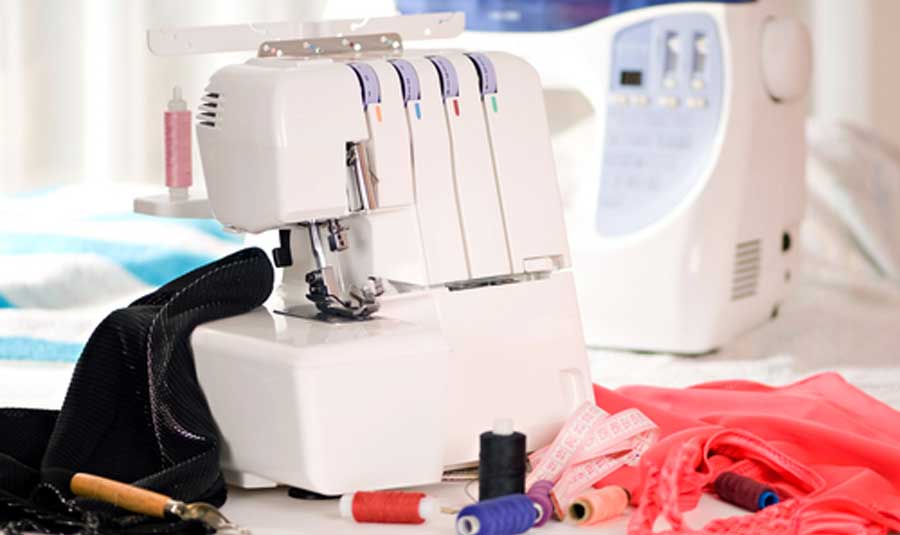
A quicker construction option is to create the loops on the serger. Cut the fabric strip twice as wide as the desired finished loop, serge the long edges, then insert a narrow piece of fusible web as you press both long edges to the wrong side. This makes a slightly lighter weight belt loop as you’re eliminating some fabric layers from the original method, making it ideal for heavy fabrics like coating or denim.


~Linda Griepentrog is the owner of G Wiz Creative Services and she does writing, editing and designing for companies in the sewing, crafting and quilting industries. In addition, she escorts fabric shopping tours to Hong Kong. She lives at the Oregon Coast with her husband Keith, and three dogs, Yohnuh, Abby, and Lizzie. Contact her at gwizdesigns@aol.com.
  • 1
  • 2
  • 3
  • …
  • 88
  • Next Page »

Become a Member

Join the only national organization dedicated to Advancing Sewing as an Art and Life Skill.

Join Now button

Blog Article Categories

  • ASG Conference
  • Chapter Stories
  • Embroidery
  • Fitting
  • Learn to Sew
  • National Sewing Month
  • Products, Books, & Patterns
  • Projects
  • Quilting
  • Sewing
  • Sewing Techniques
  • Sewing Tips
  • Sewing Tours
  • Videos
  • Disclaimer
  • Privacy Policy

American Sewing Guild
National Headquarters
9660 Hillcroft, Suite 230
Houston TX 77096
713-729-3000 | 713-721-9230 Fax
www.ASG.org

ASG wordcloud - education, conference, discounts, videos, special offers, tours and more

Copyright © 1998–2026 · American Sewing Guild · All Rights Reserved