Walk through any clothing store, and you’ll notice that many of today’s garments combine knit and woven fabrics. A jacket may feature knit side panels for comfort, a blouse might pair a woven front with a knit back, or a dress could use stretch knit sleeves with a woven bodice. These thoughtful combinations offer the best of both worlds—structure where you want it and flexibility where you need it.
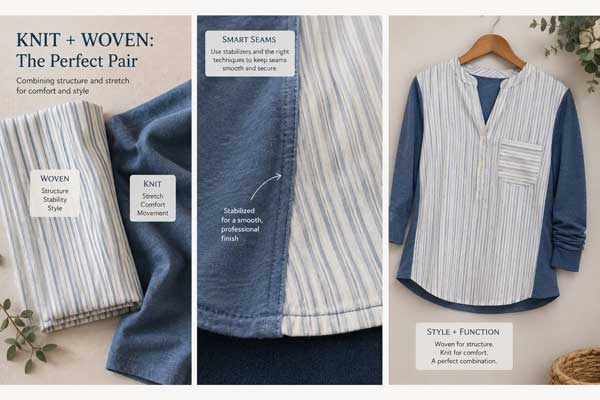
For home garment sewers, however, combining fabrics with different characteristics can sometimes be intimidating especially when one fabric stretches while the other doesn’t. One may drape fluidly while the other holds its shape. The secret to success isn’t avoiding these pairings—it’s understanding how each fabric behaves and designing your project so they work together rather than against each other.
Start with Compatible Fabrics
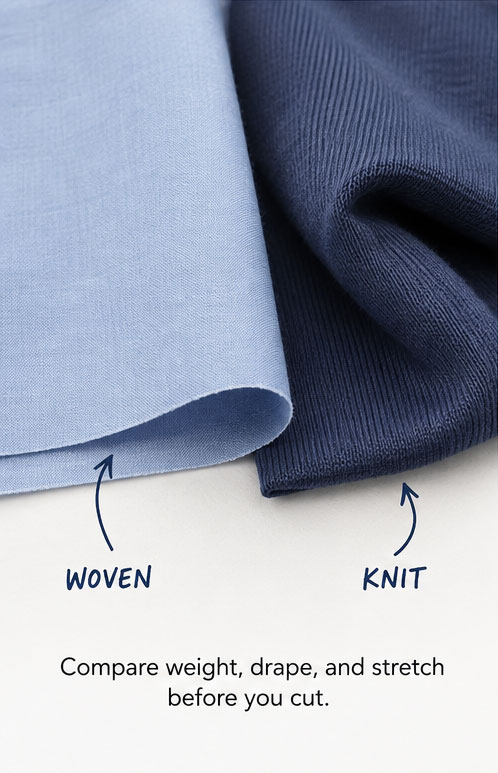
The biggest mistake you can make is choosing fabrics based solely on color or print. Instead, evaluate how the fabrics behave.
- Begin by comparing their weight. A lightweight rayon challis paired with a heavyweight ponte knit will likely pull out of balance, while a cotton lawn and a lightweight jersey may complement each other beautifully.
- Next, consider drape. Fabrics should move in a similar way. If one fabric flows softly while the other stands away from the body, the garment may twist, sag, or feel awkward when worn.
- Finally, pay attention to texture. A smooth woven linen and a textured sweater knit may technically work together, but the contrast should be intentional rather than accidental.
Before cutting your project, hold both fabrics together, let them hang over your hand, and observe how they move. If they seem comfortable together, chances are they’ll sew together well, too.
Let Each Fabric Do What It Does Best
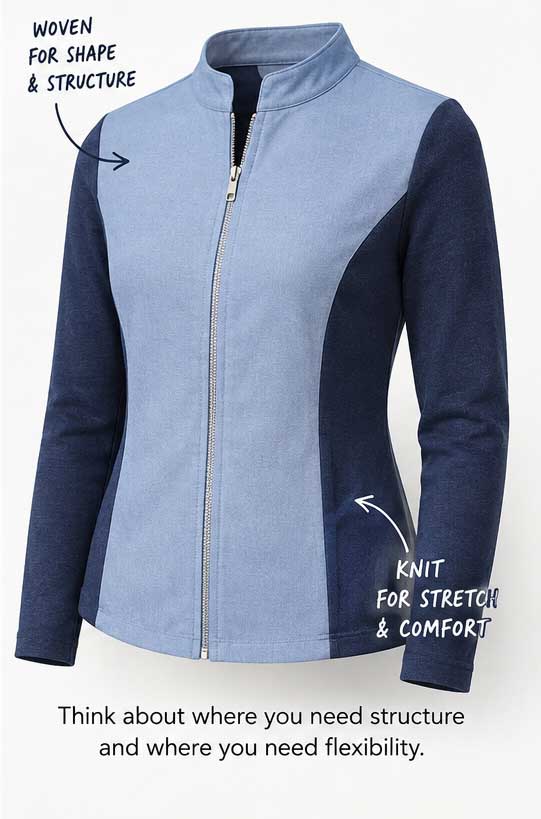
Successful mixed-fabric garments take advantage of each material’s strengths. Use woven fabrics where structure matters. Shirt collars, cuffs, waistbands, button plackets, and tailored bodices all benefit from the stability of woven fabric. Reserve knits for areas where comfort and movement are important. Side panels, sleeves, backs, neckbands, and fitted waist sections can all benefit from the stretch that knit fabrics provide.
Think about how your body moves throughout the day. Placing knit panels where you bend, reach, or sit can make a garment noticeably more comfortable without sacrificing the crisp appearance of woven fabric.
Stabilize Seams Between Fabric Types
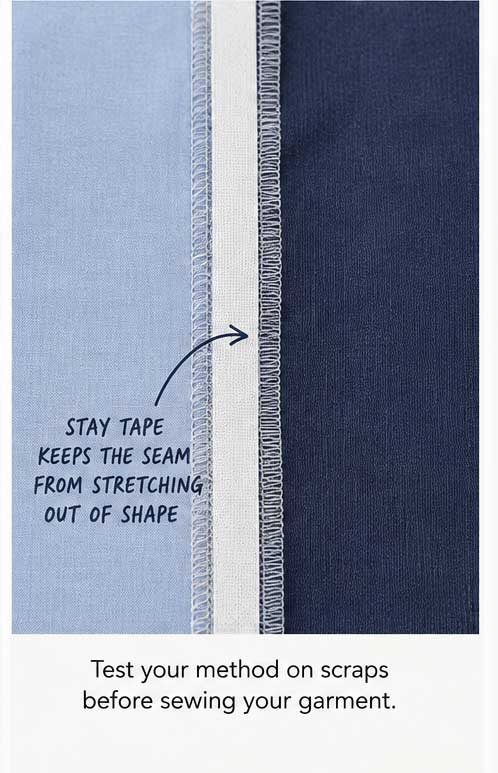
Joining a knit to a woven is where many projects begin to misbehave. Because the knit naturally stretches while the woven does not, the seam can become wavy or distorted during construction. The solution is stabilization.
A strip of lightweight fusible stay tape, clear elastic, twill tape, or even a narrow strip of lightweight interfacing can help keep the seam from stretching out of shape. The appropriate stabilizer depends on the garment and fabric, but the goal is always the same: preserve the intended shape while allowing the garment to remain comfortable.
As always, test your chosen stabilizer on fabric scraps before using it on your garment.
Choose the Right Needle and Stitch
One garment may require more than one sewing setup.
- For sections sewn entirely in woven fabric, a universal or sharp needle and a standard straight stitch often work perfectly.
- When sewing knit sections, switch to a ballpoint or stretch needle to prevent skipped stitches and fabric damage. Depending on your machine and fabric, a narrow zigzag or stretch stitch may produce seams that retain flexibility.
- If you’re sewing across a seam that joins both fabric types, test your stitch settings first. A small sample can reveal puckering, tunneling, or skipped stitches before they become part of your project.
Consider the Direction of Stretch
Whenever knit fabric is part of a design, think carefully about where the stretch belongs. A knit side panel should stretch around the body, while a knit waistband may need more recovery than a knit sleeve. Pay attention to the greatest direction of stretch as you lay out your pattern pieces.
Likewise, remember that woven fabrics generally control the fit of the garment. If a woven front is paired with a knit back, the woven piece usually determines the finished size. Simply adding a stretchy panel won’t automatically create a looser fit if the woven sections remain restrictive.
Press with Care
Pressing becomes even more important when different fabric types meet.
- Use the temperature appropriate for the most delicate fabric, and always test first. Excessive heat can flatten textured knits, create shine on synthetic fibers, or distort stretch fabrics.
- A press cloth is particularly helpful when working with mixed fabrics, allowing you to press seams thoroughly without damaging the surface.
- Take your time pressing seam allowances so they lie flat before moving on to the next construction step. This small habit helps different fabrics blend together visually.
Sample Before You Commit
Perhaps the best habit when mixing knits and wovens is making a test sample. Sew several inches of the actual seam using the same fabrics, thread, stabilizer, needle, stitch length, and pressing method you intend to use on the garment. Stretch it gently, press it, and evaluate how it behaves.
A five-minute sample can answer questions that might otherwise lead to frustration halfway through a project.
A Creative Way to Expand Your Sewing
Combining knit and woven fabrics opens the door to endless design possibilities. It allows you to add comfort to tailored garments, introduce structure to relaxed styles, and make creative use of fabric already in your stash.
With thoughtful fabric selection, careful stabilization, and a willingness to test before sewing, you’ll discover that mixing fabric types isn’t something to avoid—it’s another skill that expands your creative toolbox. Once you become comfortable pairing the strengths of both knits and wovens, you’ll start seeing opportunities for custom details and designer-inspired garments everywhere.
~The ASG Sewing Room