American Sewing Guild (ASG)

Visit our blog Visit the ASG Facebook page Visit ASG on Pinterest Visit ASG's YouTube channel Visit ASG on Instagram
  • Home
  • Join ASG
    • Join Online
    • Chapter Locations
    • Member Benefits
    • Member Brochure
    • Join by Mail
  • Education & Classes
  • Resources
    • Contests & Awards
    • Giving Back
    • Hall of Fame
    • Travel and Tours
    • Measurement Chart
  • Shop
    • ASG Store
    • Chapter Products
    • Video Resources
  • Blog
  • About
    • About Us
    • Donate to ASG
    • ASG Sensitivity Statement
    • FAQ’s
    • Start a Chapter
  • Contact
  • Member Login
    • Login First!
    • Members Only
    • Leadership Only
    • Website FAQ’s
    • Logout
  •  

May 22, 2026

Blanket Stitch

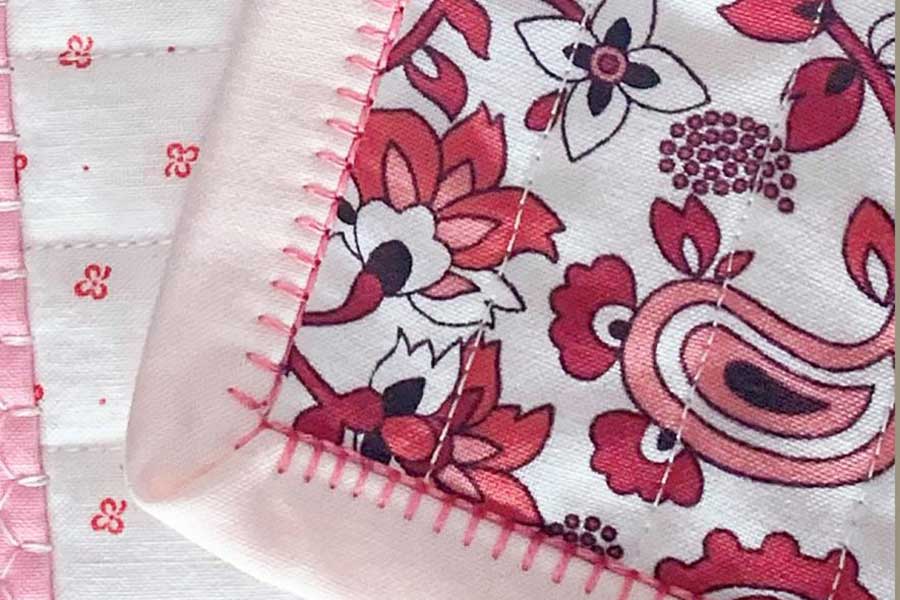
Originally used as an edge finish on heavy wool blankets (hence the name), this aptly named stitch is much more versatile. It can be used for many decorative applications and stitches out quickly and evenly, mimicking hand stitches with the same moniker.
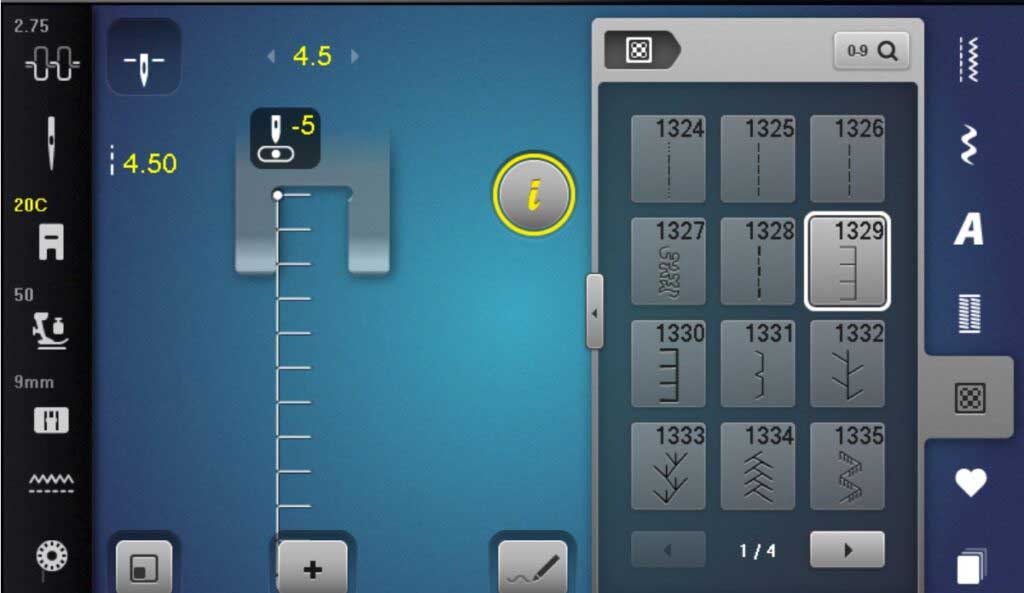
A blanket stitch can be recognized by its two distinct directions—a vertical stitch and a
‘bite” stitch perpendicular to the vertical stitch, forming a distinct right angle. The bite stitch is actually two stitches—one to the left and one to the right to return the needle to the vertical stitch positioning.

The stitch is adjustable in both length (the space between the bites) and width (the reach of the bite to the left). You can have wide bites close together, narrow bites further apart or any combination of the two. If your machine has any kind of software adjustments, you can even change individual stitches (length, width and stitch angle) for a more eclectic hand-stitched look.

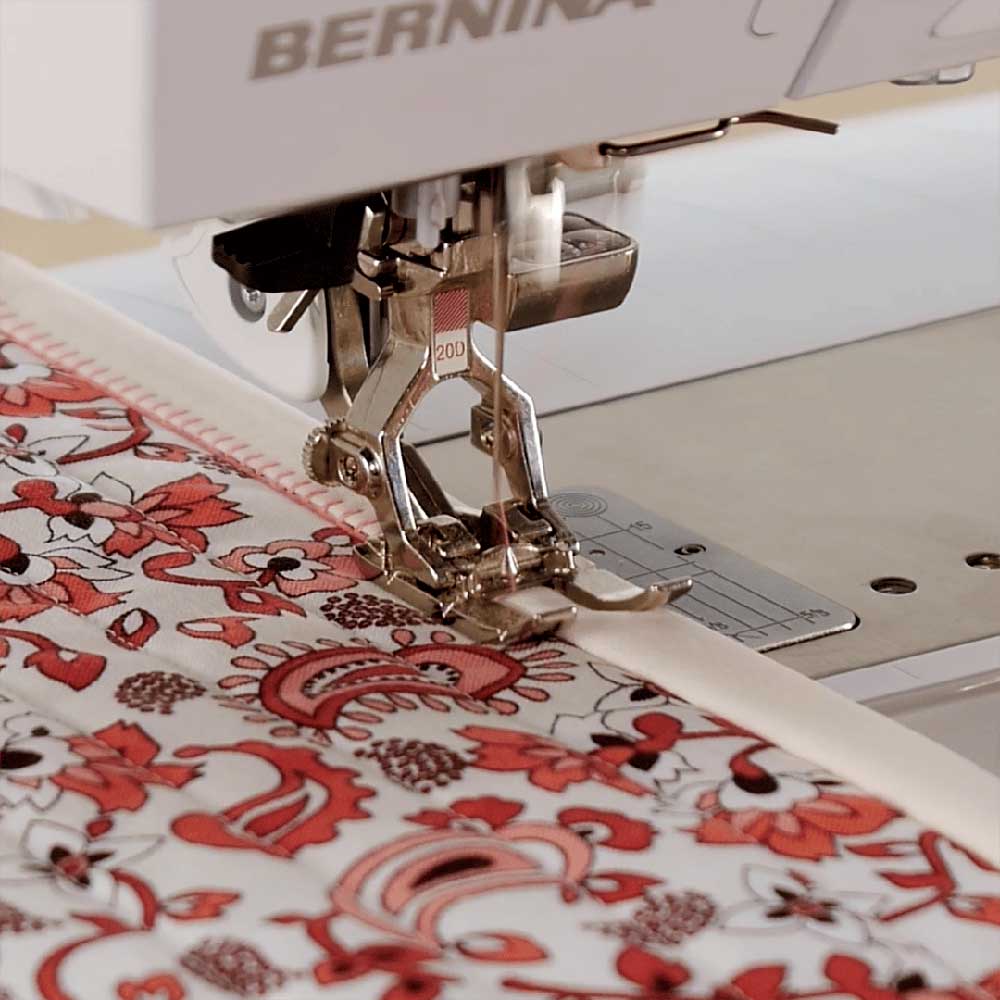
While used most frequently for appliqué (both raw edge and turned), the blanket stitch can also be used as an edge finish on both single- and double-layer edges. It can also be used to accent seams, pockets and hems, and to apply trims such as ribbon, binding and bias tape.

Machine Set-up
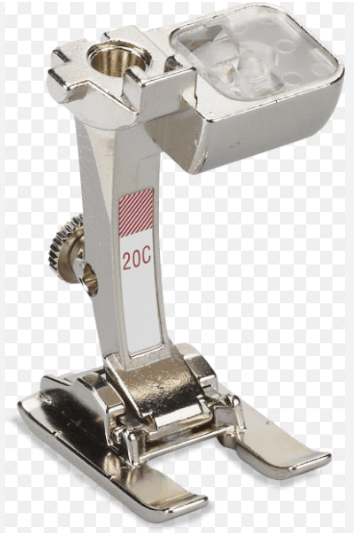
Open-toe foot

It’s important to select an open-toe foot when using the blanket stitch, as visibility is critical for precise placement. If you’re machine has one, choose an open-toe foot that can also use the dual-feed function for even feeding.

Part of the fun of the blanket stitch is that the look can vary greatly, depending on the type of thread you choose. You can use it with monofilament for an invisible appearance, regular sewing weight thread, or with any number of decorative threads, including wool for a hand-stitched look.

The type of thread you choose and your fabric type will determine the kind and size of the needle needed for perfect stitching. It’s important that the needle eye is large enough not to shred the thread since it’s entering and exiting the same needle hole during the stitch formation.
Apply binding

Blanket Stitch Tips

  • If your project has corners, curves or points, use the needle-down function if you have it to keep the stitch from shifting as you pivot around the shape.
  • Setting the machine needle position to the right or left also helps with visibility and allows the presser foot edge to be used as a guide for stitching.
  • If your machine has mirror-imaging functions, it’s possible to reset the bite portion to form in the opposite direction, depending on your comfort level with the stitch.
  • Your project may require a stabilizer underneath to avoid puckering if the fabric is lightweight.
  • Always stitch a test sample to adjust the stitch settings before beginning the project.

Appliqué

The easiest way to appliqué with a blanket stitch is to secure the appliqué shape in place first using fusible web. That prevents any shifting during the edge-stitching process. Fuse the entire shape or just the edges, or optionally, use a light touch of fabric glue under the edges.

Using the blanket stitch for appliqué creates a neat finish to either a raw or turned edge. The vertical portion of the stitch can rest along the appliqué edge or actually be on it, depending on the desired finished look. Most commonly, it trails along the edge with the bite piercing the appliqué fabric.

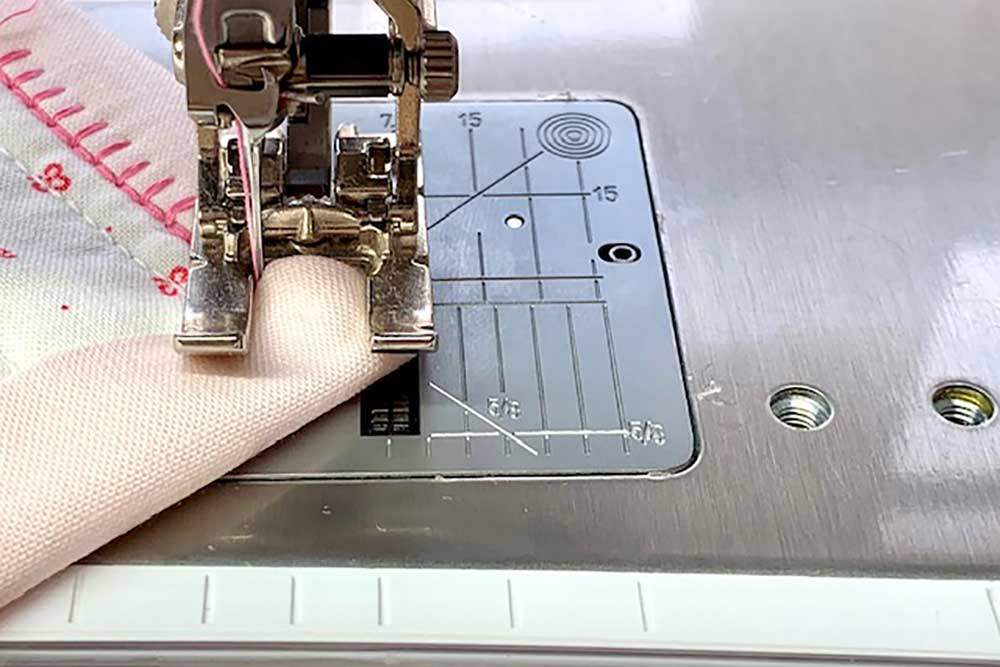
At the corner of an appliqué, stop on the vertical stitch side of the stitch with the needle down in the fabric. Lift the presser foot and pivot at the angle needed for the corner. If it’s a right angle, you can then begin stitching again on the adjacent side. If it’s not a right angle or you prefer a diagonal cornering stitch, then pivot accordingly.
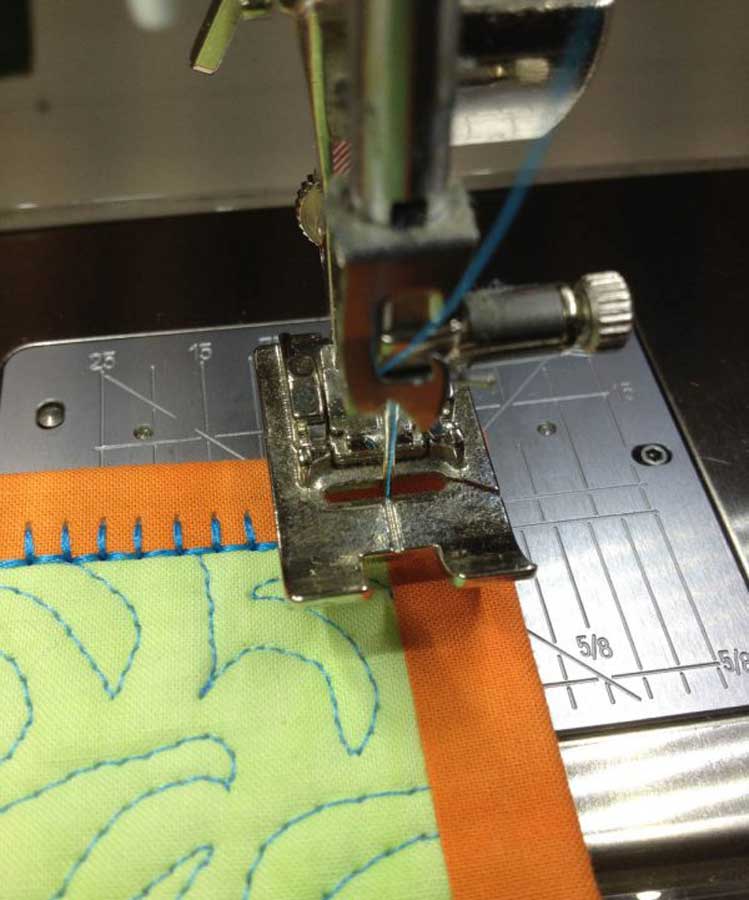
Right angle pivot at the corner
Pivot diagonally at the corner
Diagonal corner stitch

When appliquéing curves, you may need to pivot repeatedly around the curve edges to avoid stitches at odd angles if you try to stitch continuously. Each time, simply leave the needle tip in the fabric and pivot slightly to keep the stitches aligned.
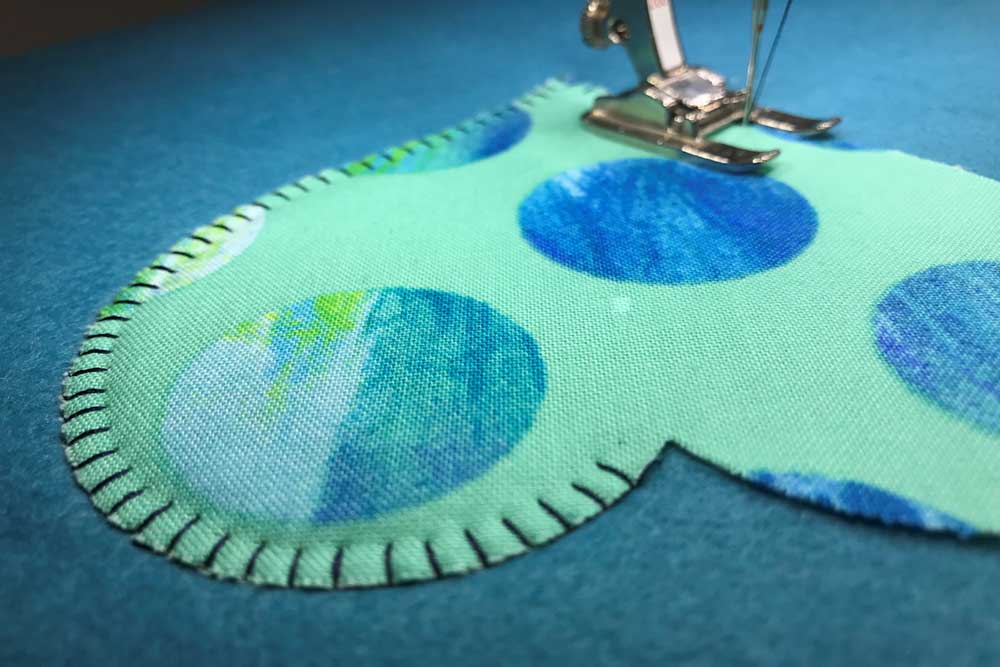
Pivot evenly around curves

Added Pizazz

Because the blanket stitch bite is a single stitch in each direction, it can also be used as a channel to add other fiber embellishments after stitching, like yarn or beads, and they’re securely held in place.
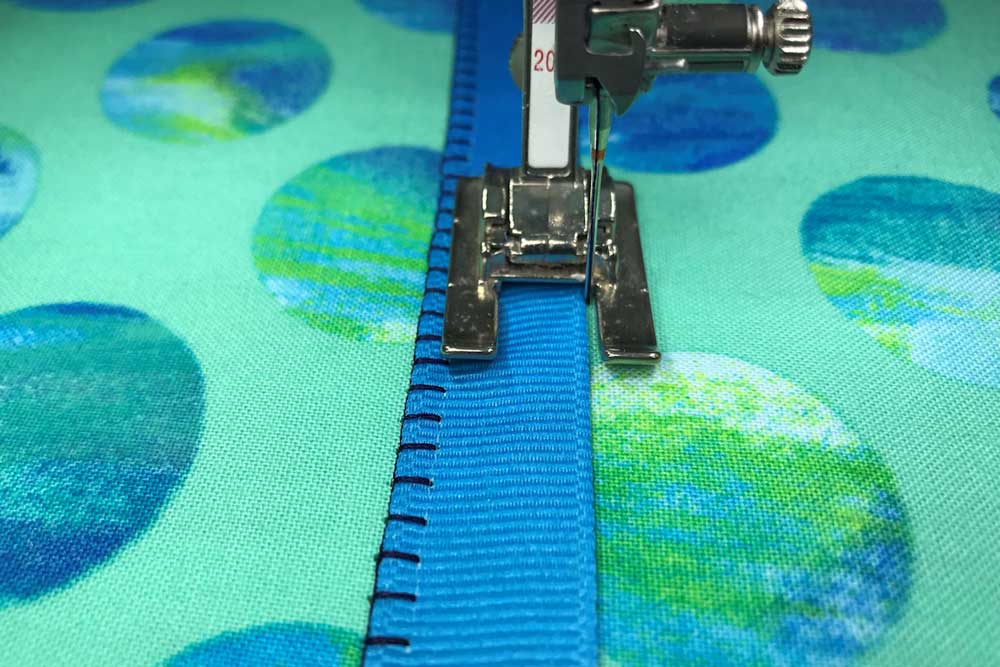
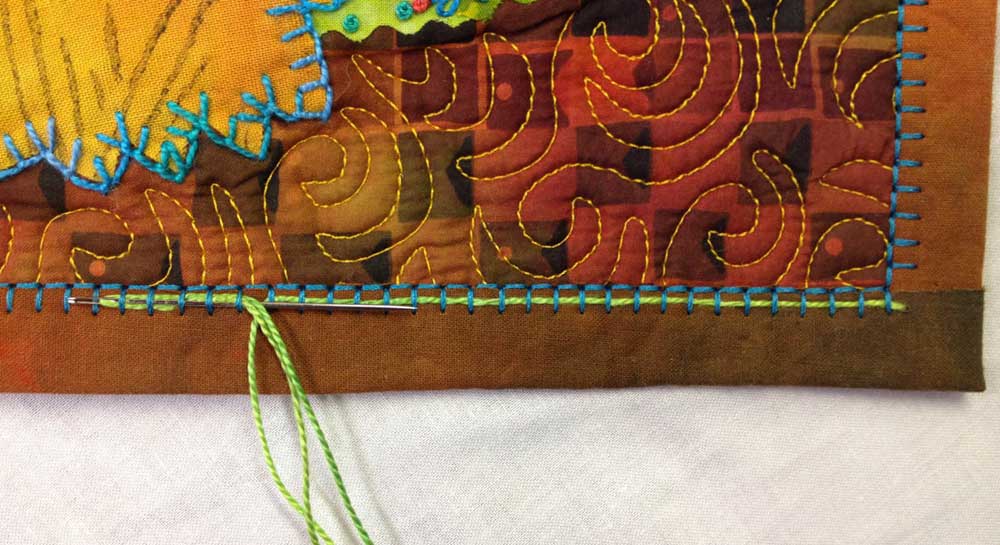
Add other embellishments under the blanket stitch

All images compliments of Bernina


~Linda Griepentrog is the owner of G Wiz Creative Services and she does writing, editing and designing for companies in the sewing, crafting and quilting industries. In addition, she escorts fabric shopping tours to Hong Kong. She lives at the Oregon Coast with her husband Keith, and three dogs, Yohnuh, Abby, and Lizzie. Contact her at gwizdesigns@aol.com.
 

Tagged With: blanket stitch, machine stitches, sewing tips

September 10, 2021

Sewing Machine: Using The Built-In Specialty Stitches

Have you looked at advertisements for new sewing machines lately? One boasts of 729 built-in stitches! The designs consist of holidays, seasonal references, geometrics, flowers, plants, bugs, scrolls, animals, lettering, and just about any topic you might be looking for. They are quite impressive, but where can they be used?

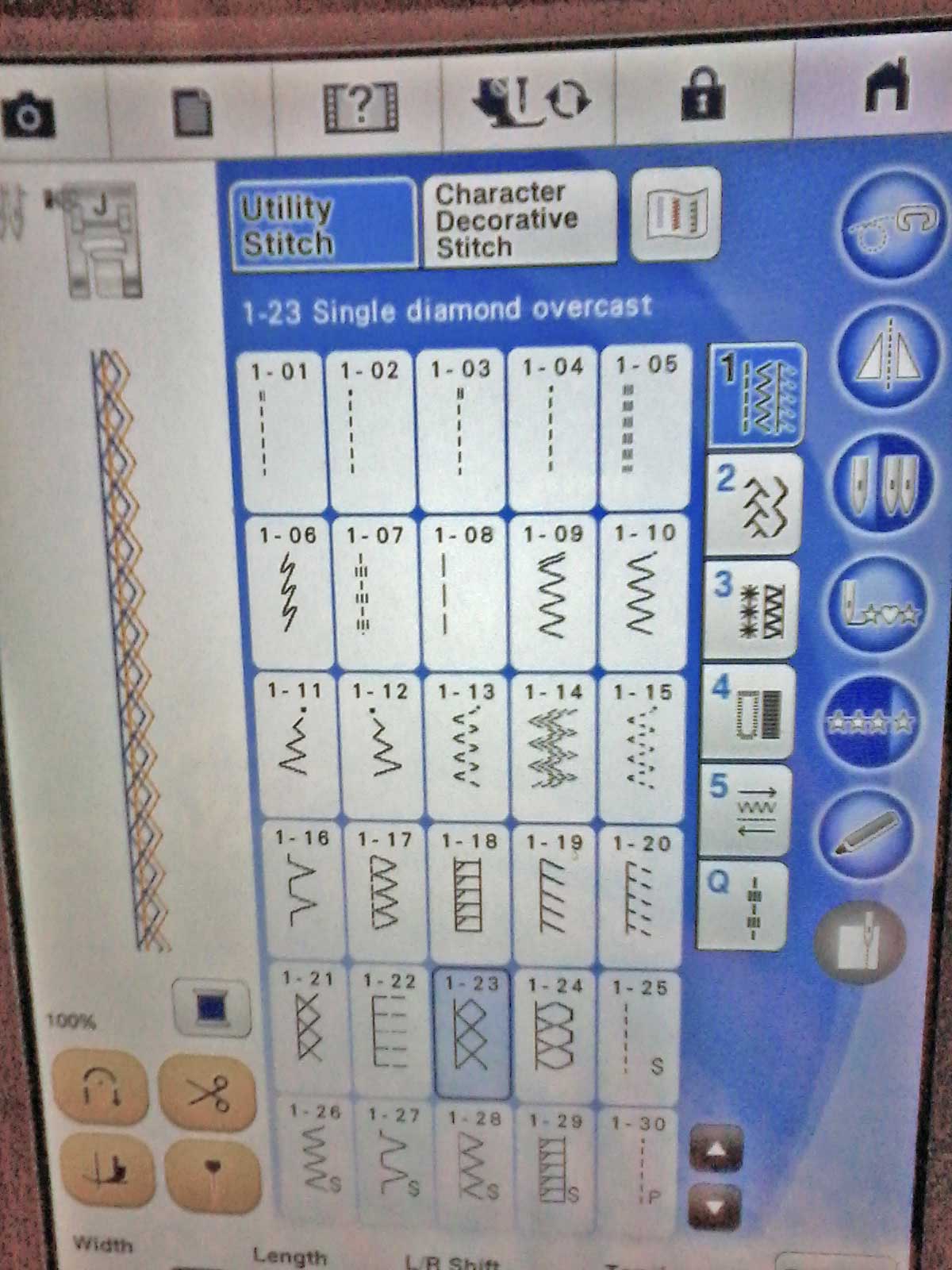
Sewing machine screen showing decorative stitchesIn this article, Beverly Betz and Rosemary Fajgier set out to not only find uses for these great designs, but also to explore their machines and find some of their little known features. Although these stitches can be found on traditional sewing machines, when using them, there are a few embroidery tips that should be followed.

Starting Out

First, begin with the proper foot installed on your machine. Some machines will indicate the foot by number or letter. Generally, this will be a foot that has a wider needle opening to allow the needle to move from side to side without hitting the foot and breaking. The second characteristic of the foot is on the underside. If you turn the foot over, you will see that the foot has a channel running from the needle opening to the back of the foot. This channel is especially important for those stitches that are dense and use more thread when created. The channel allows the extra space needed for the stitch to clear the foot without getting hung up under it.

Stabilize It

The extra stitches often overwhelm the fabric and cause it to pucker if not supported properly. To avoid this, use a stabilizer under the fabric. What kind of stabilizer? That depends on several factors:

  • Weight of the fabric—the lighter the fabric, the lighter the stabilizer
  • Use of the item—if it will be worn and laundered, use a cutaway, otherwise a tear-away may be used.

Which Thread?

Threads can make a big difference in the final appearance of the stitches. Embroidery threads have a glossy sheen to them and especially when contrasting colors are used, draw the eye to the stitching and make the design detail pop.

Tip: Before you begin stitching, always make sure you have enough thread on the bobbin to complete the line of stitching. Trying to realign your stitching once you change a bobbin is most frustrating!

Where to Use Them?

So where can these decorative stitches be used?

  • One of the more traditional ways is to use them for top-stitching — try placing them on hems or collars to give a bit of detail on the edges of garments or on home dec items like curtains.
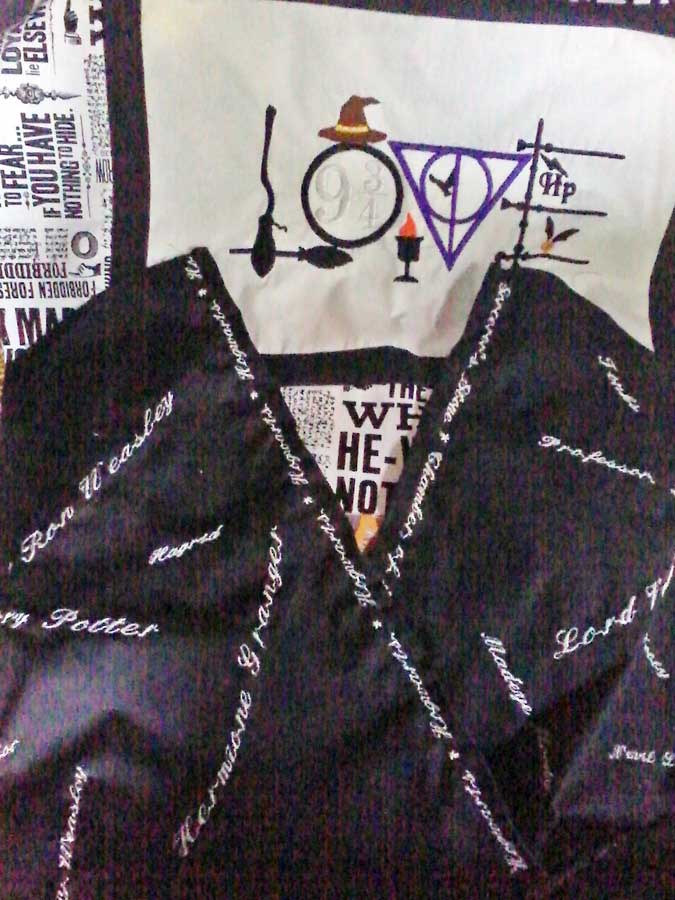
  • Harry Potter pillowIf your machine has lettering capabilities, little kids love having their name stitched on the lining of their garment or as an accent around a pocket or other design detail It’s a great way to make that garment even more special because it will be personalized.
  • Lettering can also be used to upscale other items. For example, rather than using a plain black fabric for this Harry Potter pillow (right), randomly stitched character names on the fabric made it a one-of-a-kind pillow.
  • When putting in a zipper, top-stitching down the sides of the zipper gives a great accent and a pop of color.
  • Purse handles get attention when accented with specialty stitches.

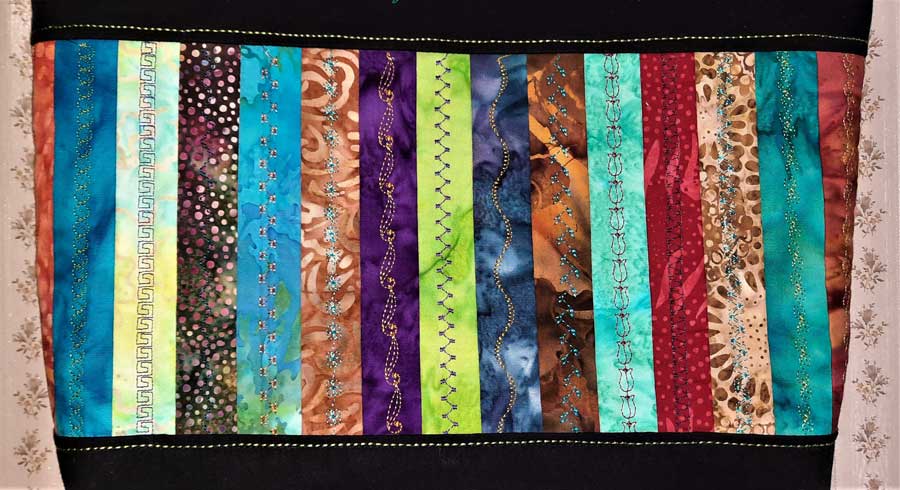
Quilters have long used these kinds of stitches to accent crazy quilts and even bindings. In this tote bag, a number of different patterns were stitched down the centers of strips to give the tote an added detail. The stitches can be applied on the strips as a sewing detail or to quilt the layers together.

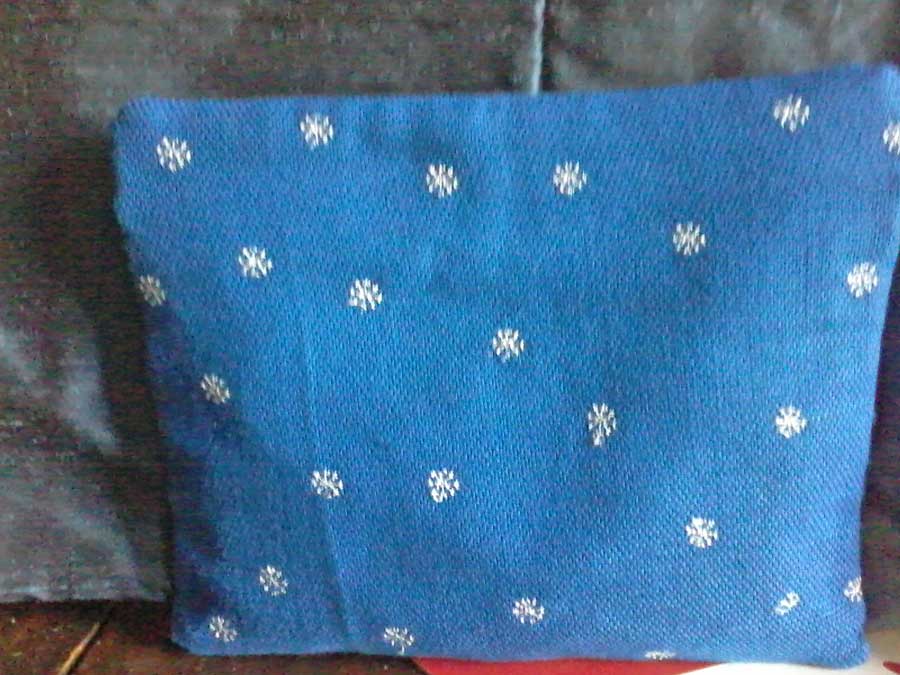
Just because we traditionally think of specialty stitches as long lines of stitching doesn’t mean that is the only way to use them. When this plain blue fabric got a new personality with embroidered snowflakes in a random pattern on the fabric. Note that some machines can be set to stitch single designs while others must be stopped manually after each motif. And instead of quilting in just straight lines, why not use the specialty stitches when you want to add a little creativity to plain fabric. Either way, it’s a great technique to use to create an all-over pattern or just a few random accents.

What’s on the Screen

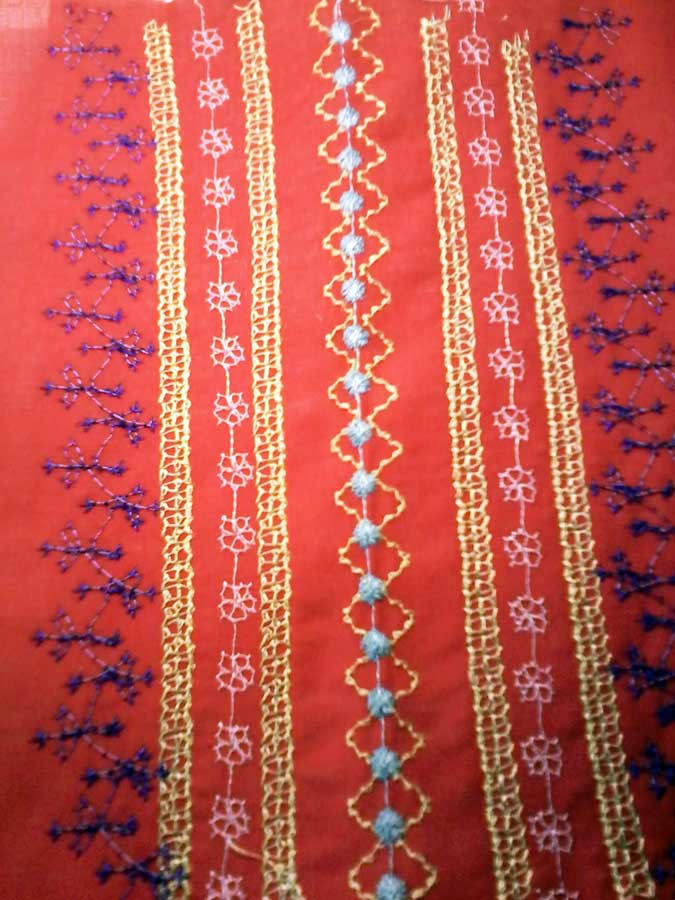
StitchesThe way the stitch appears on the machine screen and the way it looks when stitched out is sometimes very different. Therefore, it’s a good idea to test out the stitches to see if you like them before placing them on your finished project. Even doing test stitches can spur some creativity, as shown here by placing a number of designs together to create an overall pattern. Starting in the center with tiny blue eyelets, a wavy pattern was added and stitched down either side of the eyelets. Then a utility stitch in yellow resulted in a heavier braid effect. Rows of stitches continued to be added until a desired width was achieved. This design is now slated to become the front of a peasant-style blouse, but it could just as easily become a decorative pocket, or used on the front on a purse. You can even take a plain piece of fabric and fill it with your pattern to create an entirely new look to the fabric.

To get a good design, it is important to align each new row of stitching in relation to the last. The width of the presser foot makes a great spacer, as does marking a line with chalk that you can follow when stitching. And if you have a laser pointer on your machine, here is a great use of that feature. But if you don’t want to keep sewing in straight lines, how about stitching in curvy lines from various directions to create a totally unique pattern. Placing decorative stitches on fabric in random patterns gives the impression of an all-over print.

Some machines provide the same stitch in both a small and large size. If the large design requires the feed dogs to move the fabric horizontally to achieve that wider width, accurate alignment with preceding rows can be very difficult. It is better to start with the narrower designs when first stacking straight rows. The wider width ones are best used when straight lines are not necessary.

Some machines allow the user to flip or mirror image designs. Mirror imaging allows you to create more symmetrical designs and achieve a framing effect.

Change Up Your Design

Now that you have the basics, how else might you change up your design?

  • Variegated thread is an easy way to add different colors without having to change spools. Testing is critical when using variegated threads. Some of the dense, satin stitch designs just don’t translate well into these threads. They produce awkward bands of color, depending on the length of each color in the thread. Generally they create the best effects with light, airy stitches.
  • Check to see if your machine allows the use of a double needle for specialty stitches. The double needle allows the use of two colors and gives a shadow effect while stitching. Not all stitches can be done with a double needle, so check your particular machine manual.
  • Try using a double eyed needle — one needle allows thread from two different spools to be stitched at the same time within the same stitch. When the same color thread is used, it gives the effect of a heavier thread without the hassles of requiring a larger eyed needle. When different colors are used, you can choose the exact blend of colors and are not restricted to those on variegated spools. Because the two colors are always present, there is no banding like the variegated thread. The randomized twisting of the two threads also presents an ever changing effect in the stitching.

While creating a manual stitching pattern manually is time consuming, it’s not especially hard. And watching a pattern emerge is exciting and rewarding. While playing with her decorative stitches, Rosemary discovered that these same stitches could also be used in her embroidery mode on her machine. Using the embroidery mode took all the tedium out of trying to align the stitches and allowed more focus on the creativity of the patterns. But that’s another story. Look for Part 2, Using Decorative Stitches in the Hoop coming soon. Until then, give the manual method a try a see what you can create.


~Beverly Betz and Rosemary Fajgier

This field is for validation purposes and should be left unchanged.
Did you enjoy this article?
Are you an ASG member?

Tagged With: decorative stitches, machine stitches

Become a Member

Join the only national organization dedicated to Advancing Sewing as an Art and Life Skill.

Join Now button

Blog Article Categories

  • ASG Conference
  • Chapter Stories
  • Embroidery
  • Fitting
  • Learn to Sew
  • National Sewing Month
  • Products, Books, & Patterns
  • Projects
  • Quilting
  • Sewing
  • Sewing Techniques
  • Sewing Tips
  • Sewing Tours
  • Videos
  • Disclaimer
  • Privacy Policy

American Sewing Guild
National Headquarters
9660 Hillcroft, Suite 230
Houston TX 77096
713-729-3000 | 713-721-9230 Fax
www.ASG.org

ASG wordcloud - education, conference, discounts, videos, special offers, tours and more

Copyright © 1998–2026 · American Sewing Guild · All Rights Reserved