Recycled cotton sounds straightforward: old cotton textiles are collected, broken down and transformed into new fabric. Yet when shoppers examine a fabric label, they may discover that the material contains only a small percentage of recycled cotton blended with virgin cotton or another fiber. While the majority of recycled cotton is made from pre-consumer waste, it currently only represents a small portion of global cotton production. So why isn’t more of the fabric recycled?
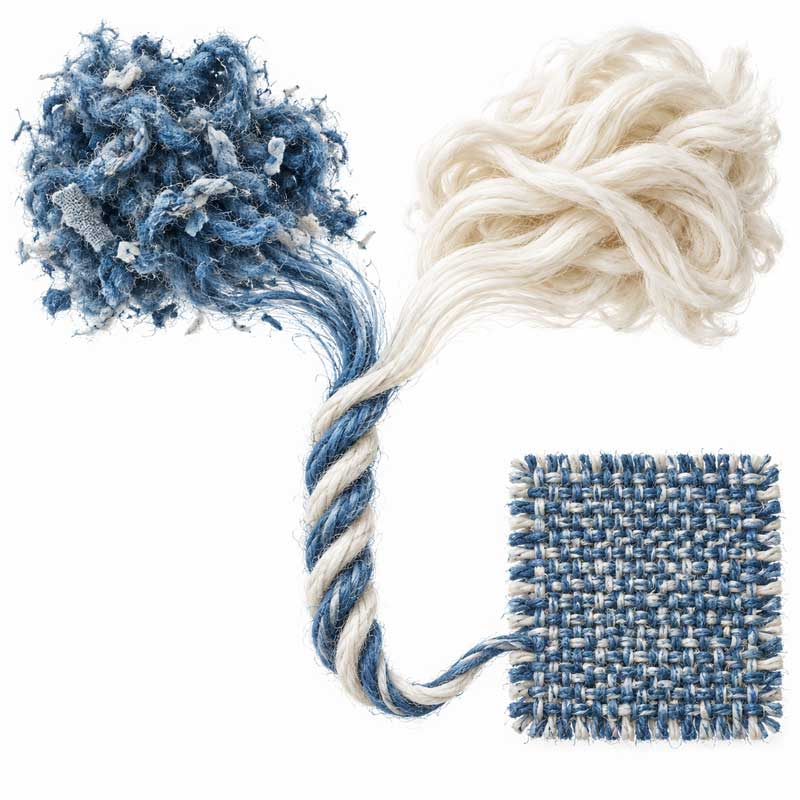
The answer begins with the way cotton is mechanically recycled. Fabric scraps and discarded garments are sorted, shredded and pulled apart until they return to a loose, fibrous state. Unfortunately, this process shortens and weakens the cotton fibers. According to Fashion for Good, only about 45–50% of the original material may remain usable after mechanical recycling. The surviving fibers are generally much shorter than newly harvested cotton fibers, making them more difficult to spin into a strong, smooth yarn.
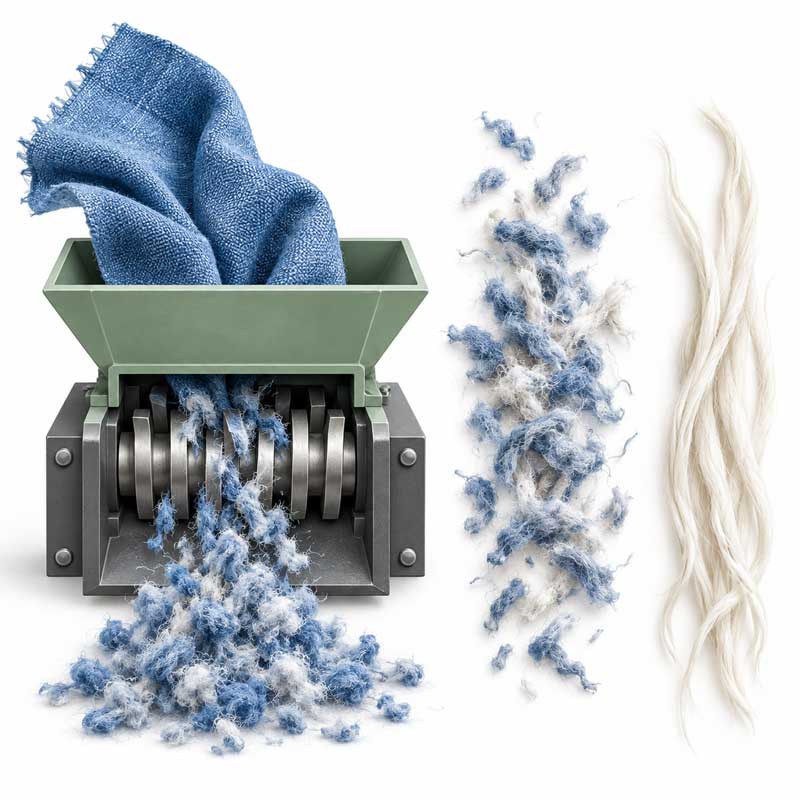
To compensate, manufacturers often combine the recycled fibers with longer virgin fibers. The virgin cotton helps the yarn withstand spinning, weaving or knitting, dyeing, sewing, wearing and repeated laundering. Without that support, a fabric containing a very high percentage of mechanically recycled cotton may pill excessively, feel rough, lose its shape or wear out sooner than expected.
Manufacturers may also blend recycled cotton with synthetic fibers such as recycled polyester (rPET) to make the yarn strong enough for items such as T-shirts, hoodies, and denim.
As a result, many commercially available yarns contain approximately 10% recycled cotton. Higher percentages are possible, but the right amount depends on the garment, fabric structure and expected performance. A lightweight blouse, sturdy pair of jeans and casual sweatshirt do not place the same demands on their fabric.
Certifications
Standards like the Recycled Claim Standard (RCS) or Global Recycle Standard (GRS) certify products with variable amounts of recycled content:
- GRS is for products containing at least 20% recycled materials. GRS certification requires compliance with both social and environmental criteria, with a third-party verification in place.
- RCS is for products containing at least 5% recycled material. You can come across two different logos of RCS:
- RCS 100 is used for products that contain 95-100% recycled material and do not contain any virgin material of the same type,
- RCS Blended is used for products containing 5-95% recycled material, with no restrictions on the remaining composition
- Note: RCS only tracks the presence and percentage of recycled material; it does not verify organic status, fair labor/social conditions, or chemical safety restrictions in production.
A New Effort to Improve Recycled Cotton
In October 2026, Fashion for Good launched the Cotton Reloop Matrix Project to address these challenges. The project brings together textile manufacturers, clothing companies and yarn-testing specialists to evaluate commercially available recycled-cotton yarns against the actual requirements for knitted and woven fabrics.
Rather than expecting recycled cotton to perform exactly like 100% virgin cotton in every situation, the project will investigate where recycled fibers already work well and where further development is needed. Participants plan to produce 10 demonstration fabrics and conduct five manufacturing trials under real production conditions. They will compare recycled content, quality, performance and price.
The group also intends to publish an open-source spinning procedure so manufacturers can apply the findings more consistently. Eventually, the project will produce a roadmap describing what the textile industry needs to increase recycled-cotton use.
This does not mean that 100% recycled-cotton yardage will suddenly appear in fabric stores. The project is an important research and manufacturing initiative, but commercial changes will take time. Its findings may, however, help mills produce more dependable recycled-cotton fabrics.
What This Means for Sewing Enthusiasts
For sewists, the recycled percentage is only one part of a fabric’s environmental story. A fabric containing more recycled fiber is not automatically the better choice if it lacks the durability needed for the intended garment. Fabric that quickly pills, stretches out or wears through may be less sustainable than a lower-percentage recycled blend that remains wearable for years.
When considering recycled-cotton yardage, examine it as carefully as you would with any other fabric. Check the fiber-content label, but also consider the fabric’s weight, recovery, hand, opacity and stability. If possible, wash a sample before cutting your garment. Notice whether it shrinks, twists, pills or changes texture. Choose a pattern suited to the fabric’s actual behavior rather than relying only on its environmental claims.
Thread, elastic, interfacing, labels and trims also affect a garment’s eventual recyclability. A cotton garment sewn with polyester thread is technically no longer a single-fiber item. Home sewists may not currently have access to a convenient system that accepts handmade garments for fiber-to-fiber recycling, but the principle is still useful: every material added to a garment affects what can happen to it at the end of its life.
You can support sustainability by making garments that fit well, choosing durable construction methods, saving usable scraps, and repairing clothing before replacing it. Selecting a recycled fabric is valuable, but extending the useful life of the finished garment may be even more important.
The Cotton Reloop Matrix Project highlights an essential lesson: textile sustainability is rarely as simple as a percentage printed on a label. Recycled cotton involves real compromises among fiber content, strength, comfort, appearance and cost. Better testing and shared standards could help manufacturers find the right balance—and eventually give home sewists access to recycled fabrics they can select with greater confidence.