Do you know how to use a wing needle? This 1 minute video gives you a sneak peak on using this specialty needle
Using a Wing Needle
Ever wondered how to line-up/match the pattern of your fabric across seams? This 1-minute tutorial is a sure fire way to get it right!
If you use your serger only for finishing seams and you never change the foot, you could be missing a world of opportunities for other fun sewing adventures.
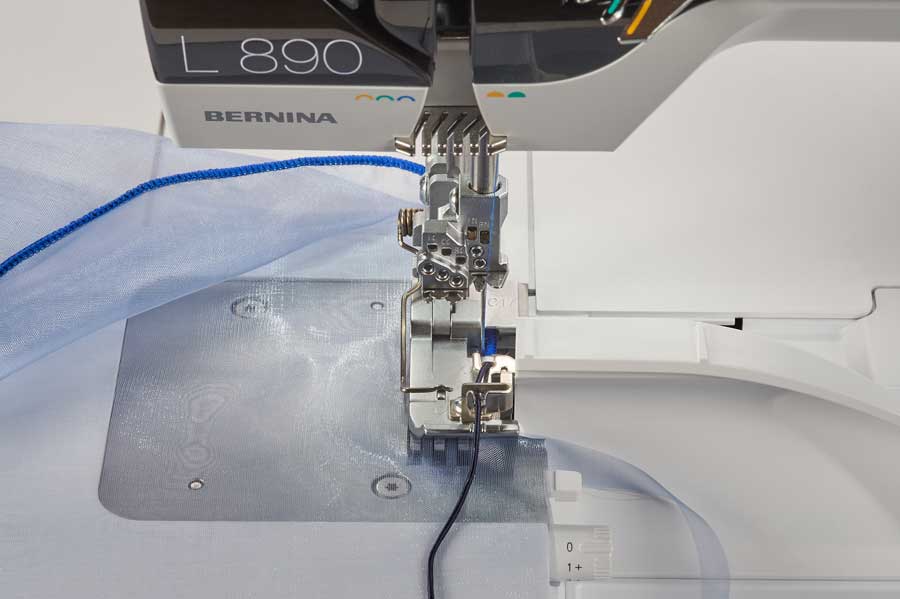 Like your conventional machine, many sergers have accessory, or special-function feet available for a variety of stitching tasks. It’s important to know what feet you might have already included with your serger, so check the manual and any accessory boxes first. Then, do a little research with your dealer to see what other feet might be available. In addition to the brand-name feet, sometimes generic feet may fit your model.
If you’re shopping for specialty feet, you’ll need to know your serger’s model number, whether it takes screw-on or snap-on feet, and any stitch width limitations. Also, note that some tension adjustments might be needed when using some specialty feet, so be sure you’re comfortable with that.
Let’s take a look at a few available options, keeping in mind that all feet may not be available for all brands and models of sergers, and names may be slightly different between brands.
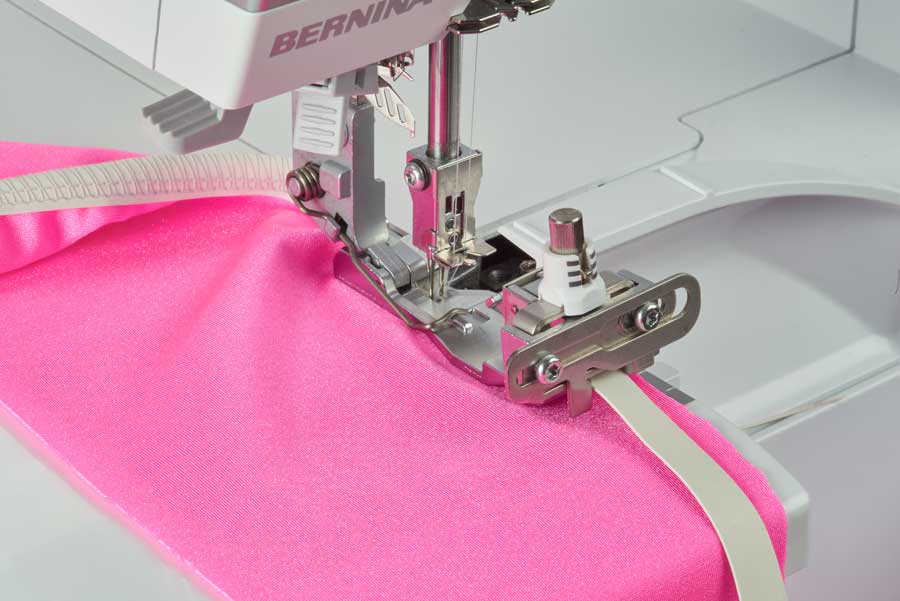
This handy foot not only helps guide elastic for you, but it also stretches it as you sew. Most feet allow you to adjust the amount of stretch, as it varies by the type of elastic. This foot is ideal for sewing lingerie, swimwear and athletic garments of all sorts. Note the elastic widths compatible with the foot, as some have a wider range than others. The foot can either serge over the elastic, or along one edge depending on the position adjustment.
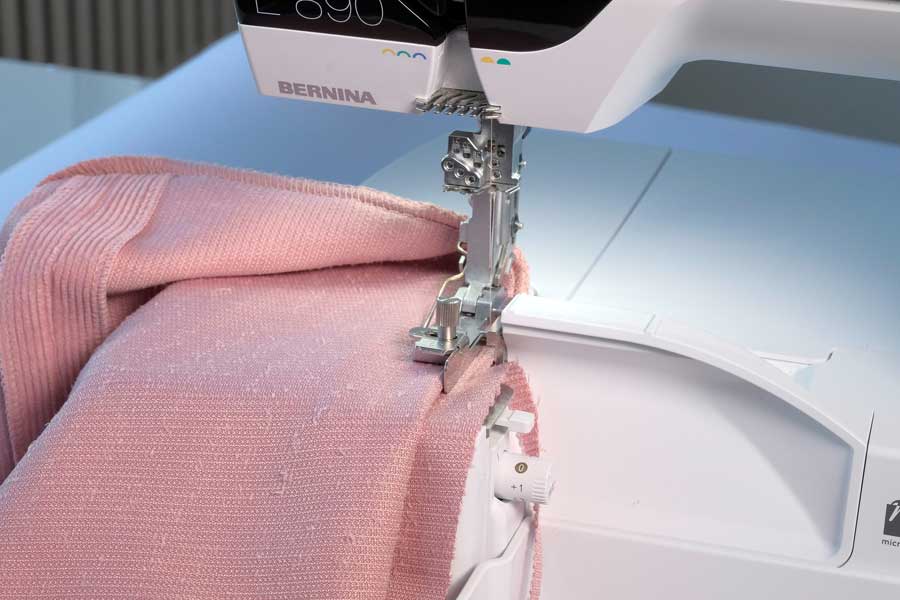
If you love making invisible hems by machine, but you hate guessing exactly where the fold should go and where the needle should be, this foot is for you, as it has an adjustable guide to keep things consistent as you stitch the hem in place. It guides the fold and can cut the extending edge in one pass for a neat hem on many fabrics. Note that serger blind hems work best on knits and other textured fabrics.
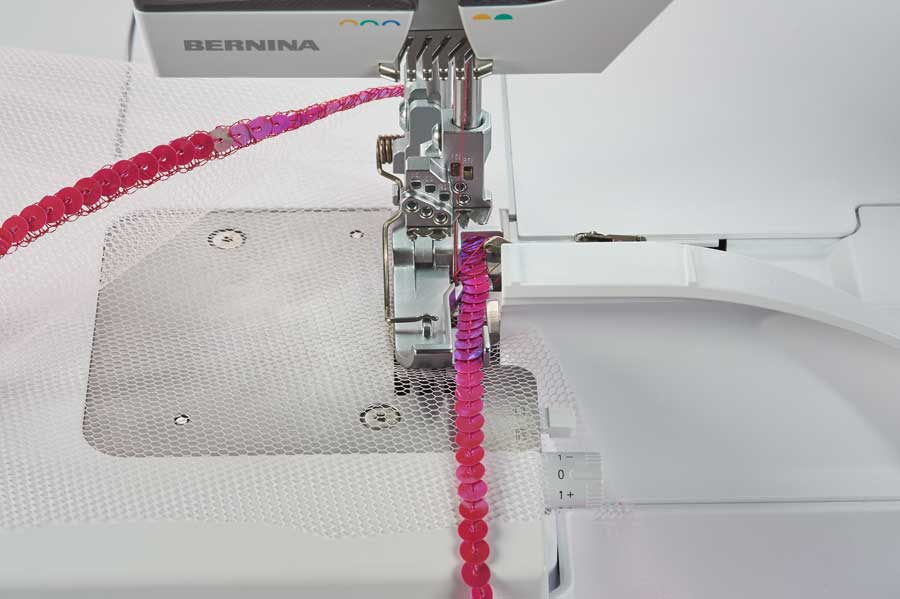
Beaded edges are a piece of cake with this foot as it guides strings of beads or sequins along the edge of garments, bridal veils, etc. as it stitches them in place. Invisible thread works well with this foot for a no-see application.
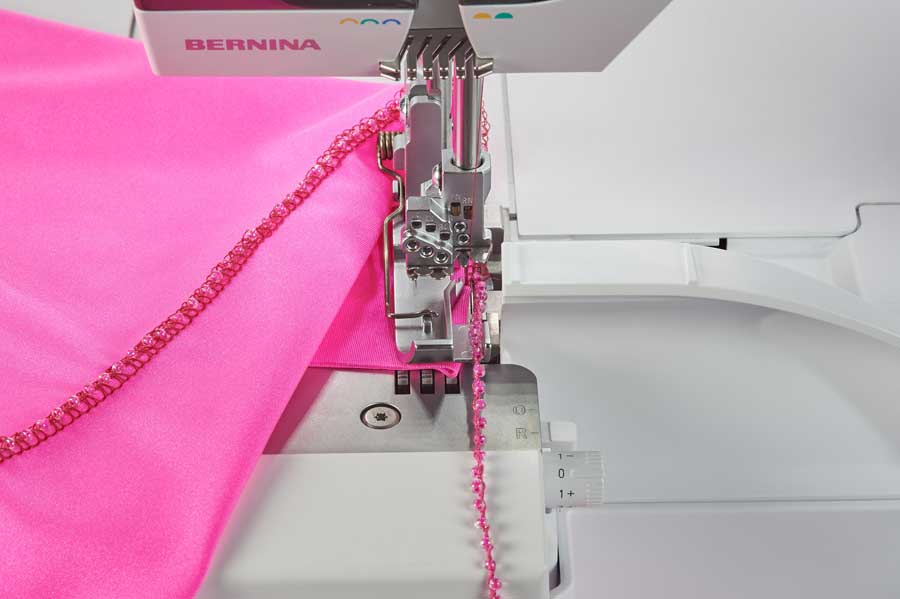
Who doesn’t love a beautifully piped seam? This foot is a slam dunk for both making the piping and inserting it into a seam. Note that there is a maximum diameter for the piping to fit the foot groove, so double check before purchasing. Some brands offer multiple sizes of piping feet to accommodate different cord sizes.
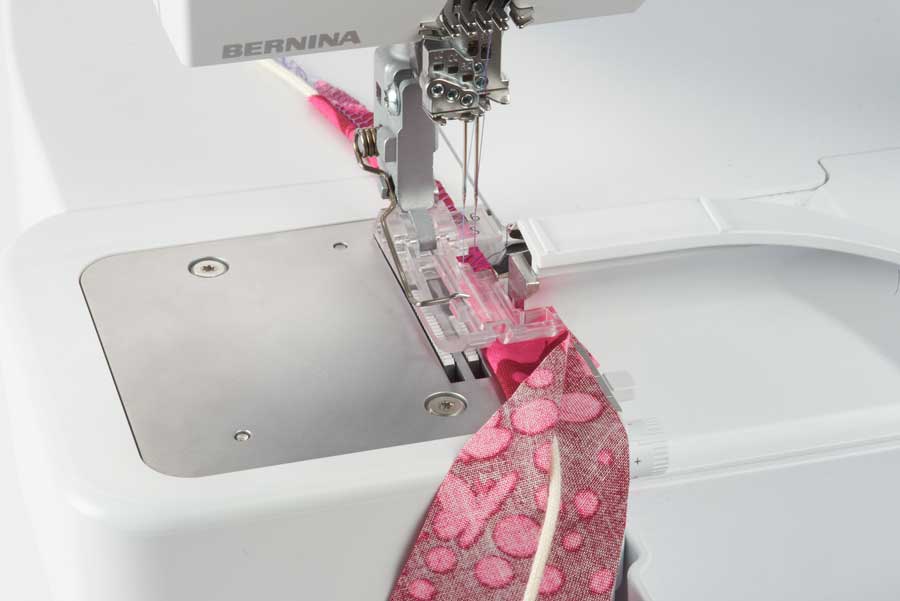
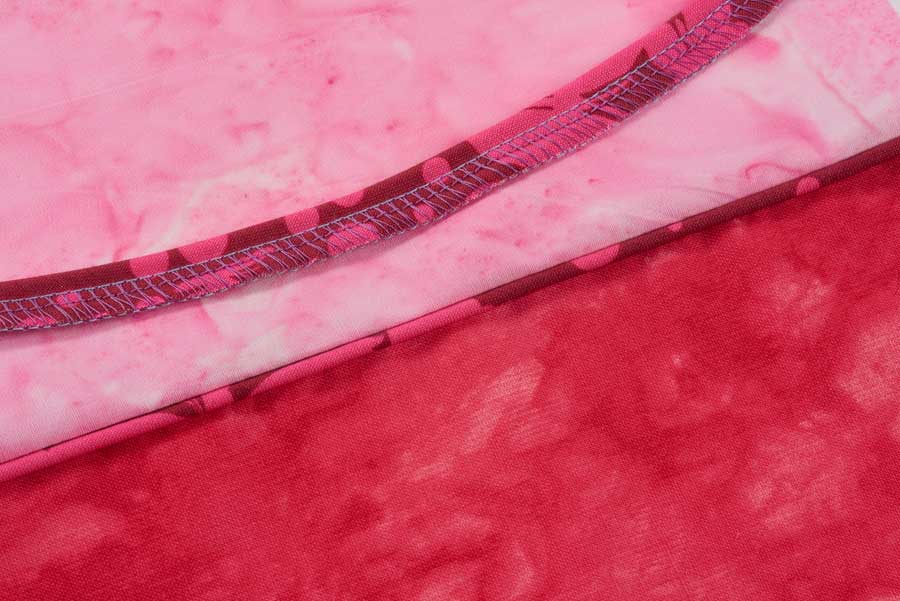
Whether you’re ruffling sheer fabric or adding a ruffle to a flat fabric piece, this foot is helpful for both functions. Most are adjustable so you can control the gathering fullness while you finish the fabric edges at the same time.
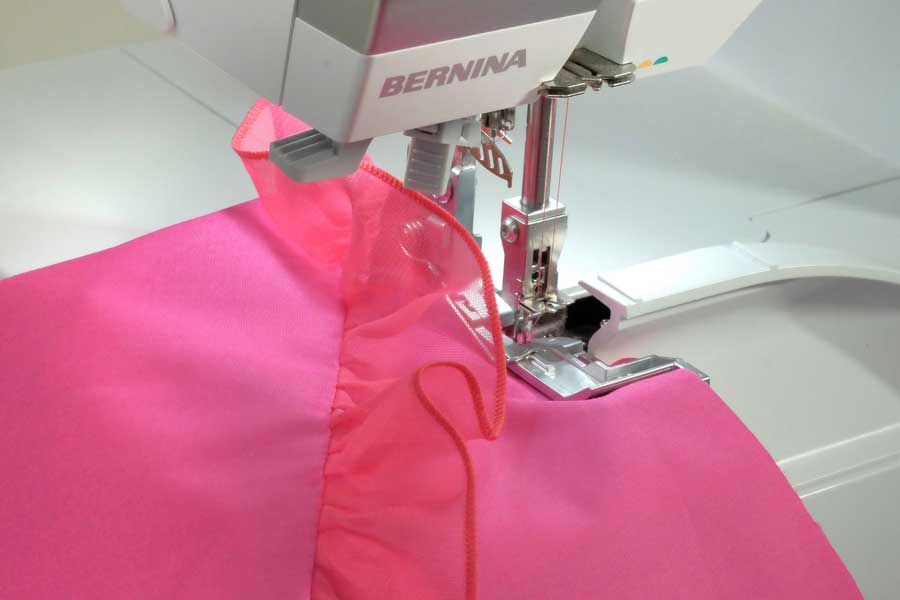
If you’re into dance costuming, eveningwear or bridalwear, this may be a must-have foot for you. There’s a hole to guide clear fishing line or wire so you can serge over it to create undulating edges, from smaller lettuce edging to full-on giant waves. It saves having to hold and guide the line on your own to be sure that the serging encases it without any nicks.
No more trim wrestling needed with this foot, as the built-in guide places flat lace or trim along the edge with aplomb, allowing you to serge it in place. It’s adjustable for precise placement.
Nothing beats a clear view no matter what you’re serging, and many brands offer a clear foot for better visibility with general serging.
All photos courtesy of Bernina. Used with permission
~Linda Griepentrog
Linda is the owner of G Wiz Creative Services and she does writing, editing and designing for companies in the sewing, crafting and quilting industries. In addition, she escorts fabric shopping tours to Hong Kong. She lives at the Oregon Coast with her husband Keith, and two dogs, Yohnuh and Abby. Contact her at gwizdesigns@aol.com.
Nothing causes quilters more angst than getting perfect points on their blocks. With multiple small pieces often combined into a single block, keeping points and seams aligned can be tricky, but there are a few tricks that help with the task. If you’re not a quilter, never fear, these same principles can apply to garment sewing where seams come together and opposing parts need to align. Think about a pieced bodice, a yoke/bodice joining, or an artful pieced jacket.
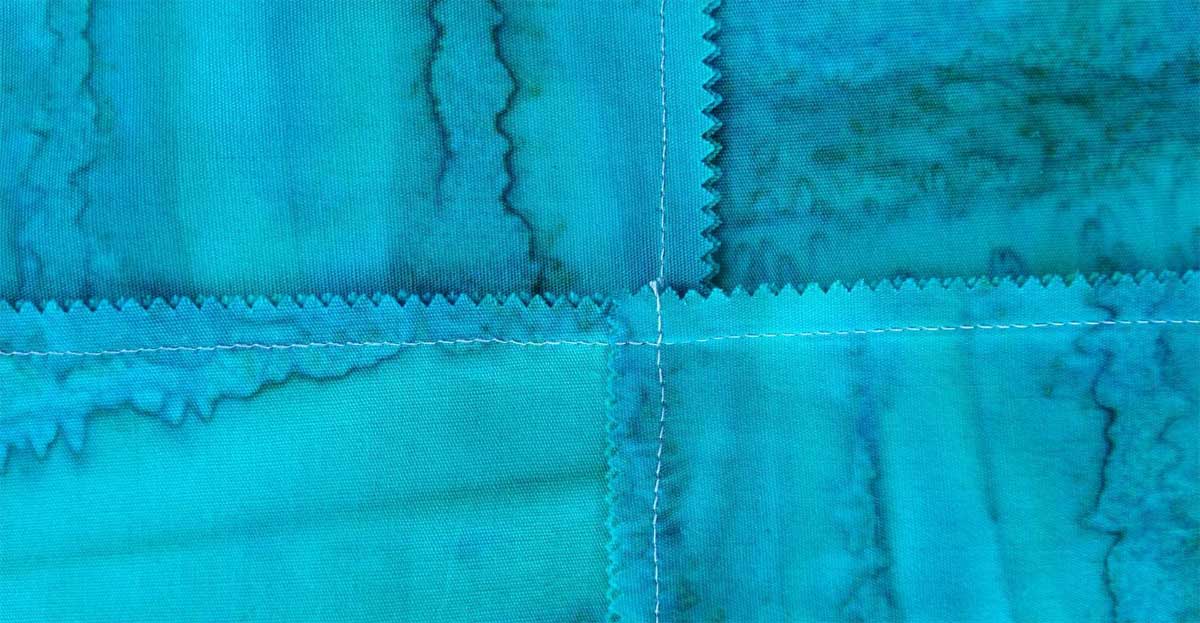
Lining up adjacent seams is easier if the opposing seam allowances are pressed in different directions. For example, on the upper half of a 4-patch block, press the seam allowances to the left; on the lower half of the block, press the seam allowances to the right.
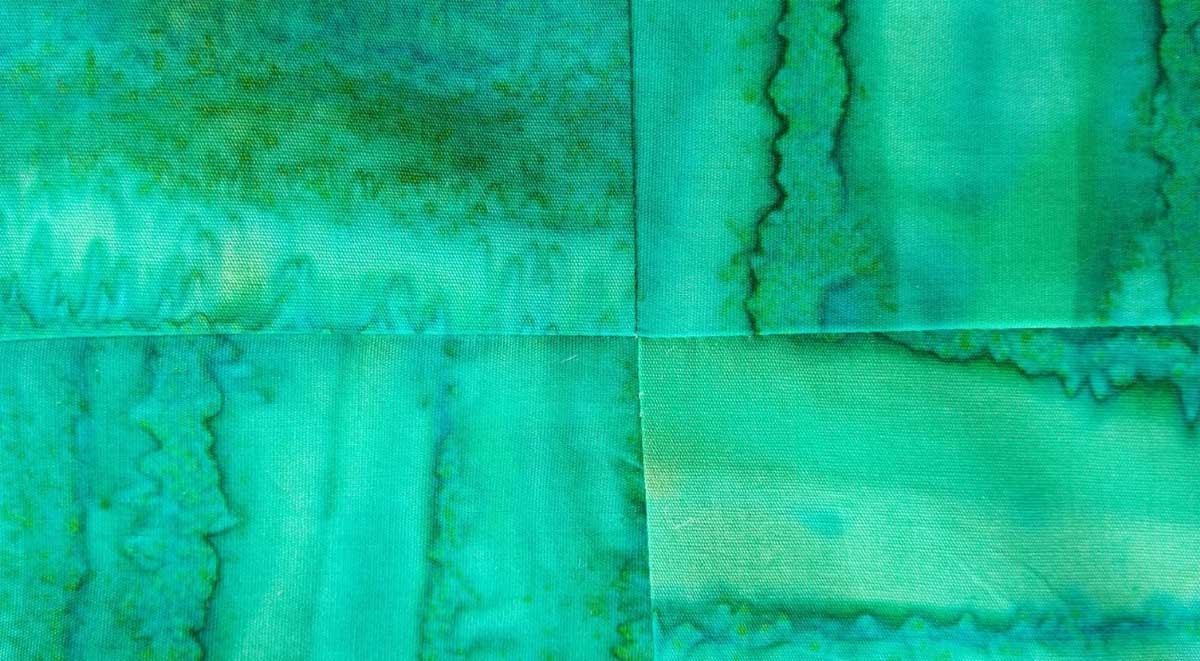
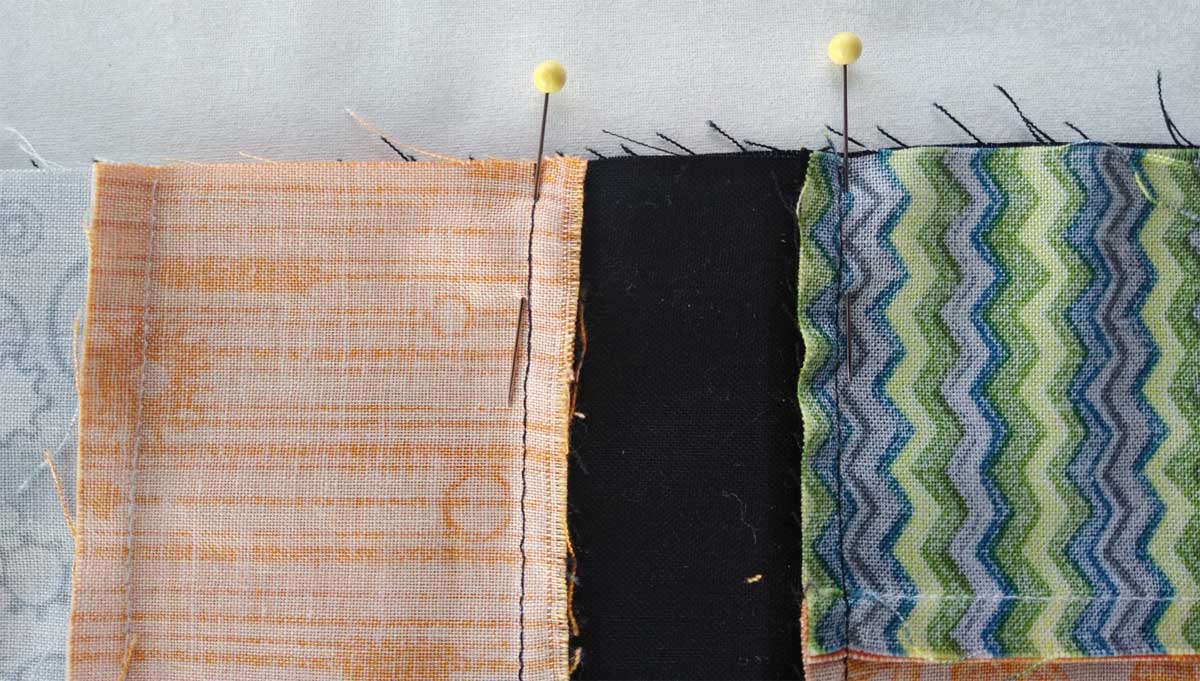
When the sections are placed right sides together, the sewn seams will be on top of each other and the seam allowances will nest together for a perfect match. Place a pin through the sewn seam so that it falls in the same place on the lower layer and then stitch, removing the pin as you come to it. Most machine manufacturers do not recommend stitching over pins.
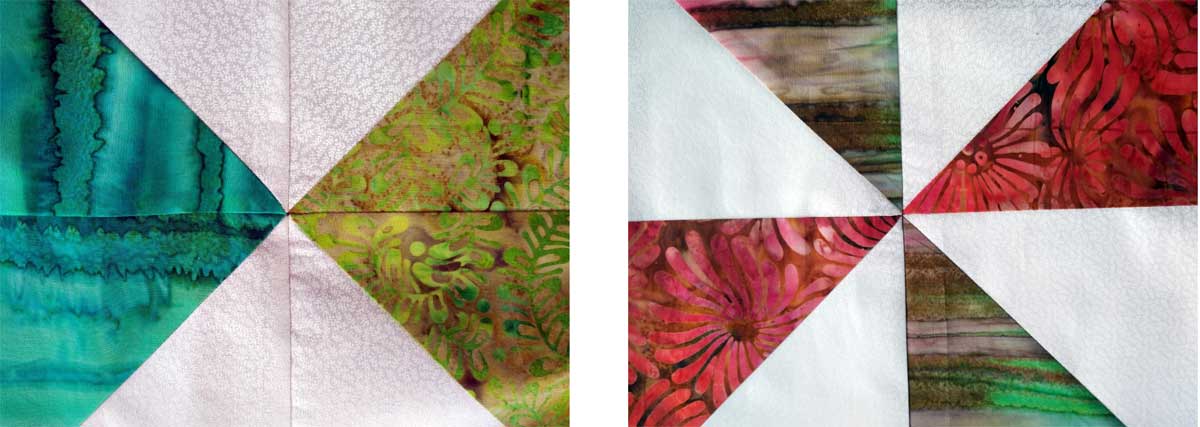
This same process works for stitching together half-square triangle blocks. Press seams for adjacent blocks/rows in opposite directions so the seam allowances will nest during the joining process. Place a pin through to match the seams, then stitch, and you should come out with a perfect match {B-1, B-2}.
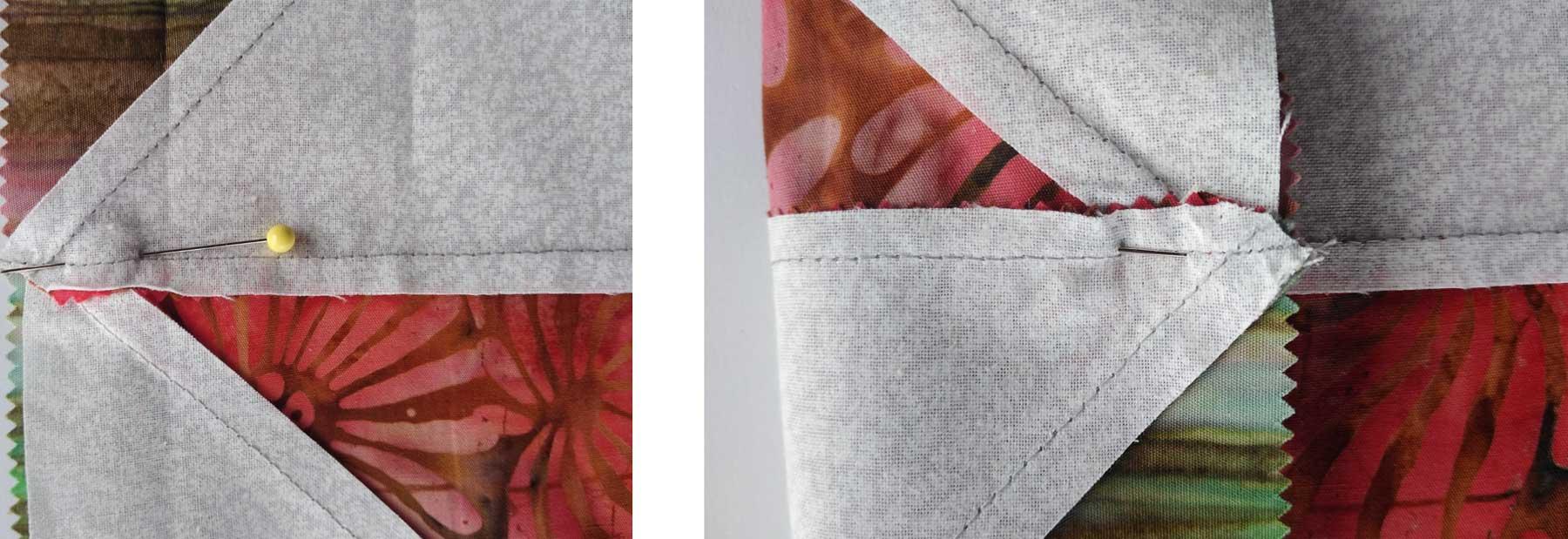
To test before stitching, fold back the seam allowances and check for the point match.
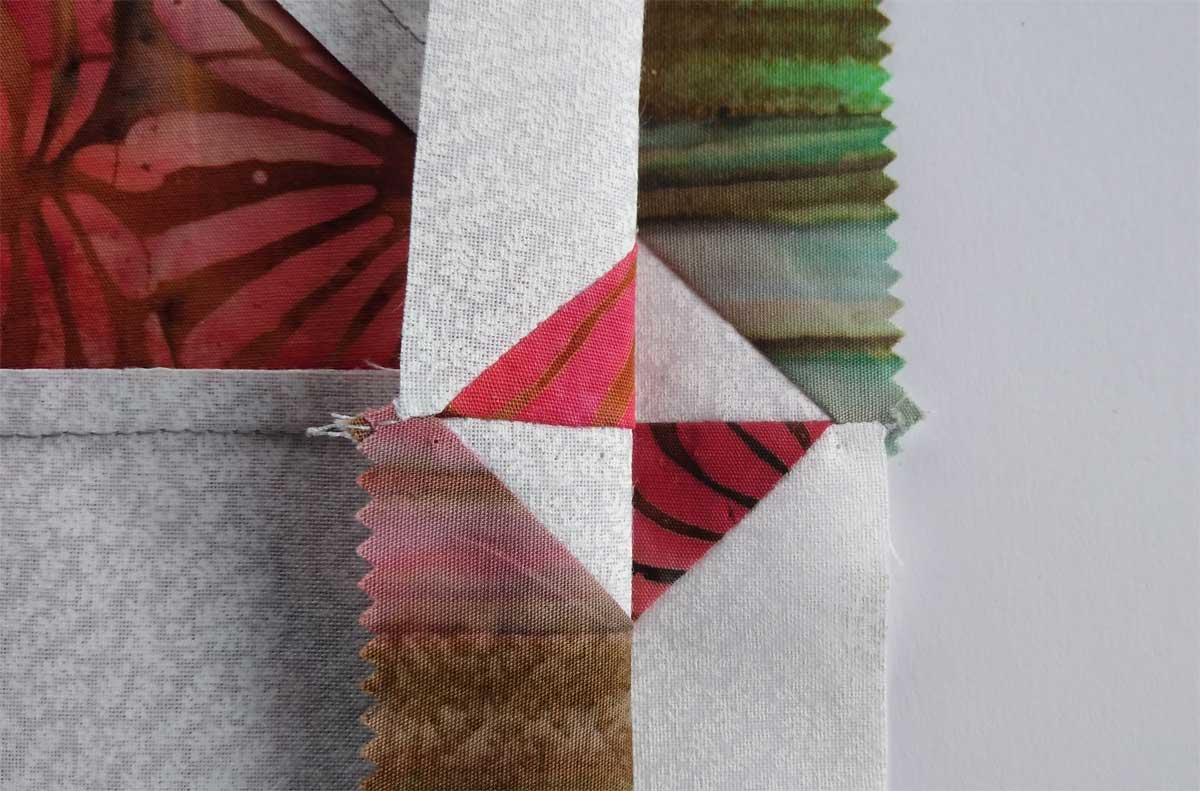
Some quilters prefer to press seams open instead of to one side. In this instance, careful pinning if required for matching points as there isn’t the nesting seam allowance advantage.
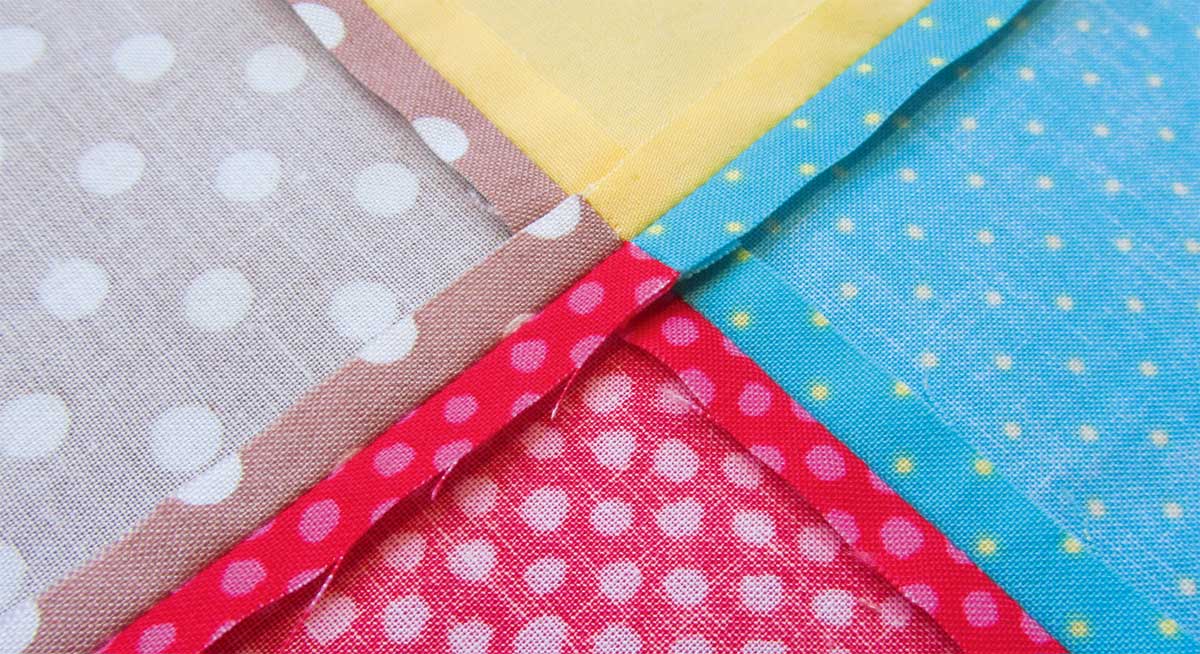
What if your points or seams don’t match? In most instances, taking out a few inches of the seam on either side of the mismatched seam allows for some readjustment and easing to realign the seam matching, then you can just restitch the open area.
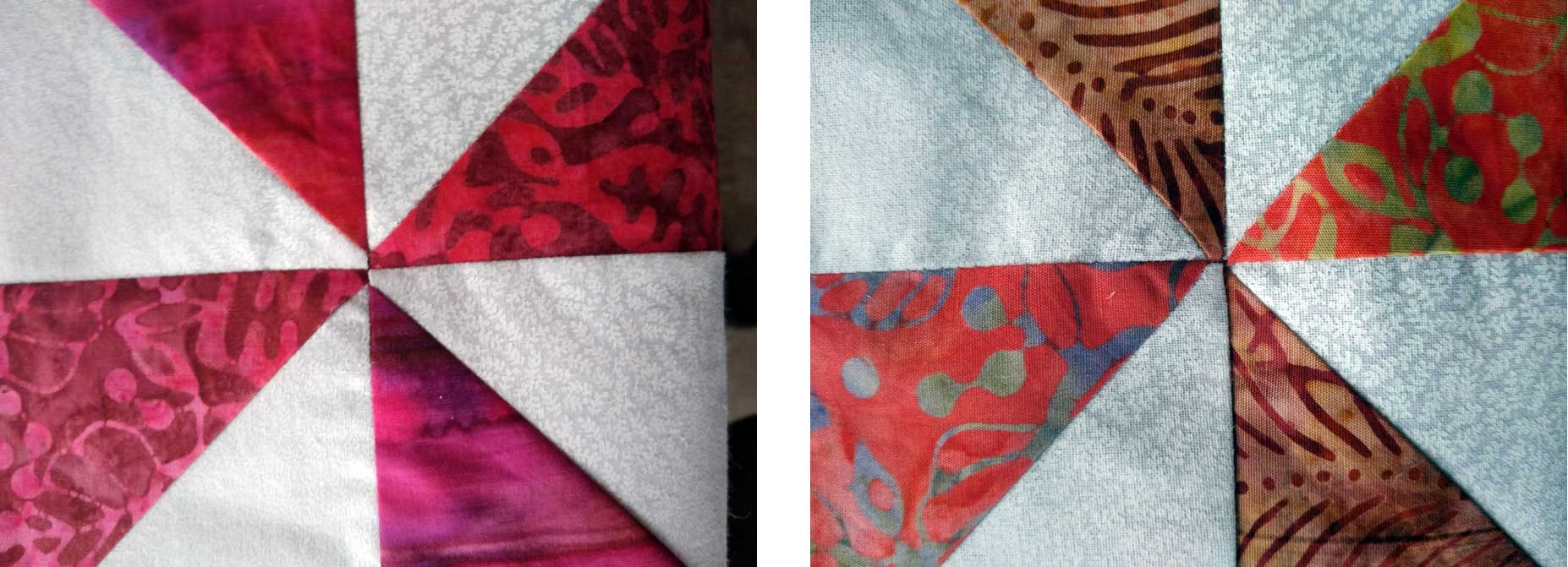
If you’re comfortable leaving the mismatched seam, an easy way to camouflage it to simply tie the quilt at the corners. The yarn ties will hide the seam matching issues and no one will be the wiser. It won’t win you any awards in a quilt show, but it may still be a great quilt to please a child or loved one.
Many quilt patterns have strips placed between rows of blocks. These strips, whether vertical or horizontal, are called sashing. Many quilt patterns have sashing strips in both directions; if so, sew the vertical strips between the blocks first, then add the horizontal ones between the rows.
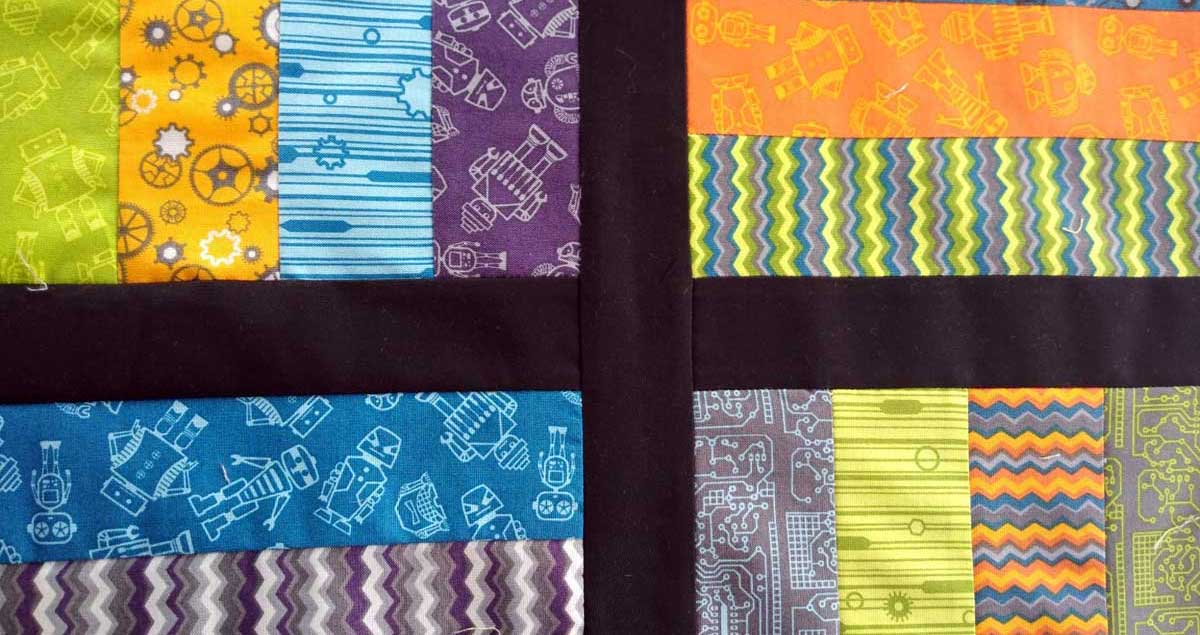
Getting blocks lined up on both sides of the sashing strip is much the same as aligning within the block or row, except that there’s now a strip between the rows.
To keep things aligned, sew a row of blocks to one side of the sashing strip, matching center points. Then fold down the sashing strip onto the blocks and mark the adjacent seamline locations on the wrong side of the sashing. Mark at each vertical sashing strip location across the quilt top width.
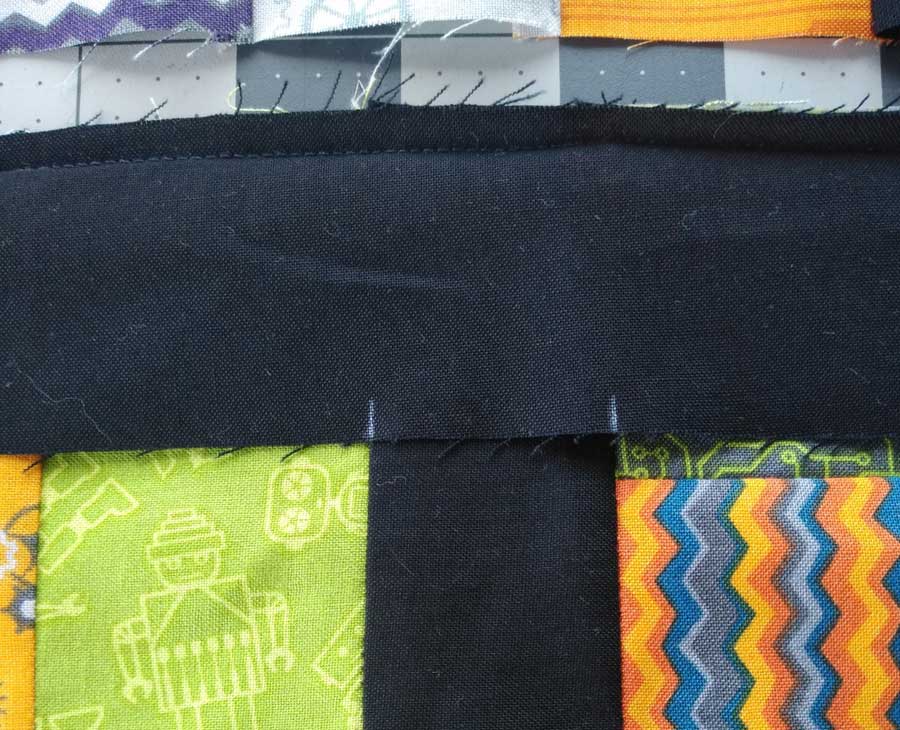
Pin the next row of blocks in place, matching the vertical sashing seams to the marks across the quilt width. Stitch, removing the pins as you come to them and voila, perfectly aligned blocks.
~Linda Griepentrog
Linda is the owner of G Wiz Creative Services and she does writing, editing and designing for companies in the sewing, crafting and quilting industries. In addition, she escorts fabric shopping tours to Hong Kong. She lives at the Oregon Coast with her husband Keith, and two dogs, Yohnuh and Abby. Contact her at gwizdesigns@aol.com.
It’s National Sewing Machine Day! Spend 17 minutes with us in this video and learn about 6 different parts of your sewing machine. Want to learn more? If you aren’t a member already, we hope you’ll consider joining ASG — we would love to meet and sew with you!
~Sheryl Belson